MEPs have now asked the EU’s top court to assess the agreement’s legality, adding fresh uncertainty to a long-delayed trade pact
The European Union is not known for speedy, seamless legislation. So when the possibility emerged that the EU–Mercosur trade deal might pass in early 2026, after 25 years in the making, there was considerable enthusiasm among Europe’s governing body in Brussels.
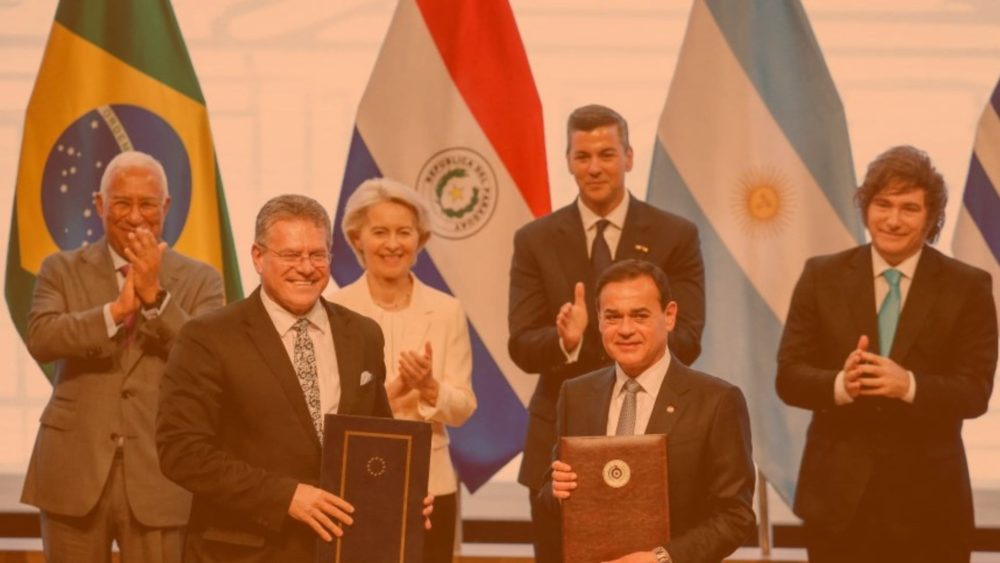
Yet even after last Sunday’s official signing of the pact – which would eliminate nearly all tariffs between Europe and four South American countries (Brazil, Paraguay, Argentina, and Uruguay) – considerable opposition from across the continent’s political spectrum may still sink the deal as it heads towards final ratification in the European Parliament. Critics include powerful national leaders, among them Emmanuel Macron.
This uncertainty deepened further this week after Members of the European Parliament backed a resolution to seek an opinion from the Court of Justice of the European Union (CJEU) on whether the EU–Mercosur agreement is compatible with EU treaties. The move does not block the deal outright, but it could significantly delay ratification and adds legal risk to an already fragile political process.
The agreement has also raised eyebrows in the United States and China, both of which have often seen Europe as a compliant partner in previous trade arrangements.
Why now for the Mercosur deal?
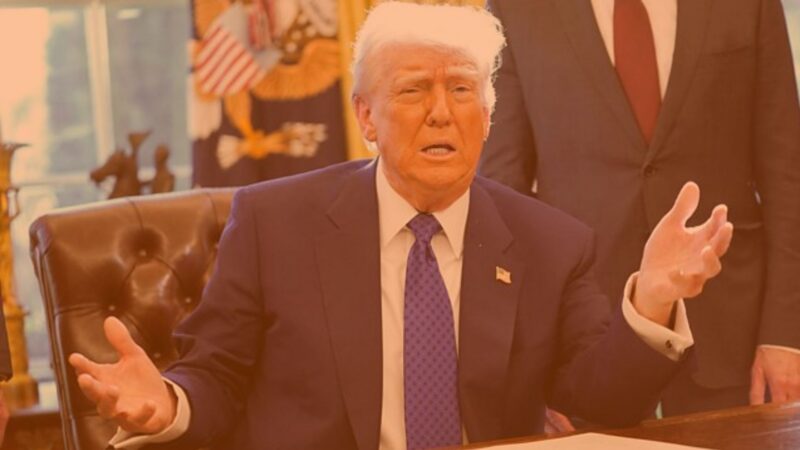
The last 12 months have seen a radical upheaval in international trade. The US has embraced a more protectionist policy since Donald Trump roared back into Washington in 2025. As a result, last April saw the White House’s “America First” trade strategy establish a blanket 30 percent tariff on all EU goods. While the EU did eventually sign a trade deal with Washington – albeit a tenuous one – Europe’s 27 member states were left uneasy about long-term reliance on an unpredictable partner.
That uncertainty has helped renew momentum for the Mercosur deal, which the EU frames as a “bulwark” against Trump-era protectionism and, in the words of European Commission President Ursula von der Leyen, a choice of “free trade over tariffs, long-term partnership over isolation”.
China has also come under criticism in recent years for “dumping” surplus goods into international markets, including the EU. Beijing’s growing stockpile of rare earth minerals – crucial for technologies such as smartphones and electric vehicles – has raised additional alarm bells. There are also concerns in Europe, and the US, about China’s expanding influence in South America through initiatives such as the BRICS grouping.
The Mercosur deal would allow the EU to “wean off” China’s rare earths and provide an alternative to the China-dominated BRICS bloc.
What’s in the deal?
The agreement would cut around 90 percent of tariffs – taxes placed on imported goods to offset impacts on domestic producers – between the EU and Uruguay, Paraguay, Brazil, and Argentina. Together, these countries represent a combined population of roughly 770 million people.
Trade between the blocs would centre on agriculture, critical minerals, pharmaceuticals, clothing, and cars.
The EU would import agricultural products such as wheat and South America’s famed beef, as well as rare earths, while South American countries would import pharmaceuticals, clothing, and German-made cars.
Why the deal might not pass the European Parliament
Signing the agreement was only half the battle. EU governments must now persuade sceptical member states and parliamentary groups ahead of a final ratification vote.
Agriculture remains the central sticking point. Tractors have rolled through both Brussels and Paris – France has the continent’s largest farming lobby – amid fears of competition from lower-priced South American imports. Farmers are also demanding guarantees that Mercosur exporters comply with EU standards, particularly regarding banned pesticides.
To address these concerns, the EU included subsidies for farmers and safeguard mechanisms allowing temporary import restrictions if South American goods significantly harm domestic producers. These measures reportedly persuaded Italy’s Giorgia Meloni, seen as a crucial swing vote, to support the deal.
Climate concerns persist. Critics warn that increased production for European markets could accelerate deforestation in South America, particularly in the Amazon rainforest, by as much as 25 percent.
Unlike the concessions made to farmers, the EU has weakened structural protections on climate issues. The EU Deforestation Regulation (EUDR), originally designed to keep products linked to deforestation off the EU market, has been postponed twice and is now unlikely to enter into force before 2027. There is growing speculation it may never be fully implemented, due to the EU’s new “simplification” agenda and resistance from Mercosur governments, notably Brazil.
Trade in an era of might makes right
Even if the Mercosur deal ultimately fails, the EU has signalled that Europe has trading options beyond the United States and China. Through this agreement – or by wielding the EU’s so-called “trade bazooka” to counter hostile rhetoric from Washington, including claims over Greenland – Brussels has sought to project strength rather than dependency.
Whether the Mercosur deal is genuinely good for Europe, rather than simply for Brussels, remains an open question. The inclusion of enforcement mechanisms suggests some awareness of the failures of past global trade agreements, such as NAFTA, which hollowed out domestic industries and harmed workers.
The lack of binding climate enforcement, however, is unequivocally regrettable.
We may have to wait another 25 years to fully understand the deal’s true impact.
Do you want to be informed of DiEM25's actions? Sign up here