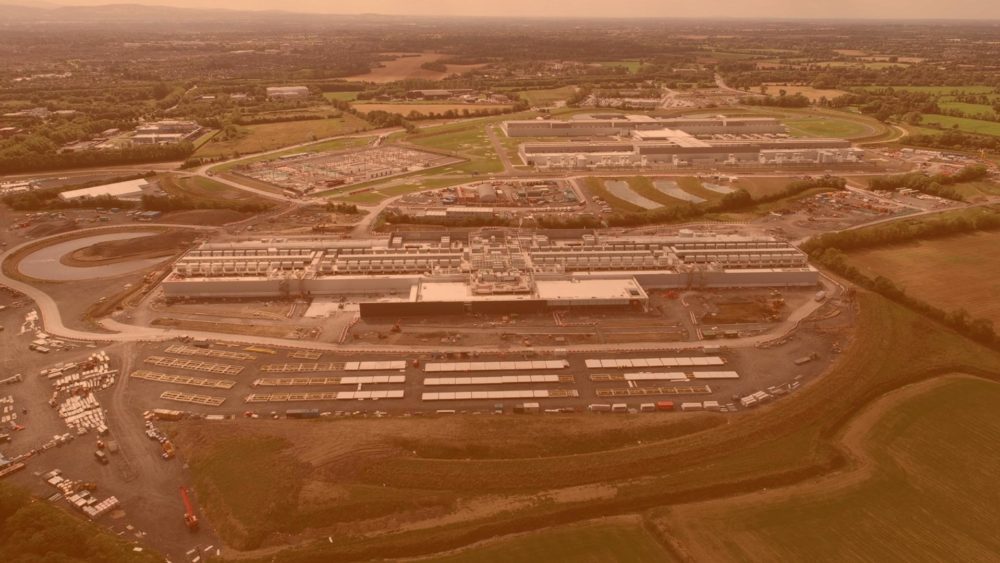
Why the race to host Big Tech infrastructure raises urgent questions about sovereignty, sustainability and public ownership
In the new technology age, artificial intelligence is revolutionising not just how we work and live, but the very essence of humanity itself. The shift towards this brave new world cannot come about without the infrastructure necessary to power AI systems. And so we address the elephant in the room: data centres. Climate change has been impacting the planet since at least the 1970s. Warmer temperatures, unpredictable weather patterns and rising sea levels have had and will continue to have compounding devastating effects on our ecosystems.
Twinned with economic mismanagement, some of the north of Ireland’s most treasured natural landmarks have suffered devastating destruction. Lough Neagh has been infested with toxic blue-green algae that destroy not just its economic potential but, more importantly, what was a self-sustaining natural ecosystem. The toxicity of gold mining and the predatory practices of Dalradian in the Sperrin mountains has long been a point of contention for local and national activists
One of the main points against gold mining is the swathes of clean water required to keep mining operations running, with no feasible solution for waste water. In our era of global desertification, even in more temperate climates, we compound our water shortages with increasing economic activity in fields that are not beneficial for the whole of society, catering to the interests of Big Tech and private corporations. We are staring at an ever growing snowball: increased competition for drinking water as our reservoirs dry up with more unpredictable weather patterns and longer streaks without rainfall; which is compounded by the infestation of our reserves of fresh water by invasive bacteria; and planned economic activity such as mining and data centres using up our freshwater resources.
The Thames Water debacle in England and the repeated government interventions to bail out shareholders is endemic of a management system that is concerned with profits over functionality, which points at a terrifying direction of travel for the Irish people. Donald Trump’s foreign policy agenda shifts toward a new era of imperial competition for natural resources, with the White House slipping the mask and outright explaining oil revenues as justification for the kidnapping of a foreign president, whilst starving Cuba of oil in order to attempt to bring down their system of governance. Away from the corridors of power, communities face these battles on a similar scale with proposed data centres and their connotations.
According to the Environmental and Energy Study Institute, large data centres can consume up to five million gallons per day, equivalent to the water use of a town populated by 10,000 to 50,000 people. Water is used in data centres for cooling purposes, whilst new technologies are being pioneered to try and remove the need for so much water. There is no real solution, since the new industrial cooling systems themselves require large amounts of electricity to operate. Data centres consumed 22% of Ireland’s electricity in 2024, which is more than half of the approximate 40% of the country’s electricity that comes from renewable sources.
On current metrics, data centre growth in Ireland is totally unsustainable. As of April 2024, Ireland hosts 82 operational data centres, with 14 more under construction and a further 40 granted planning approval, mostly in the Dublin area. We are at a dangerous epoch where without the urgent need for democratisation of natural resources, we will continue to neglect the human impact of new technologies.
Democratising Big Tech could put us in a better place to harness the liberative potential of artificial intelligence. When we understand what technology is being used for, resources can be allocated more efficiently and sustainably to ensure compatibility between our climate and the systems that can make our lives better.
One of the proposed visions in the 2022 DiEM25 Manifesto is that this democratising process should envisage a digital commons in which persons fully own their data, and that online platforms, currently operating like digital fiefdoms, are socialised to end all mechanisms that turn people into Big Tech’s commodities. There must also be a Universal Declaration of Human Rights with a provision that bans all autonomous AI-based weapons while protecting every human’s dignity and right.
Do you want to be informed of DiEM25's actions? Sign up here