


The fact that something has not been done before does not mean it is impossible. The struggle for better democracy begins with the belief that today’s “impossible” can become possible.
The problem
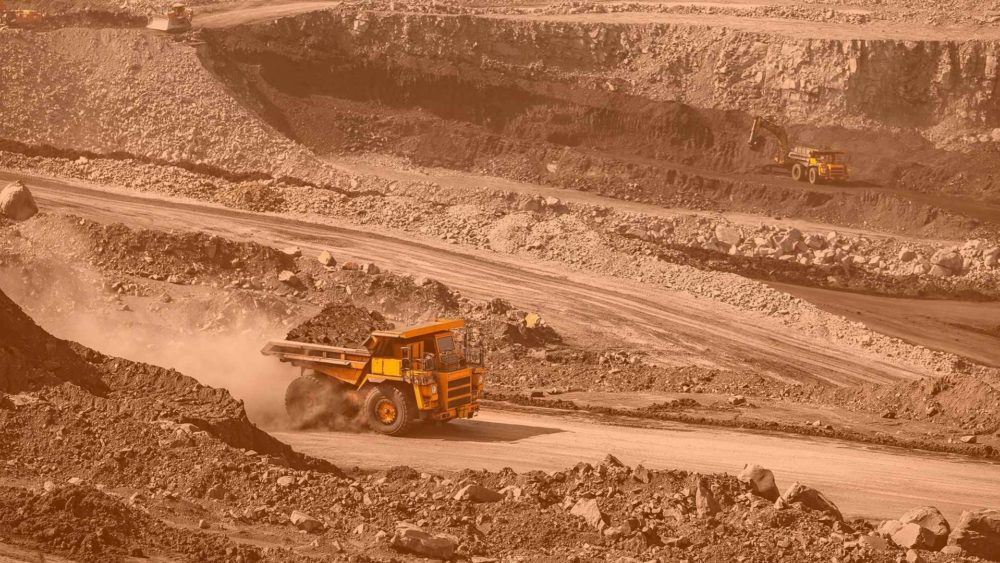
The mining industry, together with the governments of high- and middle-income countries, is one of the most destructive industries in the world. Not only is it an environmental issue, it also affects local, rural communities in the Global South, often leaving little, if any, benefit for the local communities in the sourcing country. From an environmental perspective, mining industries are destroying some of the last remaining biodiversity hotspots, further contributing to the accelerating climate crisis.
In terms of transparency, a key barometer of democracy, governments and corporations in high- and middle-income countries are scoring poorly. Agreements are negotiated between governments and corporations in the sourcing country, without obtaining Free, Prior and Informed Consent (FPIC) of the communities – or if obtained, the likelihood of intimidation and corruption is high. All of this adds up to grave human rights violations, child labour, and the displacement of thousands of people from their ancestral lands.
Present political party parliaments do not engage in direct dialogue with communities in the sourcing country. Their focus, as is often the case in capitalistic societies, is on return on investment and how it benefits businesses in the receiving country. Social justice violations elsewhere are violations everywhere.
Any solution that doesn’t address the root of the problem honestly and transparently is merely scratching the surface, hiding the deeper, fundamental problem – how developed countries are governed, often in the absence of the people.
The proposed solution
One potential approach is the creation of a deliberative body – a House of the Peoples – to operate alongside existing political institutions.
This body would be composed as follows:
- 40% experts (economic, environmental, and market specialists)
- 20% from resource-producing countries
- 20% from importing countries
- 10% industry experts
- Evenly split between producing and importing countries
- 50% citizens
- 40% from producing countries, including:
- 20% from communities affected by existing mining operations
- 20% from communities facing proposed mining projects
- 10% from importing countries (end users of products containing critical minerals)
- 40% from producing countries, including:
The “jury” members
We must emphasise that the path to successful deliberation is paved by acquiring thorough knowledge about the matter, through research and learning from communities whose lives are affected if the mining operation is approved. Without prior knowledge, the recommended solution lacks evidence-based information and, in the worst case, is based on pre-existing opinions rather than a knowledge-based perspective.
The aim of the House is to deliberate on recommended solutions, understanding all aspects and effects the activity has on local communities, and together with them (honouring FPIC), come up with a solution that benefits both the sourcing and receiving countries.
The recommendation could look like, for example:
How is it beneficial to all parties involved?
Environmental impact: Indigenous communities often have strong traditions of environmental stewardship. They live off forests and land resources with relatively low levels of pollution compared to industrial models. It is not without reason that they are often called “guardians of the Earth.” Involving these communities in planning and executing operations can help ensure minimal environmental damage and contribute to addressing the climate crisis.
Human rights impact: Forced labour is less likely in locally owned cooperatives managed by local communities than in operations conducted by foreign corporations or overseen solely by local governments, where corruption, bribery and intimidation may occur.
Social justice impact: Local communities can gain improved access to healthcare, education, and other essential services compared to the present situation. There can also be non-mining-related job opportunities in end production and retail sectors.
Economic impact: The starting point is that value creation cannot be measured solely in financial terms. A foreign company in this instance may earn less than under traditional, neo-colonial models of extraction. However, if the company contributes economic benefits to the community, it creates value both locally and globally on several levels. At the global level, people may have access to more affordable products than if they were produced with high profit margins typical of traditional corporate models. Furthermore, the product can be certified as ethically produced.
Indirect impact: People who have access to jobs and services at the local level are more likely to stay and contribute to building their countries’ economic prosperity. One core driver of mass migration is the lack of economic opportunities and access to essential services—not only forced displacement by foreign entities extracting natural resources.
Conclusion
In the above example, we describe how democracy could work in an “ideal” world. In practice, the deliberative democracy model of the “House of the Peoples” can operate in parallel with existing parliaments, serving to challenge politically motivated decisions and showcase the difference in recommendations when people are actively involved in the decision-making process.
This comparison serves its own purpose: when populations become aware of different decision-making processes, they may be more likely to question traditional political representation in the years to come. The “House of the Peoples” can transform dissent into collective, structured opposition that governments cannot easily ignore.
Do you want to be informed of DiEM25's actions? Sign up here