

What just happened in Wales is difficult to describe other than a political revolution, earthquake, tsunami or something similar. For the last hundred years, the Labour Party has been the dominant party in Wales, never having lost an election. In 1966 at their height, they won 32 out of 36 seats. At that time, in their heartlands their votes could be measured in bucketloads, with all the other parties getting such a low vote they would lose their deposit. People have described them as the most successful political party in the world.
And then suddenly, after the Senedd (Parliament) elections on May 7 this year they found themselves left with only nine members out of 96. They must have been glad that the election was held under Proportional Representation. If it had been under first-past-the-post (FPTP) like the Westminster General Election, they would have had no members elected at all.
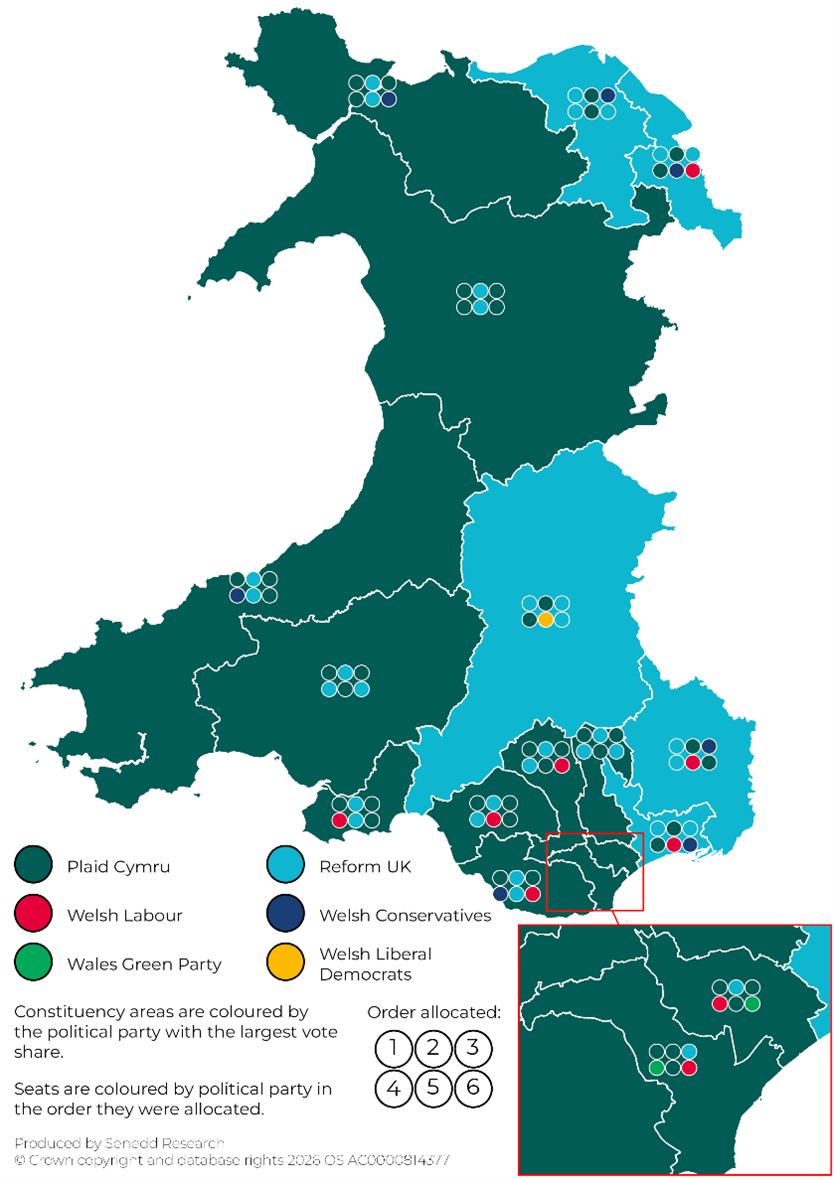
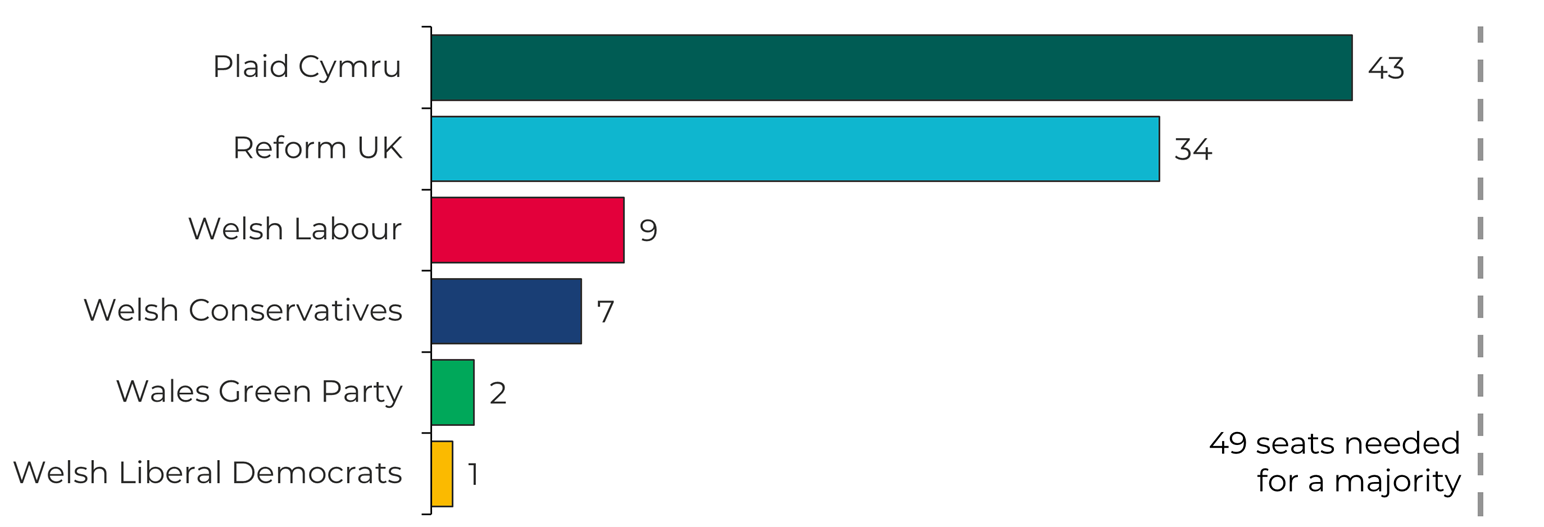
Nobody could say that this result was anything but brutal for Labour. All different factions of the party (Welsh Labour, Welsh Labour in Westminster and UK Labour) are blaming each other. Mark Drakeford, the previous Labour Corbynista First Minister, has written an article which documents the various mistakes and shortcomings. He sums up that “we were neither sufficiently Welsh, nor sufficiently Labour”. But to lose so badly testifies to a much deeper change in attitudes, because nobody would say that Welsh Labour were that bad or incompetent.
The good news is that, unlike a lot of European countries, Wales has not succumbed to the lure of the far right but instead has overwhelmingly voted for Plaid Cymru, a party to the left of Labour. Plaid Cymru are described as a nationalist party, which I know will strike fear or apprehension in the mind of many on the left. However, usually this is combined with left i.e. left nationalist or civic nationalist to differentiate it from right wing nationalist parties like Reform UK or the other parties taking over European countries. However, this raises the question as to why there is not a left or civic nationalist party in countries like England or France.
Politics within countries such as Wales is very different from independent states. I like to use the term ‘internal colony’ to describe Wales, Scotland, Bretagne, Euskadi, Catalunya etc. though you could also use the term ‘stateless nations’. This means that they are partly integrated into the bigger state but partly have aspects of a colony. A longer article would be needed to explore this theme in depth but for now if you consider Plaid Cymru as a national liberation movement and Reform UK as an imperialist nationalist project it explains the situation.
It is difficult for people to understand politics in Wales, but national identity is fundamental. Welsh national identity is completely intertwined with left-wing politics. If you don’t believe me, just look at the chart below. The X-axis shows liberal-authoritarian and the Y-axis the left-right. Notice the people describing themselves as Welsh only; it is off the scale left and liberal, whereas those describing themselves as English only, British & English and British(W) (i.e. those identifying as British only but born in Wales) in contrast are off the scale right-wing. Does that mean that all English people in Wales are all right wing authoritarians? No – how you define yourself is a matter of choice. The left is mainstream in Welsh culture, so if you are from an English background and are left wing you will tend to identify with Wales and the opposite if you are right wing you will tend to identify as British or English.
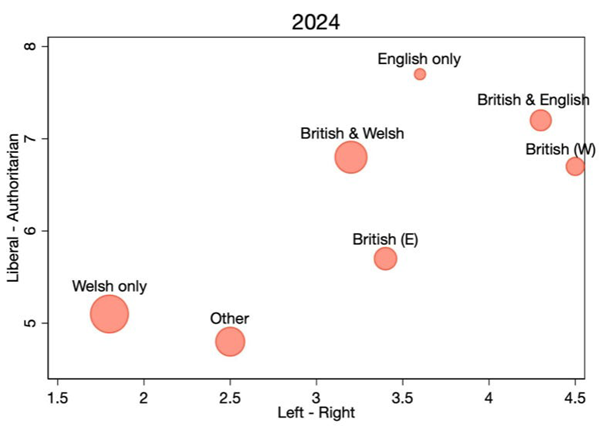
Those who identified as British and Welsh are quite centrist on both liberal-authoritarian and left-right scales. These were the natural voters of the Labour Party. The party until recently managed to appeal to both British and Welsh identities pretty successfully. But the Welsh-only identity has been constantly growing, especially amongst young people. Many have grown up with a Senedd that governs in their name. Changes to the education system have meant most young people will have grown up with some knowledge and familiarity with the Welsh language and history. The Cwl Cymru period, where Welsh bands made a name for themselves internationally, helped to remove a lot of the inferiority complex associated with Welsh culture. Finally, the Football Association of Wales (FAW) helped create and nurture a culture of progressive patriotism at the same time that the Welsh national football team successfully qualified for the European Championship and World Cup.
An English journalist and Labour Party supporter recently dismissed Plaid Cymru as a party of “dairy farmers and vegans”, but attitudes like his is the reason why Welsh people get frustrated. Plaid won in cities, rural areas, ex-industrial areas, and it won in coastal areas. It won in social housing estates, in suburbs, and in town centres. The only places it didn’t come out on top were areas on the border with England, where it came a close second. It got support from indigenous Welsh, people of English background, ethnic minorities and the LGBTQ community.
During the election campaign, Plaid Cymru constantly reinforced the message of “hope over hate and division” and emphasised that they were the only party that could defeat Reform UK. This message really hit home. On the last day of campaigning, except for one person who supported Reform UK, the other 29 I canvassed said (or hinted strongly) that they would vote for Plaid Cymru and the reason given was “we can’t let Reform UK in”. It really surprised me the level of disdain and hatred of that party I encountered on the doorsteps.
Whereas Plaid Cymru’s campaign was traditional leafletting and canvassing, Reform UK was bizarre. They didn’t announce their leader in Wales until three months before the election. Their candidates were only announced a month before. Within days, a number had resigned – one when a picture of him performing a Nazi salute went public. All were appointed without any resemblance of internal party democracy. The leaflets that came through the post didn’t have the candidates name or picture. They banned respected journalists from their conference. All this intending to deny scrutiny of their party. On the other hand, the social media world was a cesspit of lies and distortions put out by their supporters. And their manifesto was designed in la la land.
Powers on immigration are not devolved to Wales which means it is still controlled by the UK Westminster government and the number of people not born in the UK living here is tiny 6.9%. Only in two cities is it over 10%.
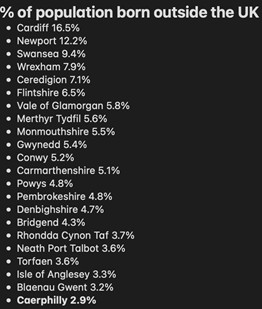
So, in reality, it shouldn’t have been an election issue at all. But two of Reform’s main points related to this. They pledged to close asylum hotels even though there are only 74 asylum seekers in one hotel in Cardiff and the Welsh government doesn’t have the power to close it. They pledged to scrap the ‘Nation of Sanctuary’ programme which helped Ukrainian refugees settle here and learn about Welsh history and language. But the Welsh government is statutorily obliged to help settle refugees and only spends a tiny amount yearly on this project. Neither of these pledges would make any difference to the problems in Wales. Like someone said, it was like “promising to buy a house by cancelling your Netflix subscription”.
Finally, they pledged to cut taxes which would have meant £300 million less to spend on vital public services like health. A truly bizarre combination of the idiotic, irrelevant and impossible. During the campaign they were sure they would be the largest party after the election. But to their great disappointment, they didn’t come anywhere close to fulfilling that aim.
And Reform UK have carried on like that in the first week of the new Senedd. They first complained that there were two Welsh flags outside the Senedd and only one Union Jack and then complained about the Ukrainian flag. It must be noted that the former Reform UK leader in Wales is now in jail after admitting receiving Russian bribes to make pro-Putin statements. They seem to hate Ukraine for the same reason they hate Wales – two small nations asserting their identity and right to self-determination.
In contrast to the monkeying around of Reform UK it was significant the new First Minister of Wales and Plaid Cymru leader Rhun ap Iorwerth made his first public engagement at the Wales TUC (Trade Union Congress) where he received a warm welcome and a standing ovation. If anything symbolises the complete PASOK-ification of Labour in Wales, it was this. Something that would have been unthinkable a few years back given the close relationship between Labour and the Trade Unions.
In his speech, Rhun ap Iorwerth said “You represent the organised voice of working people across our nation. You fight for fairness, for dignity, for respect. And I want to be clear from the outset: those values are not only shared by this Government – they are embedded in the programme we have been elected to deliver.”
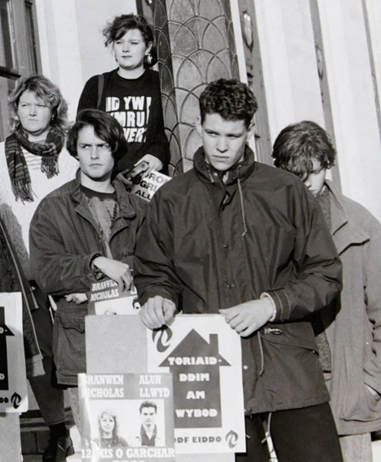
Two future Plaid Cymru leaders in their activist days protesting for Welsh language rights.
The new government has made history because its members are overwhelmingly fluent in the Welsh language (the first time Wales has been governed in Welsh since the brief insurrection in 1400), and the cabinet will predominantly be conducted in that language. Love of the language is very strong within the party as is a dislike of Royalty and British Empire. One MS Keira Marshall made a protest at taking the oath to the king. I predict that names of locations and institutions will change over the next few years and a greater emphasis on Welsh history will become evident.
The Plaid Cymru group in the Senedd is 26 female to 17 male which is the opposite of Reform UK which has only 10 females and 24 males. The Plaid Cymru cabinet is gender equal.
With Wales, Scotland and Northern Ireland all having First Ministers from pro-independence parties, there is already greater cooperation across these nations. They will pressure the UK government for a reset in relations including getting the right to hold an independence referendum when the devolved nations decide.
There will be demands for a fairer financial settlement based on need. And because at present things like R&D spending is done solely in England. Fairer settlement for transport spending as Wales was cheated out of around four billion pounds by calling the High-Speed Railway (HS2) – an England and Wales project even though it doesn’t go anywhere near Wales. At present Wales gets less for railway development than a city like Leeds. The Plaid Cymru government will also request greater powers to borrow which are at present capped at 500m which is less than some county councils and will ask for powers over taxation. At present, Wales can’t change the bandings. This means it is difficult to create a progressive taxation policy like they have in Scotland.
We can also be sure that the Plaid Cymru government will take a principled stance on international issues. Their support for Palestine and Ukraine will be unwavering as will opposition to overseas military adventures. During the campaign, Rhun ap Iorwerth was asked by a BBC reporter “are you happy that one of your candidates described Israel as a terrorist state?” to which he replied: “I would go further. They are a genocidal state, and Benjamin Netanyahu should be put in front of the court in the Hague.” It is fair to say that the previous Welsh Labour were strong on this as well.
Plaid Cymru has set itself the goal of tackling child poverty as a third of children in Wales grow up in this condition. This has a knock-on effect on educational attainment and health in later life. To alleviate this problem, they are including free school meals for children in secondary schools whose parents are on Universal Credit. They are also developing a programme of free childcare for a certain number of hours which will allow more parents to take part time work if they wish.
People in Wales are fed-up with the extractive nature of the economy in Wales over the centuries. The Plaid Cymru dream has always been a mixture of cooperatives, community owned enterprises and small local businesses. There is a grassroots movement Cymunedoli (see article by Grace Blakely) which has had some success in creating enterprises owned by the community. It will be interesting how far they manage promote and nurture this type of economy. They are committed to between 15-25% community stake in major renewables project. They are also pushing for the devolving of the Crown Estates which owns a lot of the coast and land (and which local councils must even pay rent to) so that Wales can benefit from its own natural resources.
There is nothing to dislike about Plaid Cymru and there no downsides to the recent election victory. The majority of their Senedd members are very principled and there are seriously left-wing people in the new government. And no career politicians or major doners pulling the strings.
Time will tell how effective they transform Wales. Nobody is expecting miracles. Wales has severe structural deficiencies in almost every area and lacks many of the powers to rectify them. But as a woman in her late 40s said to me: “I hope some good comes of it.” She had just voted for the very first time in her life and that had been an unbelievably difficult life. There are many dark clouds amassing, with a far-right Reform UK government very likely to be elected at a UK level. Wales will need all the support it can get from the English and European left.
Do you want to be informed of DiEM25's actions? Sign up here