

Spain may have won the trophy, but Trump, Infantino and the US government ensured the 2026 World Cup was really about power, politics, profit, and ultimately, hypocrisy.
The 2026 FIFA World Cup is finally over, with Spain defeating Argentina 1-0 after extra time in a gruelling final in New Jersey. Spain lifted the trophy, Ferran Torres scored the winner, Lamine Yamal embraced Lionel Messi, and Donald Trump, naturally, found a way to make it about himself.
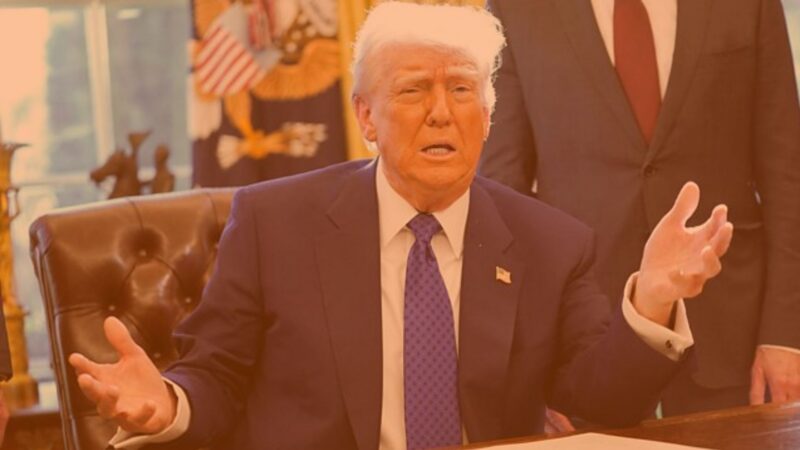
What was billed as a celebration of football, unity and global togetherness instead became a remarkably effective showcase for the power, ego and political interests of the United States president.
From the FIFA Peace Prize awarded to Trump by his personal footballing associate Gianni Infantino to the president’s intervention in a red-card suspension, the tournament repeatedly demonstrated that the beautiful game is not immune from the ugly realities of power.
The closing ceremony even displayed a giant banner spelling out “LOVE”. A touching message, although one that sat somewhat awkwardly against the backdrop of a US president threatening and bombing Iran, one of the countries participating in the tournament.
But at least the branding was consistent in its hypocrisy as FIFA also gave Trump a peace prize.
Peace, love and the Trump show
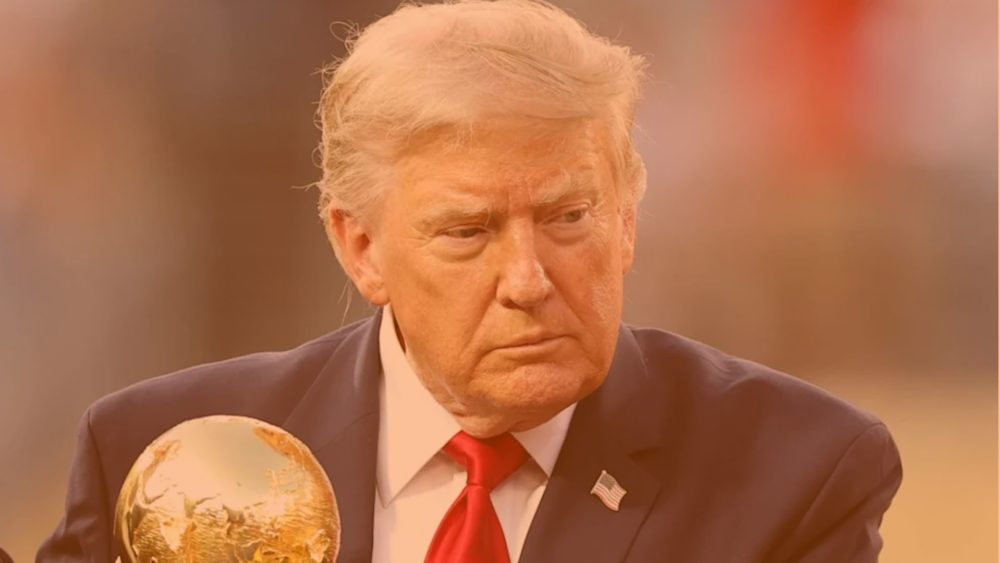
In December, Gianni Infantino presented Trump with the inaugural FIFA Peace Prize, an award created by FIFA only weeks earlier. Infantino said it recognised Trump’s efforts to promote peace and unite people across the world.
The timing was unfortunate given that the award was presented to a president whose administration had taken the United States into war with Iran, while the tournament itself featured the Iranian national team.
The final offered another extraordinary image. Trump remained on the podium as Spain celebrated its World Cup victory, inserting himself into the trophy-lift scene as the players and staff gathered to celebrate. Spain’s players clearly tried to guide him away, before Gianni Infantino eventually appeared to intervene, but the message had already been delivered. Even the World Cup trophy lift was not safe from the presidential photo opportunity.
Welcome to the NFL World Cup
The tournament also continued the long process of Americanising football – or soccer, as the hosts would insist on calling it.
Mandatory three-minute hydration breaks were introduced in every half, regardless of the weather. There is a legitimate argument for stopping matches in extreme heat. But in 2026, the breaks also created convenient new opportunities for commercial advertising.
Football has always had two non-stop 45-minute halves of action. But the American sporting-industrial complex looked at this and apparently thought: why not four quarters?
The final took the commercialisation even further. A 30-minute halftime entertainment show transformed the World Cup final into something increasingly resembling the Super Bowl: a sporting event wrapped around a television spectacle, with the actual sport occasionally permitted to continue between the advertisements and celebrity performances.
Iran: Welcome to the World Cup, but not quite America
Iran’s participation exposed the political contradictions even more starkly.
The US Department of Homeland Security denied entry visas to more than a dozen key members of the Iranian delegation, including senior football federation officials, managerial staff, kit personnel and technical advisers. Iran’s planned training base in Tucson, Arizona, was cancelled amid the hostilities and strict immigration restrictions. The team instead established its base across the border in Tijuana, Mexico.
The Iranian players were subject to strict travel arrangements, entering the United States only shortly before matches and leaving within hours of the final whistle. This was not exactly the warmest welcome for a team supposedly participating in a celebration of global unity.
Iran’s football federation had already accused the United States of discriminatory treatment. Yet FIFA’s response was essentially to insist that the show must go on.
The players, at least, offered a more convincing message than the politicians. After their final group match, they left a handwritten note in the dressing room: “May peace, respect and friendship prevail among all nations.”
A nice sentiment. Perhaps someone should have sent it to Washington.
The president’s red-card appeal
Then came the Folarin Balogun affair, which made even purely sporting fans wake up to the political interference of Trump… which is ironic to say the least from someone who has claimed political interference is the biggest crime possible.
After the USMNT striker was sent off against Bosnia and Herzegovina, Trump personally intervened with FIFA president Gianni Infantino. Balogun’s automatic one-match suspension (usually two for the severity of such challenges) was subsequently suspended, making him available for the United States‘ next match against Belgium.
FIFA’s disciplinary rules had previously made clear that a red card meant an automatic suspension. Yet the suspension was suddenly placed on hold for a year, allowing Balogun to play.
The Norwegian Football Federation is now considering an ethics complaint over the decision, while UEFA described FIFA’s action as “unprecedented, incomprehensible and unjustifiable”.
The principle was apparently simple: a red card is a red card – unless the president of the United States calls Gianni Infantino.
Cristiano Ronaldo had already benefited from a similarly controversial suspension arrangement after his red card against the Republic of Ireland in a World Cup qualifier. FIFA imposed a three-match ban but suspended the final two matches for a year, allowing him to participate in the tournament. The precedent was already troubling. The Balogun decision made the problem impossible to ignore.
The World Cup was supposed to celebrate football’s ability to bring people together. And, to be fair, it did. Millions of people watched the same matches, celebrated the same goals and suffered through the same penalties.
But it also showed us something else: the game remains deeply entangled with power.
Maybe the World Cup final halftime show banner was right. The World Cup really did spell out LOVE.
Just don’t ask who was allowed to define it.
Do you want to be informed of DiEM25's actions? Sign up here