

We should ask what’s wrong with the system, not what’s wrong with the people who have to suffer through it
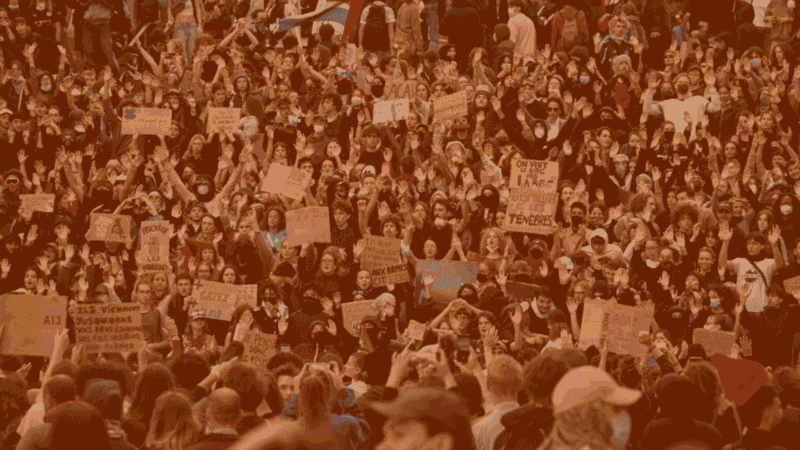
On Saturday, tens of thousands of young people marched through more than 30 German cities demanding better education, affordable housing and economic security. A life they could actually afford. Most demonstrations were peaceful.
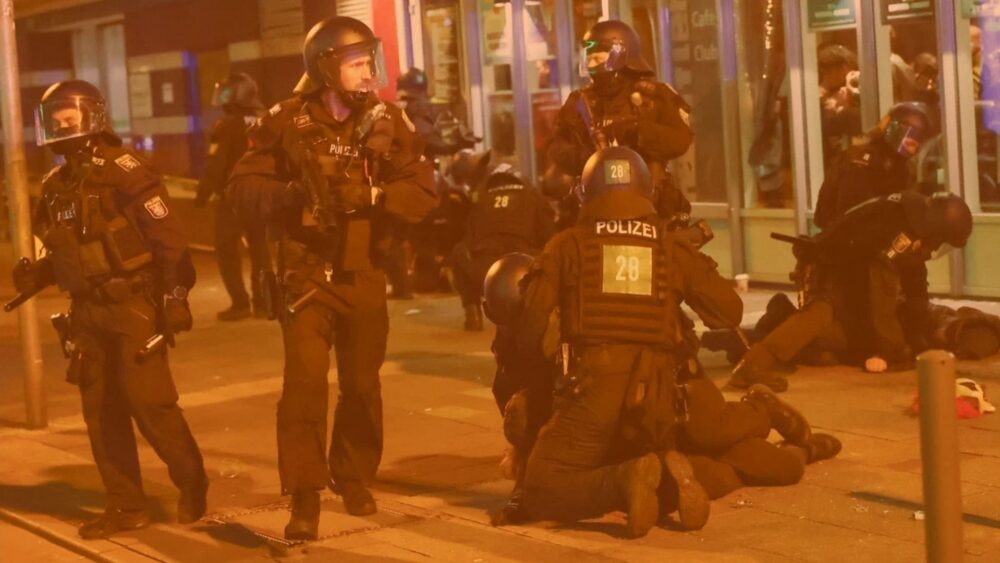
In Frankfurt am Main, Germany‘s banking capital, however, shop windows were smashed and stores looted, among them several sneaker shops. Because apparently, even during a supposed revolution, one mustn’t miss the opportunity to get the latest pair of Nikes. Police later distinguished the demonstrators from many of those involved in the later riots.
So did the student protests sweeping Europe finally arrive in Germany?
In Serbia, a deadly railway station collapse sparked a sustained student movement against corruption. In France, school blockades over deteriorating conditions brought teachers and parents into the protests.
In Germany, meanwhile, the latest protests mobilised largely through social media. A political movement takes months or years to build, but an image of a burning barricade crosses Europe in seconds. It communicates anger, defiance and the intoxicating possibility that somebody, somewhere, has stopped obeying. What exactly they’re disobeying, and why, can apparently be figured out later.
But the minute protest becomes a language of choice for a generation, we should hardly expect everyone to speak it in the same way. Some will organise, some will march peacefully, some will become more radical and others may turn violent. And some will simply borrow the spectacle for their own purposes. Sharing a generation does not mean sharing a political consciousness, much less a common understanding of what should change. Anger is remarkably versatile in that respect, and not particularly concerned with ideological consistency.
Frankfurt offers an interesting example. I lived near Konstablerwache for many years. I know those streets, those shops and the young people who have long made the surrounding area their meeting place. They didn’t suddenly appear because someone announced a demonstration on Instagram. Even the police had established a special operation targeting the area long before Saturday. The protests may have provided an occasion for the violence, but the young men gathering there were already part of the city’s social reality. And you can ask social workers and people who actually engage with these young men, that they are as much disillusioned about their future, as anyone of their age can be these days.
And then there is the interesting choice of shops for the looting. Several of the businesses targeted sold sneakers and sportswear. A weapons dealer was also attacked, which is rather more disturbing. The merchandise tells us little about the motives of individual looters, but it offers an almost comically appropriate illustration of capitalism’s contradictions. A society extraordinarily successful at manufacturing desire, advertising lifestyles and promising opportunities that remain increasingly out of reach for many young people. The carrot keeps dangling, even when the chances of reaching it become increasingly remote.
Of course, stealing sneakers doesn’t make someone an anti-capitalist. It may simply make them a particularly impatient consumer. Nor does every act of violence conceal a sophisticated political grievance. But anger doesn’t arrive with a political programme attached. It can become solidarity, resentment, resistance or destruction. And the circumstances in which young people grow up have rather a lot to do with what opportunities they have to turn their frustration into something constructive.
Perhaps even the peaceful protesters present a contradiction. Are they demanding an alternative to capitalism, or are they asking capitalism to finally fulfil its promises? Study hard, work hard, find a decent job, afford a home and enjoy life. Hardly revolutionary demands. More like customers complaining that the product no longer works as advertised.
Meanwhile, the political discussion has already shifted from education, housing and economic insecurity towards criminality, migration and possible restrictions on future demonstrations. The broken windows become the story, while the reasons thousands of young people took to the streets become a footnote. Violence demands accountability, certainly. But accountability and understanding are hardly mutually exclusive. We seem perfectly capable of discussing how to punish young people without ever considering improving the society that is failing them.
The protests across Germany may develop into a sustained political movement, or they may fade as quickly as the images that inspired them. But if we want to understand the anger emerging across this generation, we might have to look beyond the distinction between the well-behaved protesters and the badly behaved ones. We should be asking what produces so much frustration in the first place, what channels exist for expressing it and why some young people find a political voice while others find little more than a shop window.
After all, broken glass can be replaced. The opportunities denied to an entire generation are considerably harder to restore.
Do you want to be informed of DiEM25's actions? Sign up here