


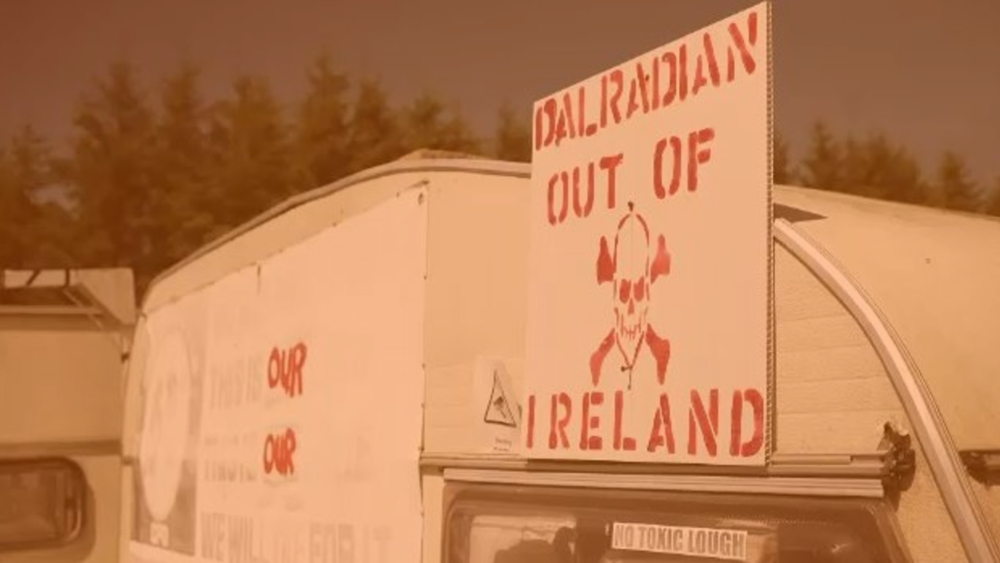
Community campaigners and environmental activists in Ulster remain steadfast in their opposition to Canadian company Dalradian Gold’s plan to establish a large gold mine in the Sperrins, an Area of Outstanding Natural Beauty. Residents fear the project will lead to toxic pollution, generating hazardous waste – including arsenic and mercury – and creating a massive dump site near homes, schools, and community spaces.
Save Our Sperrins, a local community group, has played a key role in mobilising resistance at local, national, and international levels. They describe their struggle as a “David and Goliath battle,” pitting an ordinary rural community with limited resources against a well-funded mining corporation. Despite the challenges, campaigners remain determined to protect their environment and prevent threats to land, water, air quality, public health, and community cohesion.
Public inquiry faces suspension over legal breaches
On January 13, the long-awaited Planning Appeals Commission (PAC) inquiry into Dalradian’s application began at the Strule Arts Centre in Omagh, County Tyrone. However, just three days later, Commissioner Jacqueline McParland suspended the proceedings due to the Stormont government’s failure to meet its legal obligation to notify the Irish government and conduct proper transboundary consultations with authorities in the Republic.
“The inquiry has been besieged with difficulties from the start,” McParland stated. “The planning department of the Department for Infrastructure failed to follow its own legislative procedures. I have no option but to accede to the request to suspend the inquiry, in view of Access to Justice and the Right to Participate.”
Following the suspension, the all-Ireland campaign group Communities Against the Injustice of Mining condemned the inquiry process, citing multiple breaches of planning and environmental laws, as well as barriers to public participation. The group criticised government departments responsible for issuing mineral prospecting and mining licenses, accusing them of incompetence.
Among the legal violations, campaigners highlighted breaches of environmental protection conventions that the UK signed in 2005 while still an EU member. These agreements require states to notify and consult with neighboring countries on projects with potential cross-border environmental impacts. Given that Ireland is officially partitioned into two jurisdictions – the six counties ‘Northern Ireland’ and the twenty six counties ‘Republic’ – activists stress that such legal safeguards are crucial because human designed borders pose no barriers to the life of nature and the environment.
“Artificial borders do not stop the effects of environmental damage,” campaigners argue. “Any toxic mine near a border will inevitably impact shared waterways, air, and land. The conventions also state that affected communities must be informed as early as possible and given meaningful opportunities to voice their concerns and objections.”
Calls for greater transparency in the inquiry process
Opponents of the mine have also criticised the inquiry’s lack of accessibility, arguing that many affected residents cannot participate daily due to work, illness, childcare, or other responsibilities of care. To address this, they are demanding that the Planning Appeals Commission implement measures to enhance transparency and public engagement.
Their proposals include:
- Live streaming and recording of all proceedings
- Public access to video recordings of the inquiry
- Remote participation options for expert witnesses unable to attend in person
The case for environmental justice with democratic engagement
DiEM25 has championed a definition of environmental justice that prioritises public and local community participation. The movement has proposed establishing an Environmental Justice Commission, which would include randomly selected citizens’ panels with open public meetings, and mechanisms to ensure transparency and democratic engagement in environmental decision-making.
As the battle over the Sperrins mine continues, activists throughout the whole of Ireland remain committed to safeguarding the land and their communities from the risks posed by large-scale industrial mining.
Do you want to be informed of DiEM25's actions? Sign up here