

In the face of rising inequality and global challenges, the UN’s evolving focus on cooperation signals a path forward
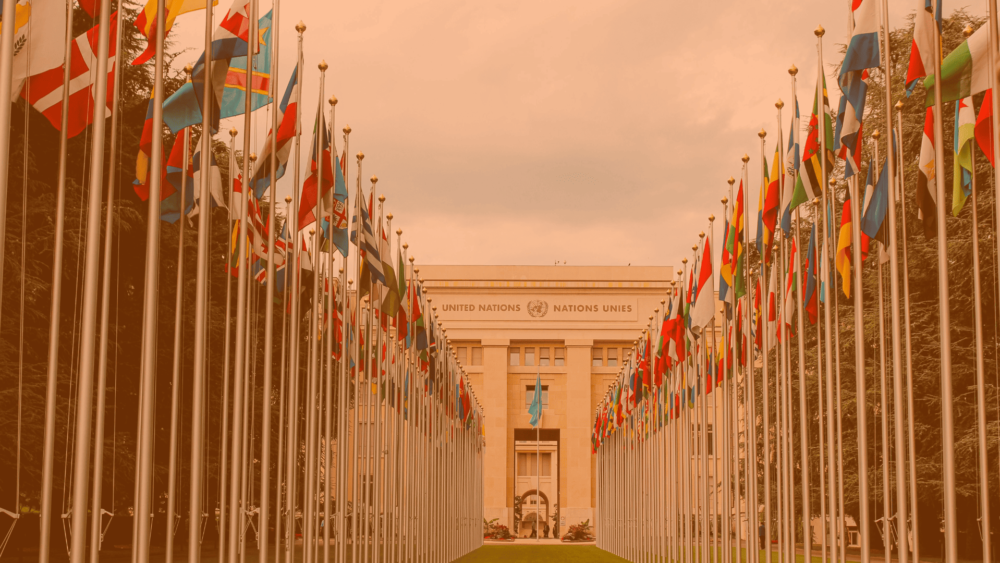
Founded in 1945, the United Nations maintains relevance 80 years on, as its core values reflect simple human decency. The UN has endeavoured to play a leading role in saving lives, preventing wars, advancing equality, promoting human rights, establishing fundamental personal freedoms, and fostering social, health, and economic development throughout the world.
An inspiring example of this can be seen in the work of UNRWA. This UN organisation has been much in the news recently due to the Israeli-imposed legal ban on its humanitarian operations in Palestine. This follows many years of demonising UNRWA by the Israeli government, supported by the United States. Despite the ban and the destruction of their facilities for providing humanitarian aid – alongside the tragic loss of staff – the people of UNRWA remain determined to persist.
They believe the purpose of humanitarian action is to protect people in need, ensure access to food, healthcare, and education, and secure the conditions necessary to live in dignity. Over the years, their programmes have adopted strategies to foster resilience, empowerment, and social inclusion, all informed by a cooperative ethos. They resolutely refuse to abandon this mission – especially when it is needed now more than ever.
Despite a lack of significant funding and facing political obstacles, the UN has established itself as, and remains, the universal global organisation. With 193 member states, the UN serves as the key forum for international cooperation. Its foundational document, the Universal Declaration of Human Rights, was written collaboratively, adopted democratically, and clearly outlines the rights and freedoms of all human beings. It remains a cornerstone of decent, democratic, and anti-discriminatory societies.
Article 23 of the Declaration affirms that:
- Everyone has the right to work, to free choice of employment, to just and favourable conditions of work, and to protection against unemployment.
- Everyone, without any discrimination, has the right to equal pay for equal work.
- Everyone who works has the right to just and favourable remuneration ensuring for themselves and their family an existence worthy of human dignity, and supplemented, if necessary, by other means of social protection.
Today, the realisation of these rights is becoming increasingly difficult due to austerity-driven government policies and the extractive practices of oligarchic corporations. This has led more people to seek alternatives that end exploitation and foster cooperation.
No other international political movement aligns more closely with the UN than DiEM25 – a fact that we, as members of DiEM25, should highlight with pride and commitment. The six core pillars of the DiEM25 vision for a more democratic and caring world – Democratic Europe; Ecological & Social Europe; Transparent Europe; Open Europe; Technologically Sovereign Europe; Peaceful Europe – could be seen as pillars built upon the platform of the Universal Declaration of Human Rights.
In its 80th anniversary year, the UN has declared 2025 the International Year of Cooperatives, in recognition of the vision that cooperatives can help build a better world. The UN understands, through experience, that cooperative workplaces are essential for reducing inequality, alleviating poverty through sustainable development, enhancing ecological responsibility, and fostering inclusive, democratic societies through the principle of ‘one member, one vote’.
When UN member states adopted the 2030 Agenda for Sustainable Development in 2015, they recognised cooperatives as “important partners” in achieving the Sustainable Development Goals (SDGs). Cooperatives promote democracy, raise incomes, foster social inclusion, and support environmental care. The International Co-operative Alliance (ICA) actively supports this agenda, especially across the Asia-Pacific region, where cooperatives contribute to SDG implementation across sectors including agriculture, banking, consumer services, healthcare, and employment.
The UN’s Cooperatives for a Better World programme in 2025 aims to showcase the global success of the cooperative movement, which now includes over 1 billion members worldwide. It will also advocate for supportive policy reforms and highlight how different nations have adopted laws favouring cooperatives. At the same time, it will raise awareness of the struggles many co-ops face, such as restrictions on investment and systemic bias from institutions that protect multinational corporate interests – interests that see the cooperative model as a serious threat to their exploitative dominance.
DiEM25 echoes the UN’s belief in a cooperative world. Our own Green New Deal for Europe (GNDE) Jobs policy centres on the principle of cooperative democratic workplaces. This policy offers a transformative pathway towards the change urgently needed for a better, fairer world.
Do you want to be informed of DiEM25's actions? Sign up here