

The NATO Summit in late June capped a rollicking two weeks in world affairs — Israel preemptively assassinated Iran’s nuclear negotiating team, Iran retaliated with missile strikes across Israel, and the United States conducted airstrikes on suspected Iranian nuclear sites.
While the summit was expected to be dramatic — given the perceived animus of the White House toward the military alliance — takeaways from the conference show Washington and NATO members, particularly Secretary General Mark Rutte, more aligned than ever.
Iran and Israel
The summit was dominated by conversations around the US-led military action and a tenuous ceasefire between Iran and Israel.
This shaky peace gave president Donald Trump added leverage heading into the gathering. At the G7 summit in Canada earlier in June, Trump left early to manage the unfolding Middle East crisis. When French president Emmanuel Macron suggested Trump’s departure was to negotiate a ceasefire, Trump snapped back that he was working on something “much bigger.”
That “something bigger” turned out to be US airstrikes on Iranian nuclear facilities.
The bombing campaign came even as European leaders were meeting with Iran’s top diplomat, Abbas Araghchi, to restart negotiations on the country’s nuclear program. In a symbolic move, they held talks at the same Vienna hotel where the 2015 Iran nuclear deal was signed.
But both sides seemed to acknowledge Washington’s outsize role in shaping the outcome. Reports described Europe’s talks with Araghchi as offering “hope” and “follow-up meetings” — but “no breakthrough.” As if sensing the futility, Trump remarked: “Iran wants to talk to me — not Europe.”
NATO chief Mark Rutte echoed that sentiment, praising Washington’s decision to act unilaterally, calling the US strikes “extremely impressive.” He also commended Trump’s role in negotiating the ceasefire, adding that sometimes, “Daddy has to use strong language.”
Ukraine
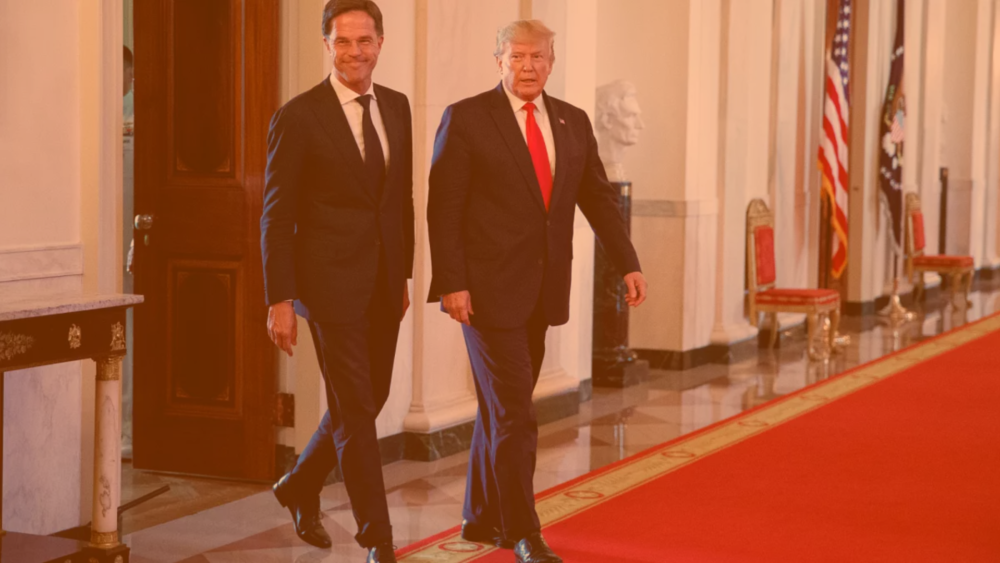
This alignment — if not outright affection — between Trump and Rutte shouldn’t come as a surprise. Rutte, known in diplomatic circles as the “Trump whisperer,” met with Trump at the White House in March. The meeting saw the two leaders not only praise each other but outline a “reinvigorated” NATO that closely aligned with the US president’s view of world affairs.
The June summit showed this new vision also includes a developing plan for Ukraine.
While the war didn’t dominate headlines like in previous summits, Ukrainian president Volodymyr Zelensky scored a win. In a 50-minute private meeting, he earned something long withheld by Trump: praise. “He couldn’t have been nicer,” Trump told reporters.
That charm offensive may have paid off. When asked during a Q&A about sending US-made Patriot missiles to Ukraine, Trump said: “Ukraine wants them… and we’re going to see if we can make some available.”
For a country that’s faced an on-again, off-again supply of Western arms since Russia’s 2022 invasion, this could mark a major reversal. Military aid from the US had been largely frozen since the start of Trump’s second term — and Europe, despite rhetorical unity, has struggled to fill the gap.
Rutte, who has urged NATO member states to boost military contributions by invoking the specter of further Russian aggression, put it bluntly during a speech in the UK: “You can fund the NHS — but you better learn to speak Russian.”
A new NATO – but whose?
The growing alignment between Rutte and Trump appears to come at a price: a NATO more willing to follow Washington’s lead, even if it means embracing hard power over diplomacy.
Rutte seems determined to have the US. on his side — even if that requires endorsing unilateral strikes, aggressive posturing, and vast increases in defense budgets. The summit’s final communiqué formalized this new path, with member nations committing to the Trump-Rutte goal of allocating 5% of their GDP to defense spending.
Rutte himself credited Trump for the breakthrough. The US president posted a text message from the NATO chief, in which Rutte said Europe would “pay in a big way” for the alliance — and that this was Trump’s “win.”
In what looked like a reciprocal gesture, Trump re-committed to Article 5, the alliance’s cornerstone of collective defense, saying he believed NATO was “not a rip-off” and that member state leaders “love their countries.”
But as the world looks to a dramatically militarized NATO, the question arises: is the goal of this Trump- and Rutte-led alliance still defense?
Do you want to be informed of DiEM25's actions? Sign up here