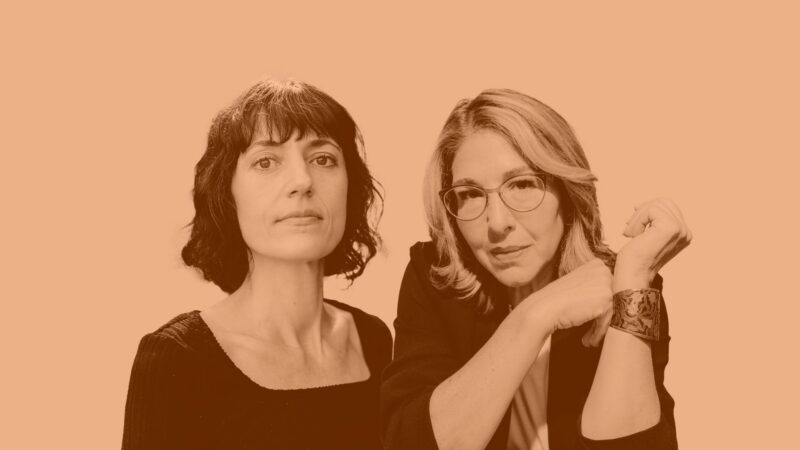


In a DiEM25 livestream hosted by Mehran Khalili, Yanis Varoufakis and political commentator Arnaud Bertrand analysed the recent US invasion of Venezuela and what it signals about the direction of global politics. Their discussion ranged from empire and international law to Europe’s collapse as a political actor, China’s strategic choices, and the dangers of externally driven “liberation” narratives.
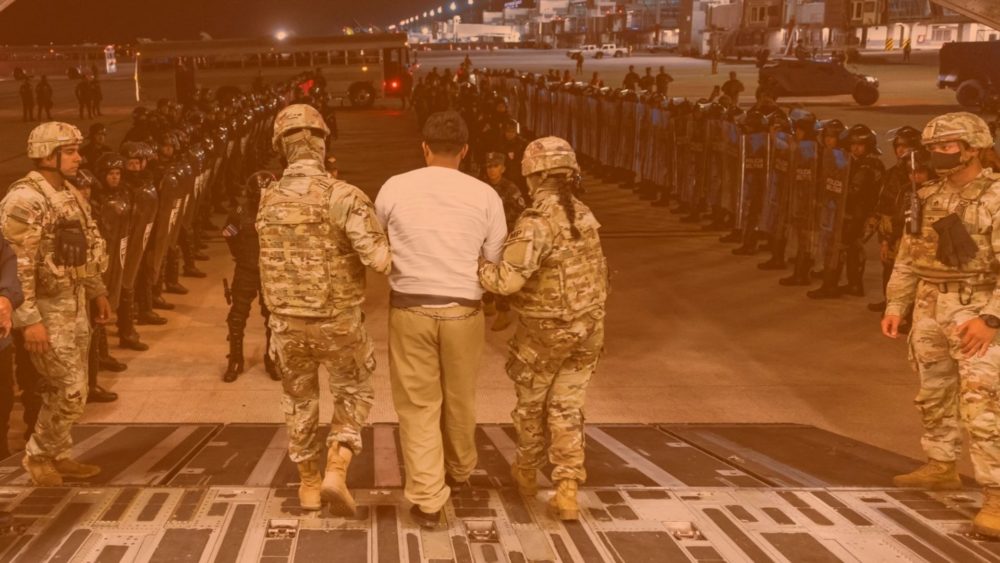
The starting point was Washington’s decision to carry out a military operation inside Venezuela, abduct President Nicolás Maduro, and openly declare its intention to oversee Venezuela’s political future and manage its oil resources. While the US framed the operation as law enforcement, both speakers argued it represented something far starker: the abandonment of even rhetorical restraint.
As Arnaud Bertrand put it, what distinguishes this intervention from earlier US actions in Latin America is its “nakedly coercive, aggressive and extractive” nature.
“There is no pretence at all of serving some greater good, democracy or human rights. Trump has openly said this is about extracting resources, taking over Venezuela’s oil and wealth. They’re not even really trying to do regime change.”
For Bertrand, this matters because hypocrisy itself once acted as a constraint.
“When you are hypocritical, it means you still understand that what you are doing is wrong. But when you are comfortable saying this is about theft and extraction, it means there is no virtue left.”
He linked this shift to US weakness rather than strength. The Trump administration’s own National Security Strategy admits that global hegemony is no longer possible. What is emerging instead is a retrenchment into the Western Hemisphere – disastrous for Latin America, but also a sign that unipolarity is over.
Yanis Varoufakis agreed that what we are witnessing is “weakness in action”, placing it in a longer historical arc. He compared the current moment to the early 1970s, when the collapse of the Bretton Woods system forced the US to choose between losing its hegemony or reshaping the global system around the dollar.
“After 2008, capitalism effectively froze. Central banks flooded the system with money while austerity crushed societies. Now we are in a third phase.”
In this new phase, Varoufakis argued, US military dominance has eroded, while the technological conditions of warfare increasingly favour defence over invasion.
“Trump is bullying everyone, but American military capacity has declined. Cheap drones have replaced expensive aircraft carriers. The material conditions favour peace — though peace is not guaranteed.”
This has led Trump to seek ad-hoc accommodations with China and Russia, not out of goodwill but necessity. Yet Varoufakis warned that the greatest danger lies not abroad but within:
“Trump has promised his base a better life and is not delivering. A backlash inside the MAGA movement could produce something even more unstable.”
Both speakers were scathing about Europe’s response. Varoufakis described the continent as “finished – industrially, institutionally, morally”, pointing to European leaders’ refusal to even name the US action in Venezuela as illegal.
“The Europeans can’t bring themselves to condemn a blatant violation of sovereignty. All they say is: please don’t do this to Greenland.”
Bertrand concurred, warning that Europe now risks becoming a “blood bag” for declining US power – still strong enough to coerce weaker allies and regions, even as its global position erodes.
On international law, Varoufakis was blunt:
“It is in tatters. But it was always aspirational.”
Yet he argued that aspirational law still matters, especially for countries emerging from colonialism.
“It gives them a place to go – to the ICJ, the UN – to hone moral, legal and political arguments. That is how change begins.”
The livestream closed with Iran. Both speakers rejected the false binary that forces people to choose between supporting an oppressive regime or backing Western intervention. Varoufakis drew on personal experience of Iran under the Shah to make the point clear:
“We will never support a theocratic regime that tortures, imprisons and enforces gender apartheid. But the US and Europe are the last who have any right to lecture Iranians. Leave the Iranian people alone.”
The message from the discussion was consistent: empire dressed up as “order” produces neither justice nor stability. In a world where rules are eroding and force is increasingly explicit, non-alignment, solidarity with peoples rather than powers, and organised democratic resistance remain essential.
Do you want to be informed of DiEM25's actions? Sign up here