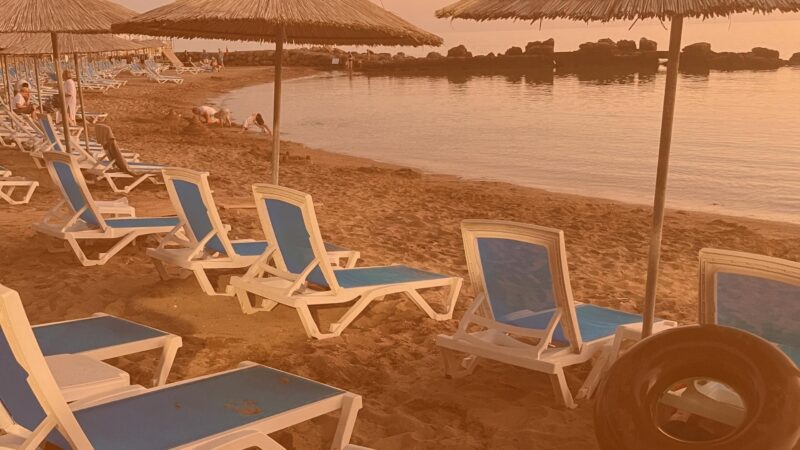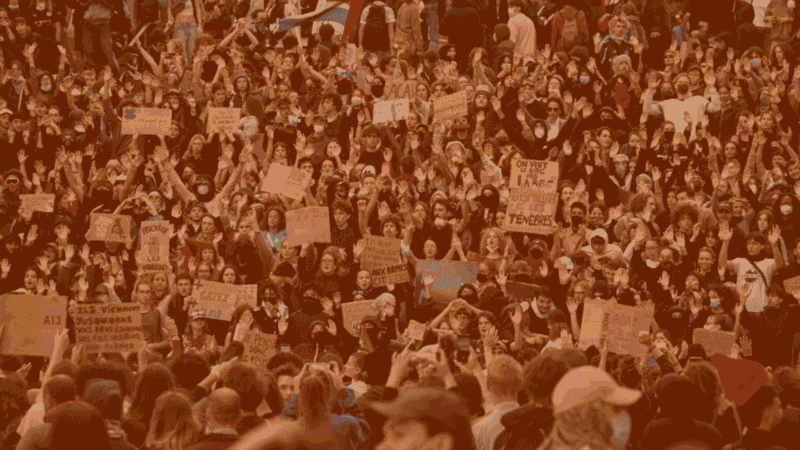


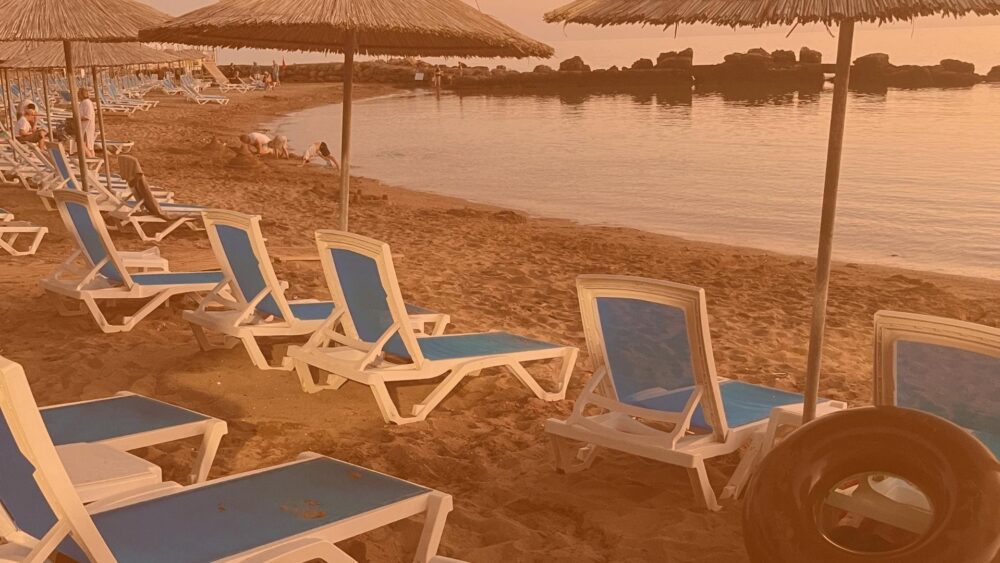
An all-inclusive holiday in Turkey offers an unexpected glimpse of how easily ordinary Europeans and Russians can coexist when removed from the politics of confrontation.
Going on holiday to an all-inclusive resort has never been my cup of tea. My wife and I always tried to avoid them. However, as a man in his late forties and the father of two very active children, aged eight and six, who demand non-stop stimulation, I eventually gave in. With only a one-week school break to work with, we packed our bags and headed to Alanya, Turkey.
I am Mexican and have been living on the other side of the Atlantic for nearly 15 years, first in the UK and then in Estonia, my wife’s country, since 2017. I’ve witnessed many changes in Europe during that time. Sadly, not all of them for the better, although I remain hopeful.
Living in a country next to Russia sometimes feels like living next to a black hole. I am only a few hours from the border, yet the blackout of contact and exchange that followed Russia’s invasion of Ukraine makes it feel as though Russia were on the other side of the world. I would even dare to say that it is easier to encounter Russian culture and people in Mexico City than where I currently live. Estonia also has a history of ethnic division, and my wife is an ethnic Estonian, so this is not an abstract issue for our family.
Russia has become an ever-present ghost in European political discourse. Over recent weeks, the continent has experienced some of the most belligerent rhetoric since the beginning of the war, accompanied by allegations of hybrid warfare and warnings about possible escalation. In Estonia, we had a national drone-alarm test, while my children were taught at school where to hide in the event of an attack. They asked me what we would do if that scenario became reality. After speaking with my wife, I had to be frank: we might have to leave the country indefinitely, our lives would change, and they needed to be prepared. It was a very sad conversation to have with two young children.
It is not my intention here to dissect the causes of this devastating conflict, whose most terrible consequences have been borne by ordinary people, particularly Ukrainians. Nevertheless, one argument I have repeatedly heard since Russia’s invasion is that the West must continue supporting Ukraine’s war effort, otherwise our way of life will be lost. What often gets overlooked in this argument is the human cost of prolonging a war, and the extent to which the lives of ordinary Ukrainians become secondary to the geopolitical calculations of others. Those advocating an open-ended military response rarely seem to contemplate what it means for the people who actually have to fight and die.
Against this backdrop, imagine my surprise when I found myself on holiday in a place where the dominant nationalities among the guests at our all-inclusive Turkish hotel were British, German and, yes, Russian.
They, like all the other guests, including my family, seemed to have far more in common than differences, regardless of which side of the geopolitical divide their countries happened to occupy. Most were working-class people trying to escape bad weather and enjoy an annual family holiday, an increasingly expensive luxury as household bills and the cost of living continue to rise. British, German and Russian guests, alongside people from other European countries, seemed to sing from the same songbook as they complained about the food, whether too plain or too exotic, or the rather tasteless fizzy and alcoholic drinks, of which nobody seemed able to get enough.
To the overworked and visibly tired local staff, we probably all looked pretty much the same: a relatively privileged bunch of holidaymakers, whose geopolitical differences seemed to disappear in this temporary paradise of family entertainment.
At the hotel’s restaurants and bars, guests from countries supposedly on opposing sides of the conflict mixed without difficulty. They joined the same yoga and Latin dance sessions, took part in darts competitions and played volleyball together, sometimes on the same team, cheering one another on. At night, they danced to ABBA and Gloria Gaynor, reggaeton or, for a more local flavour, Tarkan’s Şımarık. Earlier in the day, our children had already created their own melting pot at the mini-disco, dancing to K-pop without the slightest concern for national boundaries.
Even the displays of patriotism tattooed on some of the more hypermasculine guests, featuring Yuri Gagarin, Queen Elizabeth II or the German slogan Eher Stolz (Rather proud), did little to disrupt the general atmosphere. Exhausted or hungover parents still tried to please their children by going down the scariest waterslides several times or queuing up to get them quantities of pizza and hamburgers that would be unacceptable, and perhaps unaffordable, back home.
This is the Alanya connection: a seasonal, pan-European opportunity to escape the political narratives of confrontation and coexist in a bubble for a few days. Here, ordinary people from countries whose governments are increasingly portrayed as adversaries can share meals, dance, play sports and worry about exactly the same things as everyone else: their children, their finances and getting through another year.
Of course, a holiday resort cannot erase the realities of war, nor does getting along at a hotel resolve the political and historical differences between nations. But perhaps that is precisely why the experience is worth reflecting on. If people can so easily find common ground when they meet face to face, why are we so relentlessly encouraged to believe that those on the other side are irredeemable enemies?
The answer has something to do with the interests of those who benefit from division, militarisation and permanent confrontation. Ordinary people have little to gain from being taught to fear one another, and everything to lose when political leaders decide that their lives must be sacrificed in the name of national or geopolitical interests.
Our children danced together in Alanya without needing anyone to explain which countries were friends and which were enemies. Perhaps we should pay more attention to that simple lesson before returning home to the endless stream of messages telling us otherwise.
Gabriel Ceballos is the DiEM25 Peace Thematic Collective Coordinator.
Do you want to be informed of DiEM25's actions? Sign up here