

Economic impasse, European deadlock, and double standards: the German government is running out of answers and allies.
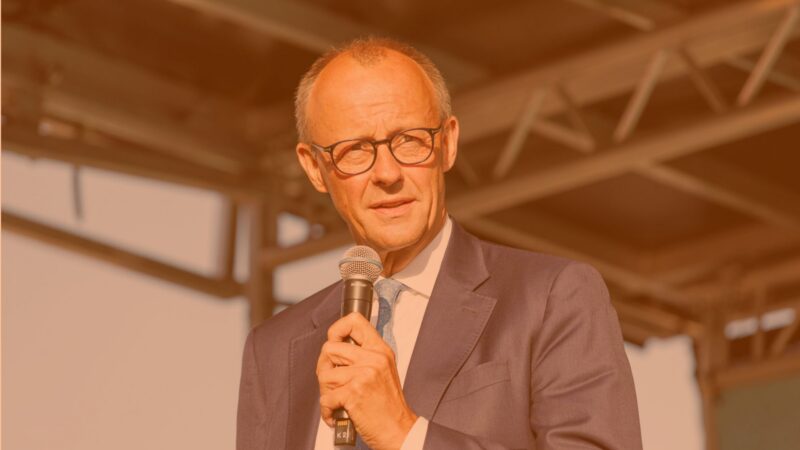
Eighteen months after being elected by the Bundestag, Friedrich Merz has done little to dispel the doubts and public dissatisfaction that surrounded his arrival in office. Unable to deliver on the promises that brought him to power or convince the country that meaningful change is within reach, the German Chancellor is under serious scrutiny, both at home and abroad. His declining popularity reflects a growing sense of disillusionment, fuelled by economic uncertainty, concerns over national security and a weakening sense of political direction.
Rather than offering a graceful, self-aware reckoning with his governing shortcomings, Merz appears to be staging a silent yet unmistakable freefall. An anti-climactic performance of the “dying swan”, with its prima ballerina paradoxically far from the spotlight, overshadowed by his own inconsistencies, conspicuous lack of charisma, and the fragmented constellation of opposition forces. The black-red coalition with the SPD has, in many respects, begun rehearsing its own inevitable ending. The swan’s “last dance” is a political conclusion that many have already made peace with, even before the curtain falls.
Caught between the tangible threat posed by the AfD, the CDU’s latest electoral debacle in Berlin, and a detachment from political reality that the Bundeskanzler seems unwilling to address, a government that never quite took flight is now in a vertiginous descent. Its potential collapse reflects the normalization of institutional instability in Germany.
When borrowed time runs out
Merz’s grand entrance onto the political stage revolved around a bold proposition: Germany needed an economic comeback, and the CDU was the party deemed capable of delivering it. The March 2025 fiscal reform, opening the door to a historic relaxation of Germany’s debt rules, exposed the government’s priorities. Defence and security spending exceeding 1% of GDP was exempted from the debt brake, while a €500 billion infrastructure fund was allocated to address years of underinvestment. The contrast is striking: the ruling coalition has been considerably more devoted to creating fiscal space for rearmament than to translating its infrastructure commitments into tangible improvements to everyday life. Add to this the July 2026 reform package proposals on pensions, income tax and the controversial move to abolish telephone sick notes, and the verdict becomes evident. According to the latest ARD-DeutschlandTrend survey, only 12% of Germans are satisfied with the Chancellor’s performance, capturing a government detached from the social realities behind its economic promises.
At the European level, the pattern is similar: ambition at the announcement, deadlock at the execution. Eager to establish Germany’s central role in the EU, revive the Franco-German partnership, and push for a more strategically autonomous Europe, Merz has found the choreography of European leadership harder to master than its rhetoric. The battle over the EU’s next long-term budget illustrates this contradiction particularly well. While Brussels envisages a budget of approximately €2 trillion for 2028-2034 to strengthen Europe’s competitiveness, security and strategic autonomy, Merz has called for cuts amounting to hundreds of billions, firmly rejecting additional common borrowing. The Chancellor seems more comfortable defending national fiscal orthodoxy than embracing the collective financial ambition required to turn European sovereignty into reality. Ukraine remains one front where Germany’s engagement has translated into substantial action. Berlin has become Kyiv’s largest European supporter, and that should not be dismissed. Nevertheless, the government’s approach to Ukraine raises a broader question: what exactly are the principles underpinning Germany’s international posture, and how consistently are they applied?
Palestine and the broader Middle East make that question unavoidable. After temporarily suspending authorizations for military equipment exports to be used in the Gaza Strip in August 2025, the government lifted the restrictions in November, appealing to the stabilization of the ceasefire. The language of international law, civilian protection, and the defence of sovereignty is unequivocal in one context, but considerably more constrained in another. Evidently, the obligations of dogmatic Staatsräson continue to set the limits of Germany’s humanitarian sensitivity. The moral austerity now comes with an invoice attached.
Having pledged that Germany would regain its economic strength, reclaim its European leadership and speak with renewed authority on the international stage, Merz may still believe he is sticking to the script of his solo act. The country, however, seems unconvinced and ready for an anti-climactic grand finale.
The double threat and politics of impasse
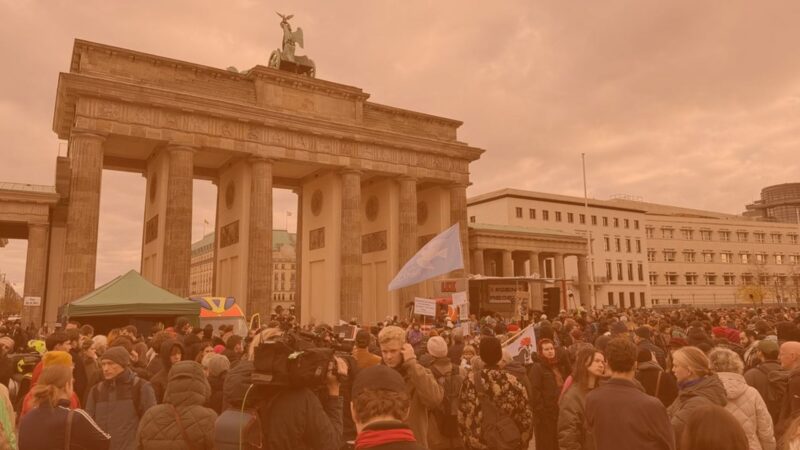
The latest electoral results have become difficult for the Bundeskanzler to ignore. In September’s round of state elections, far-right AfD secured a staggering 43.8% in Saxony-Anhalt and 38.2% in Mecklenburg-Western Pomerania, where the CDU even failed to reach the five-percent threshold and vanished from the state parliament. Berlin offered its own manifestation of public discontent: democratic socialist Die Linke emerged as the capital’s largest party, surging to 25.7% while the AfD also made significant gains, reaching 16.3%. The CDU fell to 18.8%, while its federal coalition partner SPD is negotiating with Die Linke and the Greens, leaving the CDU out of the prospective Berlin government.
The two disruptive forces could not be more ideologically distant. The Musk-endorsed, MAGA-aligned AfD exploits this disaffection through nationalism and exclusion, offering the convenient slogan of “Remigration” as an answer to Germany’s complex social and economic problems. Die Linke’s leading candidate in Berlin Elif Eralp, daughter of Turkish political exiles, built her campaign around social inequality, integration and affordable housing. On Ukraine, both parties oppose arms deliveries: the AfD invokes national interest and calls for lifting sanctions on Russia and restoring energy ties, while Die Linke’s opposition stems from its anti-militarist position. On Palestine, the government’s actions are once again strongly criticized from both fronts: Die Linke firmly condemned Israel’s genocidal assault on Gaza, a position that remains highly contentious within mainstream German politics. The AfD, which rejects accusations of neo-Nazi sympathies and remains under scrutiny by Germany’s domestic intelligence agency as a suspected right-wing extremist organisation, rejects supplying military equipment for foreign wars, even as it professes solidarity with Israel. Despite their incompatibilities, their electoral advances expose how many voters no longer feel represented by the established parties. Different answers to the same political vacuum that Merz’s coalition is incapable of addressing.
Within this polarisation, the Chancellor is running out of room to manoeuvre. His coalition with the SPD remains burdened by internal disagreements, while the Brandmauer against the AfD continues to erode. Meanwhile, the CDU/CSU leadership appears more concerned with attacking Die Linke over accusations of anti-Semitism than confronting the nationwide political discontent. With no new allies in sight and old partners turning their backs, another government crisis and premature elections can no longer be ruled out.
Merz may still be determined to hold the stage, but the ballet is coming to an end. The dying swan is approaching its final act, and this time, there may be no applause.
Do you want to be informed of DiEM25's actions? Sign up here