


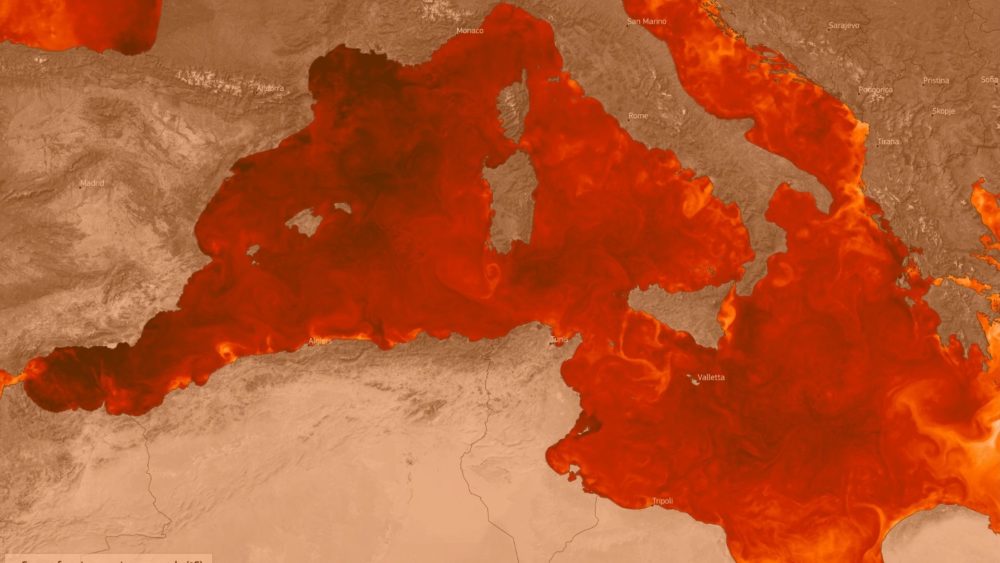
Across Europe, the toxic combination of extreme weather and inequality is resulting in tens of thousands of unnecessary deaths – and politicians are too busy cashing cheques from big oil to respond.
She rations her fan for fear of the electricity bill, and reports she is sleeping two hours a night while trying to care for her family. Her son’s school has closed – one of 1,800 that has shut its doors after temperatures reached 40 degrees Celsius. Angelique Chrisafis reports from Grigny, one of the poorest towns in greater Paris, where 60-year-old Aboubakar, wept because his flat was like a “furnance” and he couldn’t afford to buy a fan.
This week, France recorded some of its highest temperatures on record. More than 44 million people were placed on the country’s highest red heat alert. Daytime temperatures surpassed 40 degrees celsius in some places, and nights were rarely cool enough for people to sleep. This is what happens when climate breakdown meets a housing stock that is simply not prepared for extreme temperature – and the poorest are paying the price.
Half of all French homes have insufficient protection from heat – and some 66% of French people struggle to tolerate the temperature indoors in summer. Paris – densely packed, poorly insulated – carries the highest heatwave mortality risk of any capital in Europe. And rather than retrofit the housing that traps the heat, the French government has been “criticised for a lack of preparation and for cutting funding for projects designed to adapt infrastructure to the climate crisis.”
Low-income urban households suffer the worst effects, as cities tend to run hotter than the surrounding areas, and high-density housing traps that heat inside – creating “furnaces” that aren’t fit for habitation. Under the shade of a tree, temperatures can fall a few degrees, but green space is lacking in many cities. And while affluent workers can travel to offices with air conditioning, low income workers must travel by overheated bus to overheated workplaces.
The demands of the rich inflict even more suffering on the poor. As people turn on the AC, power usage increases. At the same time, the water that cools France’s nuclear reactors runs too hot to function, meaning power output falls. The result is power cuts that kill the fans that people depend on. But the wealthy have little sympathy for poorer households struggling to cope with the heat. Some wealthy towns outside of Paris have even barred outsiders from using their pools.
This is the shape of the century to come. We all feel the heat, but its impacts do not fall equally. Those of us who can afford to shield ourselves from it, take time off work, and jump in the ocean experience a heat wave as a mild inconvenience. But for those who can’t, it’s a question of life and death.
This article was originally written for the Grace Blakeley Substack channel and has been re-published with permission.
Do you want to be informed of DiEM25's actions? Sign up here