


Hungary has rejected Orbán, but without a strong left, right-wing narratives continue to dominate the country’s future
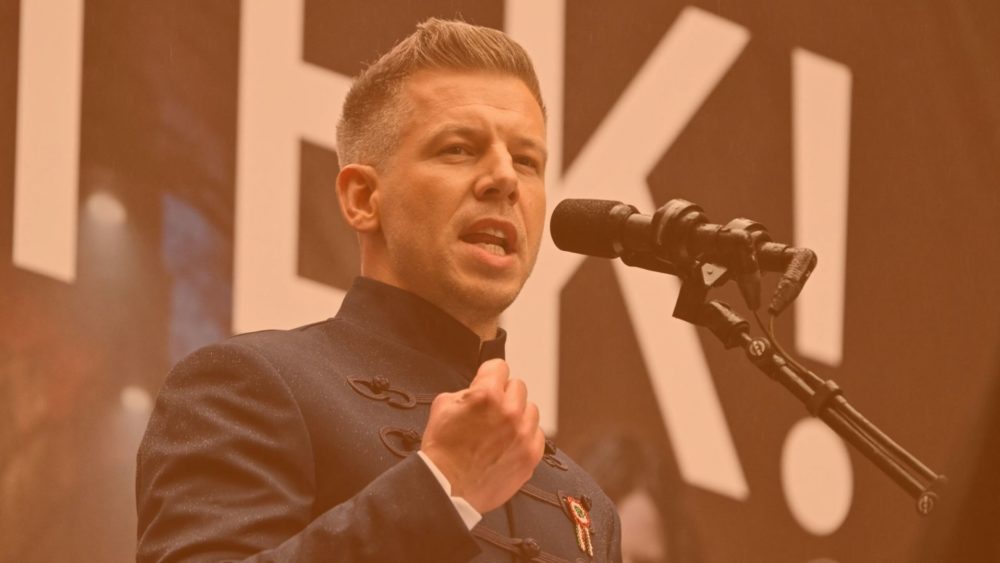
Viktor Orbán, the Hungarian far-right autocrat, has been ousted by the election results. That is great news. Or is it? Péter Magyar, his successor, promises the reunification of the “nation”, and many Hungarians say they are happy to finally be proud again. While the internet was flooded with images of relieved young people celebrating the end of the autocratic Fidesz party’s long rule, there are also many concerns about their successors, as Hungarian billionaires clinked their glasses behind the iron railings of the VIP section at the celebration party.
Should the European left welcome this direction, or should it instead raise new concerns about the state of European democracies? While there is still a month until the new government is formed, we can already draw significant conclusions from the campaign, the prime minister-elect’s victory speech, and his first international press conference in Budapest.
After his electoral success, Magyar began positioning himself as a guide for European politicians in a worrying way. His statement on new directions – namely that politicians should go among “the people” and “listen to what people really want” – will not sound new to anyone familiar with far-right populist movements. Furthermore, he refused to label the French far-right, anti-democratic National Rally and its voters as extremists, arguing instead that they are simply listening to “honest French people” who want “no dangers to their communities and European culture”.
He also stated that the relationship between Israel and Hungary is “special” and invited ICC-indicted Benjamin Netanyahu to Budapest. He speaks of national unity, labelling anyone who “divides the now unified Hungarians” in the future as deplorable historical criminals. In discussions with the European Union, he consistently refers to representing “Hungarian enterprises”, many of which are transnational.
Similarly, high-ranking corporate executives – such as István Kapitány (Shell) and Anita Orbán (Vodafone, Draslovka) – have emerged as leading candidates for ministerial positions, with their supposed technocratic excellence presented as a guarantee of change and prosperity, since “they have already proven their worth under market conditions”. Although Kapitány, the former regional director of Shell in South Africa in the 1990s, is associated with significant environmental damage on the continent, this is not the only concern. The growing presence of private-sector executives in government, and the myth that corporate “expertise” is the key to an “effective state”, should be alarming.
It was no secret that this challenge to Orbán was coming from the right. Magyar was partly successful because he managed to reclaim and reintroduce national symbols within the opposition to Orbán. This is something even far-right forces had failed to achieve since Orbán’s first term in power in 1998, during which Hungary’s national colours became closely associated with Fidesz. This helped restore a sense of national pride among a large part of the population who had been excluded from it for decades.
The other main reason behind TISZA’s landslide victory was how Magyar explained everyday experiences. He repeatedly denounced “Orbán and his mafia” for “stealing from the Hungarian people”, linking this to worsening living conditions. By pointing to potholes and failing education and healthcare systems, he drew contrasts with the luxurious lifestyles of elites close to Fidesz. At first glance, this may sound like a material critique of Orbán’s neoliberal conservatism.
However, a closer look shows that this narrative is rooted more in national pride than in material analysis. By using phrases such as “Hungary has become the poorest and most corrupt country in Europe”, Magyar framed corruption as something beneath a proud European nation. In doing so, he linked prosperity to “being European” and “sending the Russians home” – far from a structural critique of neoliberalism.
Besides TISZA and Fidesz, the only party to pass the parliamentary threshold was the far-right Mi Hazánk (Our Homeland) movement. Meanwhile, there are no clear signs of an emancipatory left capable of challenging transnational capitalism. Mi Hazánk campaigned with the help of a vigilante group called “Crime Hunters”, which has harassed alleged “criminals” – mainly Roma people – in deprived areas, accusing the justice system of complicity.
Their targets included people living in poor conditions, petty drug dealers, and other socially marginalised groups. The group records and uploads its actions online without consequence, attracting hundreds of thousands of followers. From personal experience, a significant portion of the population views their campaign sympathetically, believing that “someone is finally addressing real issues”.
In sum, this election was a contest between three right-wing narratives about Hungary’s past, present, and future. Magyar’s critique of Orbán was not rooted in material analysis, but in the idea that corruption had tarnished national pride. While the release of €20 billion in previously frozen EU funds may bring short-term economic improvement, the deeper structural inequalities of neoliberal capitalism remain unaddressed.
The fact that, in Hungary, only far-right narratives are addressing inequality and social breakdown is deeply concerning. The crises of transnational capitalism are producing widespread anxiety, which must be addressed by emancipatory political forces. Otherwise, the far right will continue to channel anger towards society’s most vulnerable, labelling them as “unwanted criminals”. I do not want to live in any country or Union where hatred towards the poor or minorities can be presented as the popular will.
Do you want to be informed of DiEM25's actions? Sign up here