

The last postcard from New York City shows that politics do not need to be ruled by fear
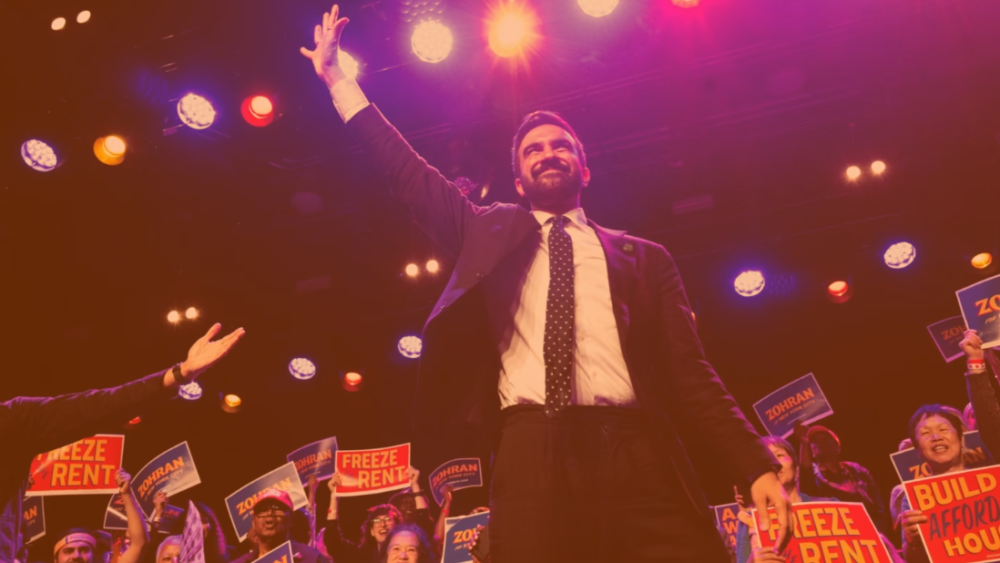
The city that never sleeps has once again kept the world awake. On November 4, New Yorkers went to the polls and sent a message echoing far beyond the five boroughs. Thirty-four-year-old Zohran Kwame Mamdani, a proud Muslim and socialist, secured more than a million votes to become mayor of New York City. While his term officially begins on January 1, there is reason to believe his influence is already being felt. The Democratic candidate’s success is neither accidental nor symbolic: it is rooted in undeniable charisma, expressed through a sharp communication strategy and an organic sense of belonging to the Big Apple’s multicultural fabric.
Through years of grassroots activism in Queens, Mamdani built his popularity around concrete issues such as housing, social justice, and economic inequality – causes once central to progressive politics but long displaced, if not entirely lost. His call to rethink the centralisation of wealth, power, and dignity ultimately set him apart from the other two contenders: former governor Andrew Cuomo, representing technocratic continuity, and Republican hard-line law-and-order enthusiast Curtis Sliwa.
Alongside the evident generational gap, what distinguished Mamdani was the optimistic attitude of someone who meets realpolitik with a smile: provocatively practising kindness toward both his local opponents and Washington, defying the status quo, and showing a willingness to roll up his sleeves to pursue change. In doing so, he gave citizens a tangible reason to believe in politics again, rather than simply fear it – a redistribution of hope in practice, making faith in the democratic project a shared, actionable commodity.
Reporting from overseas, Mamdani is widely perceived as a political unicorn. For Islamophobic conservatives, the city of 9/11 electing a Muslim with socialist views is proof of the West’s decline. For much of the European left, weighed down by its own sectarianism and elitism, imagining a leader under forty is radical; imagining one who inspires is borderline utopian. From such premises, one lesson already stands out: hope must return to the centre of politics, and progressives must learn not only to abandon a politics of fear, but to resist being abandoned to it.
Fighting disenchantment with optimism
The New York City election offers a rare alternative to the prevailing tendency of Western politics, defined by polarisation and distrust. Against the logic of offensiveness and the monetisation of fear framed as necessity, Mamdani’s greatest provocation lies in a complete inversion of the populist playbook. He preserves its proximity to the people without pushing resentment, and charges it emotionally without constructing an exploited “Other” to attack.
Bridging identity politics with minority empowerment rather than demonising opponents, the mayor-elect has, in his own way, shocked the world. Proposing real solutions instead of inventing fictional enemies and blaming them for the faults of the present can, even in 2025, still be a winning formula.
Domestically, Mamdani stands out as a breath of fresh air – the kind that begins as a light breeze but could eventually turn into a storm. His contrast with the other two candidates has made visible the stark differences between modes of political communication. Sliwa promised order; Cuomo promised expertise. But both depended on keeping New Yorkers anxious enough to listen. Both are products of a politics that relies on fear for legitimacy and actively weaponises it to further marginalise minority groups traditionally denied agency and representation – a model resembling Donald Trump’s MAGA agenda and fully aligned with Europe’s conservative supremacists.
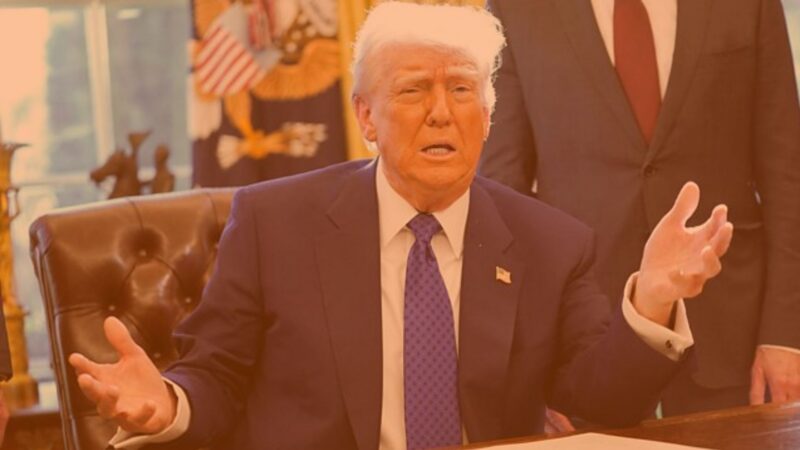
As predictable as ever, Trump could do nothing but hate Mamdani, twisting his religious and political beliefs into the creation of the perfect nemesis. But the many failed attempts to delegitimise the Democrat’s campaign only further highlighted the communicative abyss between the two. When the so-called “Muslim-Communist extremist” directly told him to “turn the volume up” while watching his speech after the election results, the president looked less like a master strategist and more like an elderly man stranded in his own cognitive fog.
No need to crown himself sovereign, no need to humiliate opponents by flying over them and throwing faeces: the young man made even the highly provocative, AI-influenced Trump-style communication look dusty and embarrassing. His “kill-them-with-kindness” tactic laid bare just how cringe, brutal, and offensive populist rhetoric has become.
Mamdani knows exactly who his political enemies are, yet he challenges them with concrete policy proposals: freezing rent contracts, offering free bus transportation, and taxing millionaires. Ideas over slogans. Violence has no place in his game plan – neither in words nor in body language. Fear is countered with hope, in a precise reimagining of the American Dream where an underdog can win it all without suppressing others. Turning optimism into a revolutionary act. A strategy that should be explored and implemented across the Atlantic as well, to combat widespread political disenchantment.
What this means for Europe
If Mamdani has taught us anything, it’s that hope must reclaim the centre of democratic life. His victory exposed a political class that has grown dependent on fear: manufacturing it, amplifying it, and offering cheap “solutions” to exhausted electorates. Throughout Europe, such addiction has spread like a political pandemic, with no vaccine in sight. In a present riddled with cascading uncertainties and a future full of question marks, parties of all stripes have surrendered to the same ritual: panicking the public instead of offering a vision of hope. A few snapshots make the trend clear.
In Germany, the government trembles at ongoing economic stagnation, and the prospect of war grows more vivid every day. The AfD terrifies the public with the spectre of Muslim radicalisation and uncontrolled immigration. In France, the far right takes advantage of Emmanuel Macron’s fragility and apprehension for his own political survival, turning each failing attempt to form a stable government into a crisis to manipulate. Italy offers its own theatre of fear too: Prime Minister Giorgia Meloni avoids the press, frightened of questions about the poor results of her superficial immigration policies. Meanwhile, the judiciary is attacked as a “politicised” enemy of the state, with an upcoming referendum threatening to further undermine its independence and set dangerous precedents for the rule of law. On the other side, the opposition is more alarmed by the re-emergence of fascist-leaning currents than engaged in proposing anything remotely constructive.
Emergency has become the default mode of governance; anxiety, the ruling method. Most leaders seem incapable of admitting it, let alone imagining beyond it. Yet real change demands vision: the conviction that societies can still move forward despite economic, social, and geopolitical pressures. Fear does scare people into the voting booth, but only hope can build anything worth keeping.
Mamdani has shown that there is a need for a redistribution of hope – something to believe in, not something to escape from. A statement of empowerment rather than intimidation.
European progressive movements should take note: young, bold, concrete, and communication-smart leadership is possible. And it is precisely what the left needs to reclaim its future. In a world shaped by panic, Mamdani reminds us that hope remains the most radical act of all.
Do you want to be informed of DiEM25's actions? Sign up here