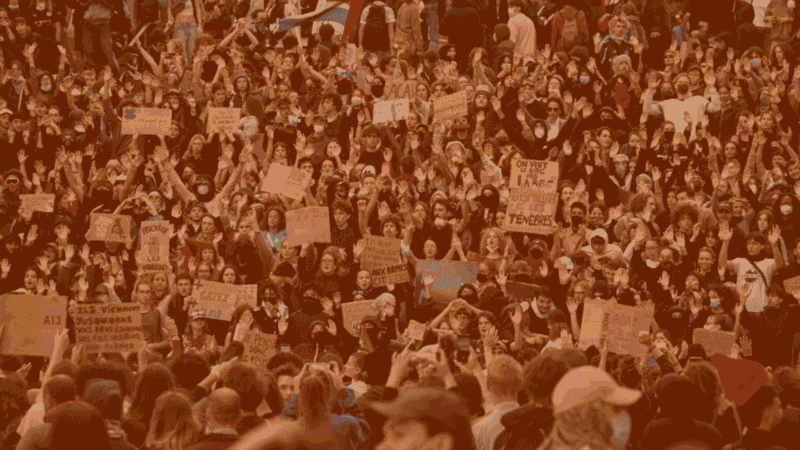


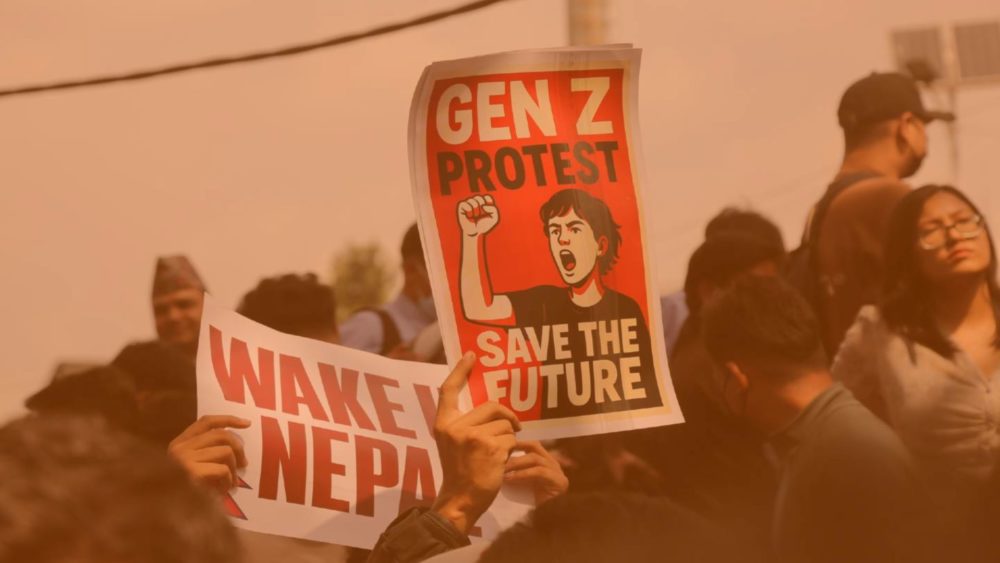
The streets of 2025 feel different. What began as scattered blow-ups over local failures – maternity ward tragedies, power and water cuts, grotesque perks for parliamentarians, a delivery driver’s death – has cohered into something larger: a global wave of youth-led unrest that commentators and participants alike increasingly call the “Gen Z protests”.
This is not mere branding. Across Asia, Africa, Europe, and beyond, young people born roughly between the mid-1990s and early-2010s have been visibly front and centre, turning everyday grievances into political moments that expose long-standing institutional decay.
Why call them “Gen Z” protests? Because the term signals more than age – it points to a shared political temperament and toolkit. Gen Z are digital natives for whom social media is not an accessory but the public square; they often distrust traditional parties and institutions; and they carry the reality of climate crises, economic precarity, and shrinking public services into their politics. In 2025, this cohort has shown a remarkable ability to transform daily indignities – a burned hospital wing in Morocco, weeks of blackout in Madagascar, a scandal over MPs’ allowances in Indonesia– into rapid, networked mobilisations that force governments to respond.
That digital fluency matters for two linked reasons. First, platforms from TikTok to Discord allow otherwise leaderless movements to coordinate, amplify local harms into international outrage, and sustain momentum without traditional gatekeepers. Second, online visibility reshapes the moral economy of protest: footage of preventable deaths or arbitrary arrests travels fast, raising the reputational costs of state repression and drawing in diaspora communities, NGOs, and journalists. The result is not a uniform revolution but a pattern: decentralised, fast, image-driven, and morally urgent.
Put bluntly: these uprisings are about dignity as much as ideology. They are not doctrinal revolts; they are responses to lived conditions and to the sense that the social contract has been broken. That is what makes them dangerous to entrenched elites and powerful as catalysts for change — and why, for those watching from elsewhere, 2025 feels less like isolated unrest and more like a youth awakening with real political consequences.
Why are the protests led by youth?
Across continents, the 2025 protests share a striking feature: they are led by young people. This is no coincidence. The youth are both the most affected by systemic failures and the least invested in defending entrenched power. In Madagascar, it was university students like Sarobidy Ramarimanana who carried jerrycans and lamps through Antananarivo, turning everyday struggles for water and electricity into powerful political symbols. In Nepal, high school and university students transformed the streets into a leaderless revolution, proving that coordinated action is possible even without a central figure.
Social media has become the nervous system of these movements. Platforms such as TikTok, Discord, and X/Twitter enable rapid communication, documentation of abuses, and real-time coordination. Nepali youth used a Discord channel to debate and vote on an interim prime minister, while Malagasy protesters livestreamed their marches to the world, forcing visibility on issues traditional media had ignored.
Even in Serbia, where protests have persisted for more than a year, young activists maintain momentum through social networks, sharing legal advice, coordinating demonstrations, and amplifying stories of injustice.
Youth-led movements also tend to retain public trust. Older generations may have grown cynical after decades of broken promises, but the young – visibly present, unaffiliated with political parties, and tied to daily hardships – evoke authenticity.
They are seen not as aspiring politicians but as people demanding dignity, fairness, and basic rights. Once the youth take to the streets, others often follow: mothers carrying jerrycans, freelancers, and office workers join in, transforming isolated grievances into broader societal pressure.
In short, youth lead because they can, because they must, and because their networks – digital and social – allow them to convert grievances into collective action faster and more visibly than any traditional political apparatus.
What do these protests have in common?
From the streets of Antananarivo to the squares of Kathmandu, young protesters share a remarkably similar set of demands. These are not ideological battles or partisan manoeuvres; they are demands for transparency, fairness, and the simple right to live with dignity.
1) Anti-corruption
Across continents, young protesters are rising against governments that have failed to serve their citizens. In Nepal, students mobilised after social media bans and corruption scandals. In Madagascar, Gen Z activists protested the state’s chronic failure to provide basic utilities. In Serbia, demonstrations against political corruption have continued for over a year. In Pakistan, youth are organising against nepotism and opaque governance, while Kenyan students and urban activists protest corruption affecting education and public services. Anti-corruption is often the spark that ignites collective action.
2) Inequality and access to basic needs
Inequality unites these movements in both urgent and symbolic ways. In Madagascar, protesters risked police violence just to fetch water and light lamps – basic necessities turned into tools of resistance. In Nepal, the destruction of government offices and media hubs reflected deeper frustrations with exclusion from political life. In Turkey, young people protest soaring living costs and the housing crisis; in Morocco and Indonesia, students demand better education and job opportunities. Even in Mongolia, environmental degradation and rural neglect have fuelled youth activism. Inequality, in these cases, is not abstract – it’s about survival and dignity.
3) Distrust of traditional leadership
These movements share a deep scepticism toward centralised authority. Nepali youth refused to appoint a leader, wary of past revolutions captured by opportunistic elites. In Madagascar, even after a military intervention, protesters demanded systemic reform, not symbolic resignations. Serbian demonstrators continue to press for accountability, not cosmetic political concessions. Similar patterns appear in Pakistan, Turkey, Kenya, Morocco, Indonesia, and Mongolia. The message is consistent: collective action matters more than charismatic figureheads.
4) Symbolic action and grassroots visibility
These movements rely on creative, symbolic strategies that amplify their message. Madagascar’s jerrycans and “jiro-kapoaka” lamps became viral icons. Nepali youth livestreamed their protests and coordinated on Discord. Serbian protesters have used performances and social media storytelling to sustain momentum. In Turkey, Pakistan, Morocco, and Indonesia, hashtags, murals, and street actions mobilise communities. Across these contexts, young people turn everyday objects and struggles into tools of resistance, showing that the language of protest transcends borders.
How are these issues tackled in Europe?
In Europe, young people are also challenging inequality and corruption, often through strikes and mass mobilisations rather than street clashes. In Italy, students and public sector workers have staged nationwide strikes for fair wages and better education. In France, youth-led climate and labour protests regularly bring cities like Paris and Lyon to a standstill.
In parts of Spain, protesters have occupied public squares to demand housing rights and transparent governance, echoing demands from Serbia, where demonstrators have continued for over a year against political corruption and eroding civic freedoms.
The methods may differ, but the underlying logic remains the same: visibility, solidarity, and collective action are essential tools for holding power to account. From Antananarivo to Kathmandu, Belgrade to Paris, young people are sending a shared message – injustice, inequality, and opaque governance will not be tolerated.
The change is ours to make
From Kathmandu to Antananarivo, Belgrade to Casablanca, young people are proving that collective courage can challenge entrenched power. They carry jerrycans, banners, and chants, insisting that survival, dignity, and fairness are non-negotiable. Social media and grassroots networks amplify their voices, demonstrating that leadership can emerge from the many, not the few.
Many of these protests and revolutions are still unfolding – awaiting new elections in Nepal, demanding elections in Serbia, testing a transitional government in Madagascar. It remains to be seen whether this global wave will bring lasting, systemic transformation or merely shift political fault lines.
But one truth is already clear: real change is built by those who refuse to accept injustice, who hold power accountable, and who refuse to remain silent. From European strikes to street protests in Asia and Africa, youth are reshaping how societies confront corruption and inequality.
Let these stories inspire action. If one generation can rise without a single leader and insist that systems serve the people, the next generation can take up the torch. History may be relentless, but it rewards those bold enough to insist that the world can be fairer, brighter, and more just – one act of courage at a time.
Do you want to be informed of DiEM25's actions? Sign up here