

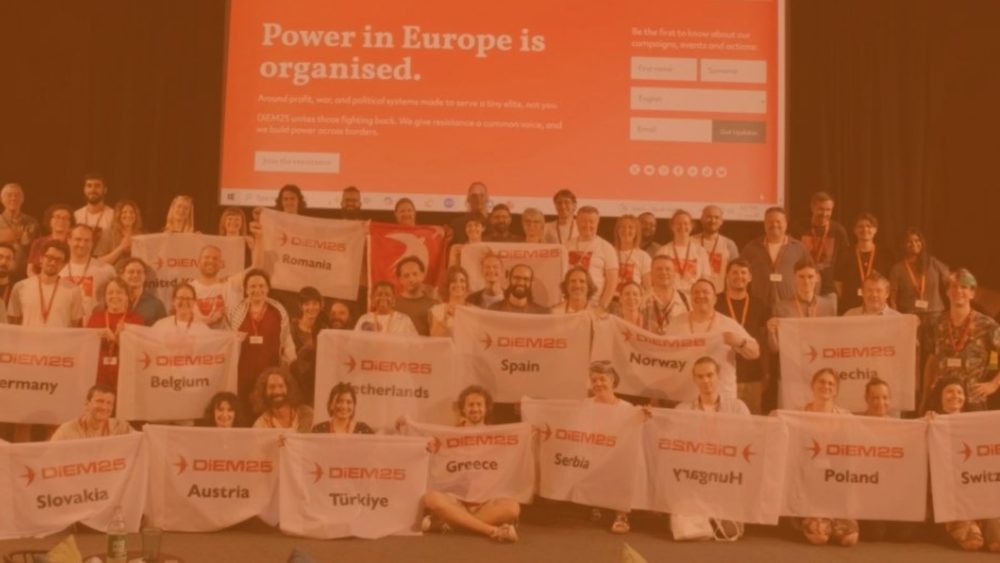
DiEM25 Academy 2026 in Prague was more than a weekend of workshops – it was a meeting point for members from across the world to learn, organise, debate, and reconnect in person. Over several days, participants explored how DiEM25, as a transnational political movement, can become more visible, more useful, and more firmly rooted in local realities. The diverse programme moved between practical trainings, political discussions, strategic reflection, and plenty of spontaneous chats and shared laughs. From the beginning, the guiding idea was clear: global analysis becomes truly powerful when it is translated into concrete local action.
The weekend began on Friday evening with an informal meet-and-greet in a beer garden. For many participants, whose DiEM25 work often happens online and across borders, meeting face to face was already a highlight that kicked off a weekend of political learning.
Saturday began with an onboarding and orientation session led by Ivana Nenadovic, main organiser of the event and member of the Coordinating Collective. The session situated the Academy within the broader work of DiEM25, advancing the notion of Europe beyond EU borders. Ivana introduced DiEM25’s foundations, Manifesto and Organising Principles, as well as the ways members can contribute: through thematic policy work, translations, articles, local initiatives, and collective decision-making. A central message shaped the rest of the programme: if members want DiEM25 to act, they must take initiative locally.
The following workshop, “Using Bits & Bytes to Grow DiEM25 at Home”, was led by Judith Meyer, DiEM25’s IT Coordinator. It focused on the digital infrastructure available to local groups. Participants learned how online tools can help activate members, increase visibility, and connect people who may already be sympathetic but not yet involved. Judith addressed two key challenges: many members are not part of an active local group, and many local activists are connected only loosely. The workshop showed how collective pages, event calendars, messaging tools, forums, petitions, crowdfunding, articles, and social media can lower the barrier to participation. It also made clear that digital tools are most useful when they lead people back into real-world encounters.
After a strengthening lunch, Julijana Zita, member of the Coordinating Collective, facilitated the “Lightning Round: Stories, Struggles and Mini Action Plans”. The session invited participants to turn their own local experiences into political starting points. Members reflected on injustices, institutions, companies, policies, and concrete situations in their cities. They asked who holds power, who is affected, what has already been tried, and what could realistically be achieved in three to six months. The session encouraged participants to move from broad concerns to focused local struggles. Instead of setting overwhelming goals, groups worked on small, tangible plans that could be tested after the Academy. This practical orientation gave the motto “Think globally, act locally” real meaning for DiEM25’s local work.
The Fishbowl session on “Soviet Legacies, Russian Power, and NATO Dependence”, led by Ivana Nenadovic, created space for a more complex conversation about Eastern Europe, Soviet heritage, and contemporary security politics. Participants discussed why people from former Eastern Bloc countries do not necessarily relate to anti-NATO or anti-EU positions, especially given their Soviet past, when fears of Russian aggression feel real and historically grounded. The conversation challenged simplified West-centric perspectives and asked how DiEM25 can speak honestly with people whose political experiences are shaped by Soviet domination, neoliberal betrayal, and the ongoing competition of imperialist powers. The session discussed strategies for building international solidarity through an open and equal dialogue, seeking to establish shared grievances and overcome them together with a joint agenda of non-alignment.
On Sunday, Kinza Saleem from DiEM25’s Comms Team led the workshop “Turning Stories into Campaigns”, which built directly on the previous day’s action plans. Participants explored what makes a campaign different from an isolated action: a campaign identifies harm, tells a story, names a target, builds pressure, and aims for a concrete shift in policy, public debate, institutional behaviour, or movement capacity. Kinza introduced a clear structure for campaign design, pinpointing the injustice, the bigger system behind it, the campaign goal, the target decision-maker, and several other crucial aspects. The workshop helped participants learn how to translate local stories into strategic interventions that others can understand, join, and amplify.
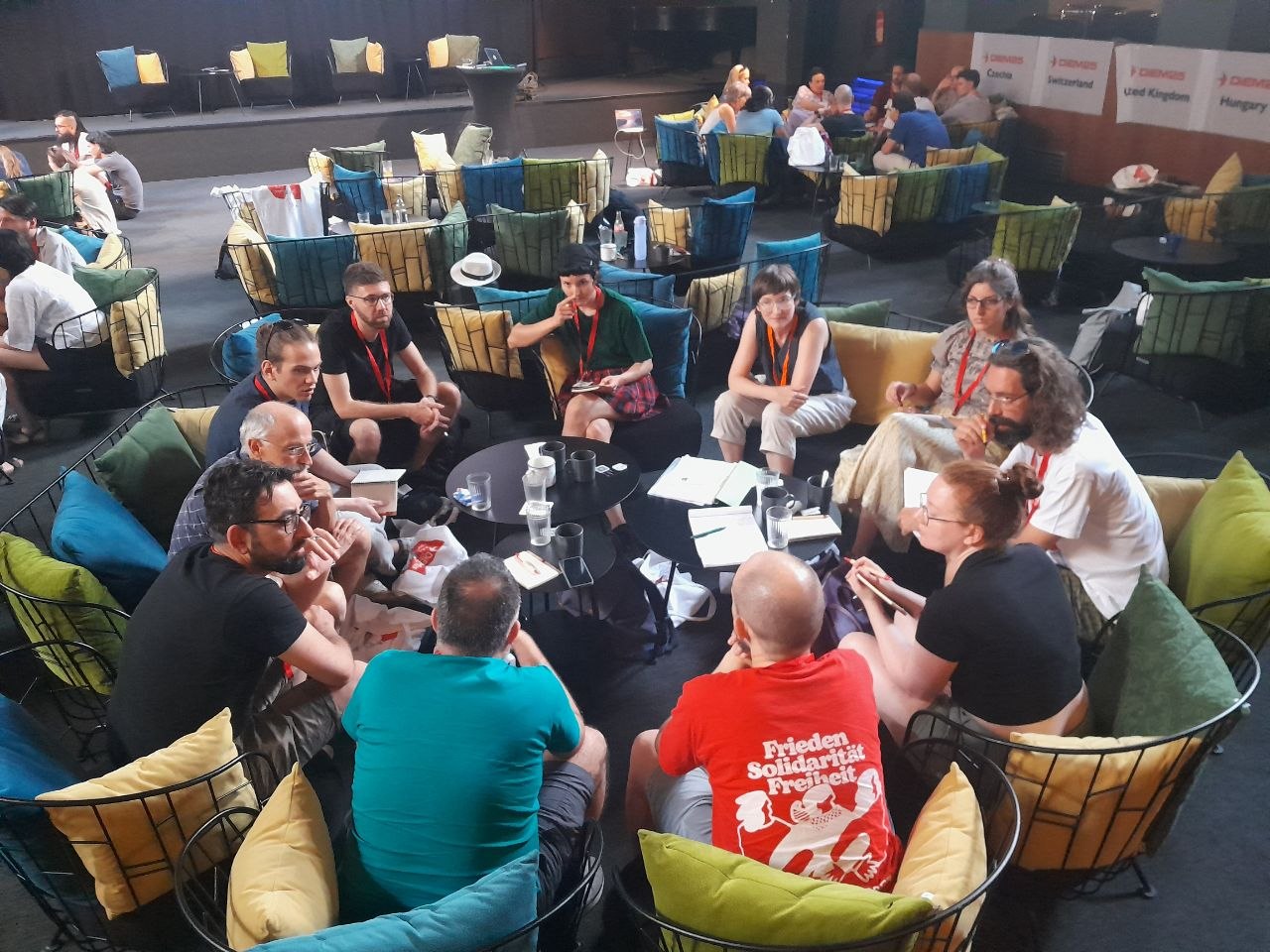
The session “How to Organize from the Grassroots” was led by Johannes Fehr, Organizing Director for Germany. It focused on how local DiEM25 groups can kick off, grow, and sustain themselves over time. Members first reflected on why they had joined DiEM25: some were looking for a transnational platform, others sought an alternative to existing party structures in their countries. Some participants shared that they found inspiration in Palestine solidarity, anti-authoritarian politics, economic justice, or the need to connect global analysis with local practice. The diversity of answers showed that DiEM25 means different things to different people. Yet the practical advice was clear: start small, read the Activist Guidelines, meet members in your area, get to know each other, and form a Local Collective.
Johannes’ session also addressed the challenges local groups often face. Participants spoke about the difficulty of turning members into activists, keeping enthusiasm alive, choosing a clear local issue, working with limited capacity, and collaborating with other organisations while maintaining a distinct DiEM25 identity. Some of the ways to move forward presented at the session included regular meetings, direct outreach to potential comrades, finding a sense of solidarity through collaboration, and deepening knowledge of the DiEM25 structure. Participants received an important reminder: organising should not feel like a burden. Informal gatherings like cooking nights, film screenings, and pub crawls can be politically meaningful because they help comrades stay connected.
The “Commitments & Closing” session, facilitated by Ivana Nenadovic, brought the weekend’s lessons together. Many highlighted the importance of identifying local issues, lowering the threshold for contribution, using digital tools more confidently, and translating DiEM25’s transnational politics into language that makes sense locally. Others reflected on the need for guidance without dependency, initiative from below, and more examples of hope and success from local groups. Participants recognised that activism is like dancing — you can’t know all the steps from the beginning. One does not have to know all the strategies and techniques from the start; it is enough to be willing to share experience and knowledge and learn from others.
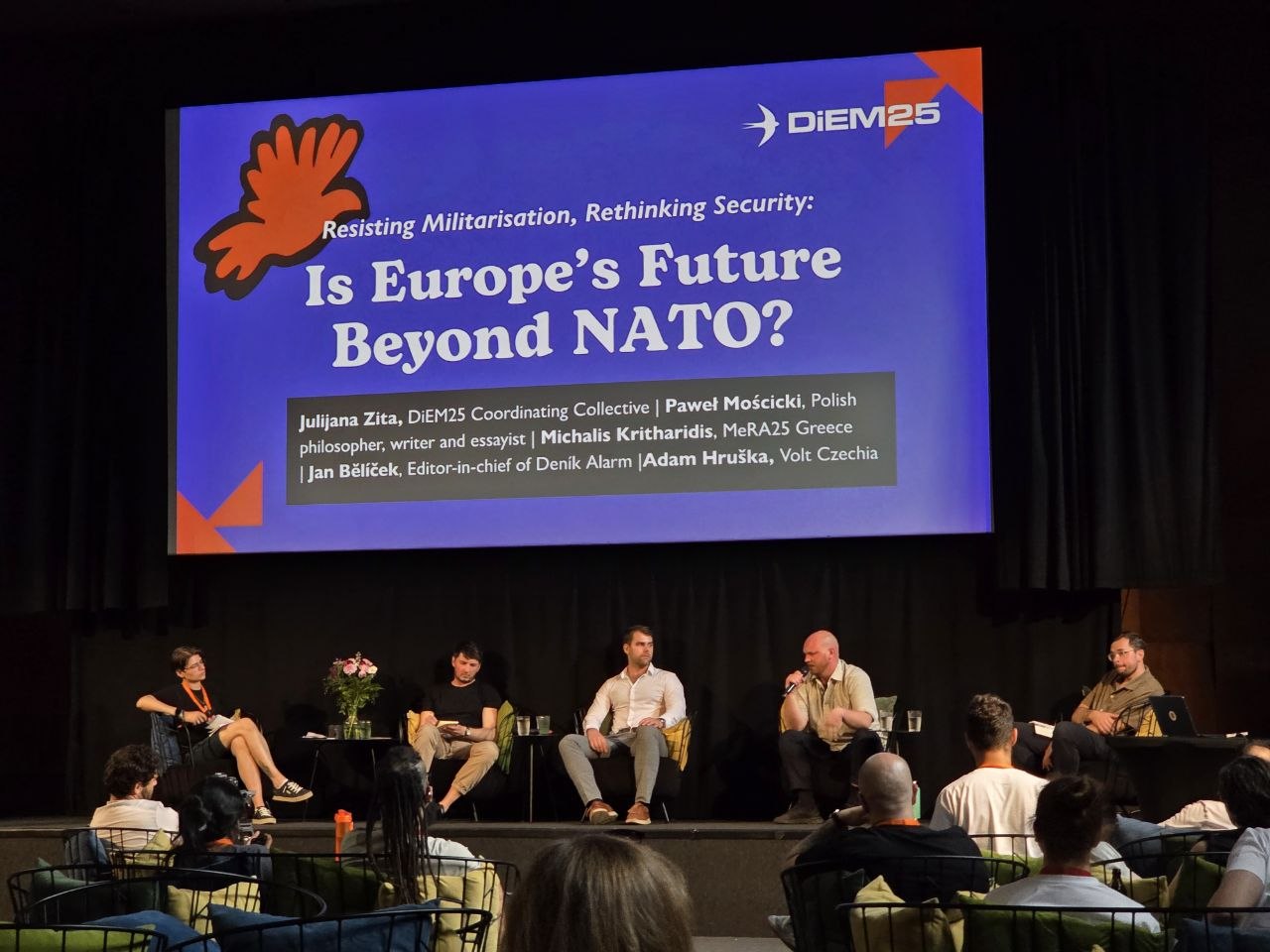
A major public discussion, “Resisting Militarization, Rethinking Security: Is Europe’s Future beyond NATO?”, was moderated by Julijana Zita and widened the Academy’s horizon to one of the most urgent debates in Europe today. The panel brought together different perspectives on NATO, EU militarisation, security, federalism, and peace. Paweł Mościcki, a Polish philosopher, essayist, and writer, reflected on Polish perspectives on NATO, historical fears, and the reproduction of militarism. Michalis Kritharidis from MeRA25 Greece argued against Europe’s militarisation and connected the debate to austerity, oligarchic interests, and working-class solidarity across borders. Jan Bělíček, editor-in-chief of Deník Alarm magazine, discussed European security, the crisis of EU cohesion, and the possibility of alternatives to NATO structures. Adam Hruška from Volt defended a federal European approach towards militarisation while also acknowledging that militarisation under current conditions would not benefit Europe.
The panel did not flatten these differences. Some speakers argued that Europe must move beyond NATO and develop new peaceful mechanisms; others defended deeper European integration or a common European security structure, while warning that militarisation under current conditions would not serve ordinary people. The Q&A allowed participants to engage critically with some of these positions and connect them to broader questions of democracy, social cohesion, and the rise of the right. As throughout the DiEM25 Academy, the strongest moments came when abstract geopolitical questions were linked back to concrete experiences: fear, insecurity, economic pressure, historical memory, and the need for a sober, materialist left perspective.
The Academy concluded on Monday with a field trip to Kutná Hora, where members who could stay longer continued conversations in a more relaxed setting and brought the weekend to a gentle close. After days of workshops, debates, and planning, this final shared experience mattered. It gave participants time to deepen personal connections, reflect informally, and enjoy each other’s company beyond the formal programme.
DiEM25 Academy 2026 was informative, practical, and deeply human. It focused on the local level without losing sight of global structures. It gave members tools to activate local groups, develop campaigns, understand political differences, and take realistic next steps. At the same time, it created generous space for personal exchange, informal conversations, and collective joy. The weekend showed that transnational politics becomes strongest when it is lived locally — in meetings, campaigns, friendships, and the courage to act.
Do you want to be informed of DiEM25's actions? Sign up here