

Headlines from last week’s United Nations General Assembly focused on the ongoing US-Iran conflict. With good reason: The war, which began in February with joint US-Israeli strikes on Iran, has caused economic chaos around the globe, not to mention the deaths of soldiers and civilians, including 165 schoolgirls in Iran.
What the press didn’t focus on was news made at the UN about the potential next Middle East conflict zone: Syria.
Speeches by leaders from Syria and neighboring Jordan, Israel and Turkey exposed tensions surrounding the new government in Damascus, led by Ahmed al-Sharaa, whose rebel forces overthrew Bashar al-Assad’s longtime government in late 2024 and whose past includes leadership of formerly Western-designated terrorist organisations.
The Golan Heights
The area in southern Syria known as the Golan Heights has been contested territory since Israel occupied the area after the 1967 war against Syria, eventually annexing the territory in 1981. President Trump recognised Israel’s claim to the Heights in 2019, with Colombia becoming the second country to do so in August 2026.
After Assad’s fall in late 2024, Israel occupied more Syrian land beyond the Golan, with the Israeli government claiming the need for a “buffer zone” between itself and the “former jihadist” Al-Sharaa.
Al-Sharaa dedicated part of his speech to invoke UN Security Resolution 497 rejecting Israeli annexation of the Heights, noting the Golan will “remain Syrian.” The new Syrian leader also criticised the repeated military attacks on his country by Israel, listing 500 air strikes, 1,200 incursions, and 300 detentions.
Jordan’s King Abdullah II joined Sharaa in warning about Israeli actions in the region. The king, whose country borders both Israel and Syria, called Israel an “expansionist regional threat” which the international community, “chooses not to see.”
Netanyahu at the UN
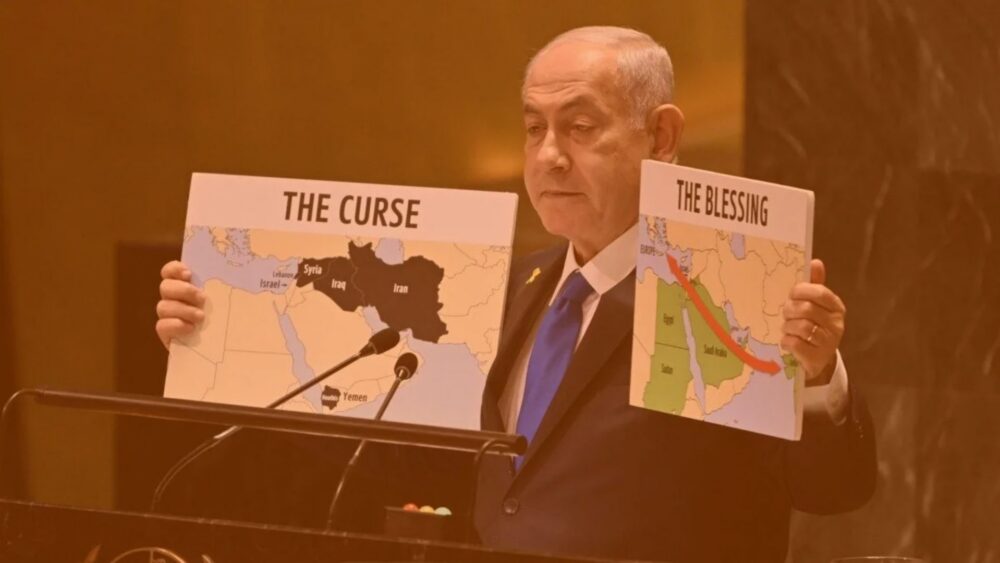
Israeli Prime Minister Benjamin Netanyahu used his speech at the Assembly to push back against Sharaa’s rejection of Israel’s sovereignty over the Heights. Addressing Sharaa directly, Netanyahu justified his country’s presence in Syria by arguing Jews have been in the Heights since “the time of Moses.”
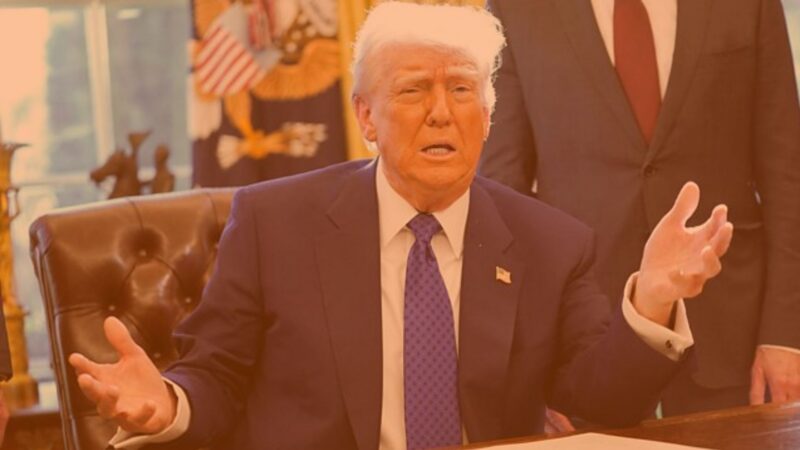
The dispute even produced an exchange involving US president Donald Trump, seen as an ally of both Syria and Israel. At an Atlantic Council event, Sharaa joked that rather than giving Israel the Golan Heights, Trump should gift it New Jersey.
Both Netanyahu and Israel’s defense minister Israel Katz have visited troops in the Heights where Israel Defense Forces (IDF) expanded their presence since the fall of Assad. Katz has publicly told Al-Sharaa “we are not moving” from their Heights, while Netanyahu argued the entire “axis” of antagonistic nations surrounding Israel will collapse.
The proxy war in Syria
Israel is not the only regional power with troops and strategic interests inside Syria. Turkey maintains its own military presence in the country’s north.
A dispute between the two countries erupted the weekend before the General Assembly, with Israel’s UN ambassador Danny Danon questioning why Turkey’s military presence in northern Syria had not drawn similar condemnation. Turkey’s ambassador Ahmet Yıldız that Turkey’s military presence was “in coordination” with Damascus.
Although the issue received less attention in Turkish President Recep Tayyip Erdoğan’s General Assembly speech, Turkey also sees room for an expanded role in Syria.
Similar to Israel, Assad’s fall in December 2024 created new opportunities for Turkey to consolidate or expand its existing presence in northern Syria and plan “military operations” against Kurdish armed groups who Erdoğan feels threaten the Turkish government.
On war footing
Tensions between Israel and Turkey have intensified since Israel’s war in Gaza began following the October 7 attacks in 2023.
Over the past three years, Erdoğan has compared the Israeli prime minister to “Hitler” over Israel’s actions in Gaza, while Netanyahu has criticised the Turkish president for “massacring” Kurds.
And as we previously reported, Israel’s former Prime Minister Naftali Bennett had stated Turkey is “next” after Iran. and Joe Kent, the Trump administration’s former deputy national security advisor who resigned over what he alleged was Israel’s role in pushing President Trump into the Iran war, claimed the US will be dragged into the coming fight between Turkey and Israel in Syria.
This war of words has become increasingly hot over the summer.
Soon after a Turkish delegation departed Idlib in Syria in August, Israeli fighter jets struck the location. The Netanyahu government pointed to Syria’s “misunderstanding of foreign powers in the country.”
The developments lend new relevance to Kent’s warning as Israel and Turkey increasingly compete for influence in a Middle East with a weakened Iran and reduced US presence.
This is of course happening amid the ongoing US-Iran war, renewed fighting between Israel and Hezbollah in Lebanon, and Russia‘s continuing invasion of Ukraine.
The question then becomes: Where is Europe? In the midst of the death of civilians caused by one Middle East war already raging, not to mention a worsening global economic outlook, the silence of the continent seems to prove that Europe is indeed asleep.
Do you want to be informed of DiEM25's actions? Sign up here