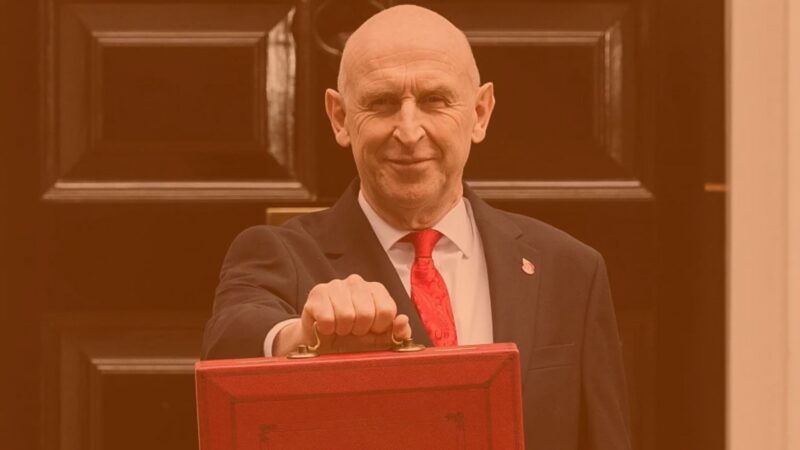


US president Donald Trump’s recent trip to China was supposed to show Washington’s continued superiority over the rising power in Beijing. Instead, the result of the meeting between Trump and China’s president Xi Jinping is defined more about what wasn’t accomplished
The cause of this lack of US strength abroad is the war in Iran, which currently appears at a stalemate.
This slow pace resolving the conflict has driven much consternation in the White House, which hoped – and was promised by ally Israel – an easy military operation.
Now, to regain the perception of military dominance and the Trump administration’s penchant for “winning,” especially ahead of the US midterm elections in November, Washington has started to look at targets beyond the Iran quagmire.
Cuba
The target of Washington capturing most of the headlines is Cuba.
The island nation has of course long been perceived as an adversary of the US and the target of many failed attempts to overthrow the Communist government since the Cuban Revolution in 1956.
Renewed focus on Cuba came in late 2025 as the Trump administration began its “maximum pressure” strategy by preventing oil deliveries to the island by Venezuelan, Mexican and Russian ships, which supply the majority of energy to the country.
After the removal of Venezuelan president Nicolas Maduro by US special military forces in January 2026, Cuba has descended into the worst economic period since the fall of the Soviet Union in 1991.
The White House welcomed this consequence, noting that Cuba will likely “fall on its own” from US policies and without the need for military intervention.
However, the Cuban government has remained in power into spring, much to the frustration of President Trump, and the slow end of the war between the US and Iran has put the island country back on Washington’s radar.
In recent weeks, the Trump administration has placed new sanctions on companies targeting the country’s alleged military-industrial base. Secretary of State Marco Rubio, the son of Cuban immigrants who has long advocated for regime change in the country, also recently visited the US military command center in the Caribbean, SOUTHCOM, and a photo with a commander in front of a map that prominently featured Cuba.
The most ambitious move to remove the government in Havana came on Wednesday, as the White House unveiled an indictment against Raul Castro, the former leader of Cuba and brother to Fidel, one of the leaders of the Communist revolution that overthrew the government of the country in 1956. The charges are seen as “symbolic” and meant to “increase psychological pressure” on the country.
These actions follow President Trump’s bellicose rhetoric against the country, such as the statement “I can do whatever I want with Cuba” and proposing a military carrier could be stationed near Cuba on its way back from the Iran war.
Other actions by the administration show Washington wants to avoid military intervention and make a deal with Cuba.
US officials, including CIA director John Ratcliffe, recently visited the island to “engage” the Cuban government on making reforms demanded by the US, including transitioning to a “market-based economy” and releasing political prisoners. Interestingly, these reforms would not constitute lifting the US embargo against Cuba, which is often blamed for the island nation’s economic woes.
Turkey
A secondary target of the US in the conflict with Iran is NATO.
President Trump has publicly blamed the military alliance for not helping unblock the strait of Hormuz after Iran initiated its blockade in response to the US-Israel preemptive military strike against the Middle Eastern country.
Much of the headlines about the rift have focused on Spain and Germany. Both have earned the ire of the White House over the Iran war after the former refused to allow their airspace for refueling US military aircraft and the latter said Iran has “humiliated” the people of the United States.
Less discussed is Turkey, and its brewing war with Israel that could drive further disintegration of the NATO military alliance.
Tensions have been rising between Israel and Turkey, both US-allied countries and the latter a NATO member, since Israel’s military campaign into Gaza after the Hamas October 7 attack in 2023. Turkish president Recep Tayyip Erdoğan had referred to Israel PM Netanyahu as “Hitler” in response to alleged Israeli war crimes against Gazans, which caused Netanyahu to claim Erdogan killed his own civilians, an allusion to the Turkish government’s “massacring” of Kurds located in the country and deemed adversaries to the government in Ankara.
Israel’s former Prime Minister Naftali Bennet had stated Turkey is “next” after Iran, and Joe Kent, the Trump administration’s former deputy national security advisor who resigned over what he alleged was Israel’s role in pushing President Trump into the Iran war, claimed the US will be dragged into the coming fight between Turkey and Israel in Syria, a hotly contested state between the countries after the fall of former president Bashar al-Assad in December 2024.
The Trump administration ambassador to Turkey, Tom Barrack, has sought to decrease tensions between the two counties, but President Trump’s threats to leave NATO could give the US more flexibility in deciding which ally to support.
Greenland
While President Trump is largely seen to have backed down from a US conquest of Greenland after the Davos summit in January, recent reporting notes negotiations are on a “good trajectory” according to the White House.
And the claims of success might not just be bluster from the administration.
The White House has sought to convince Greenland to join the US with a campaign that involves courting opposition politicians in the country, offering investments to the island, funding a famed dogsledding event, and emphasizing the negative colonial history associated with Denmark, the country which oversees the self-governing island in the North Atlantic. There were also reports of an American offering $200,000 to Greenland residents to join the US, an incentive previously being explored by the White House.
A strongman forced to take a step back?
The pivot to these other alleged US adversaries comes without success in Iran, at least not yet, which is likely not how President Trump intended to move on to his next target.
The stalled Middle East war has left Washington in an uncomfortable position: unable to claim victory, yet unable to easily disengage. That constraint was visible during Trump’s recent trip to China, where the absence of a major trade agreement underscored a narrowing set of options for the United States. While the administration remains caught in an “escalation trap” with Iran – where further strikes risk retaliation that could deepen the conflict – Beijing was able to operate from a position of relative strength.
Not only did President Xi avoid a trade deal on unfavorable terms, but reports suggest Trump was forced to treat Taiwan – long considered a strategic US commitment – as a “bargaining chip.” Taken together, the outcomes in Iran and China point to a broader reality: Washington’s ability to dictate terms, both militarily and diplomatically, is increasingly constrained.
In that context, the administration’s focus on alternative targets – from Cuba to NATO fissures in Turkey and Greenland – appears not an expansion of power, but a search for places where it still applies.
Do you want to be informed of DiEM25's actions? Sign up here