







Political leaders, organisers and cultural figures converge in Havana with humanitarian aid, challenging decades of blockade and collective punishment
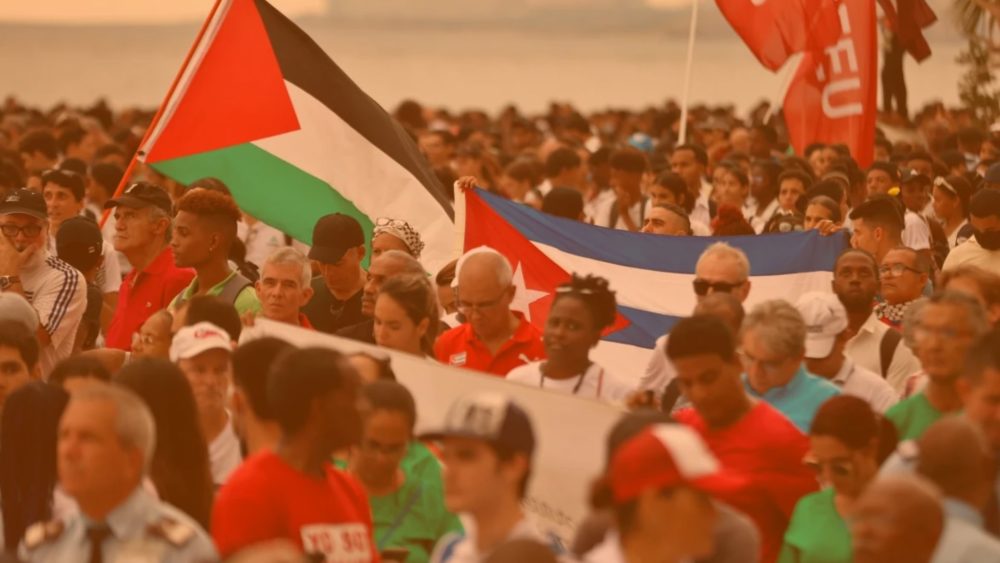
An international delegation of political leaders, trade unionists, cultural figures and organisers is converging in Havana on 21 March as part of the Nuestra América Convoy to Cuba – a coordinated act of humanitarian solidarity with the Cuban people organised by the Progressive International.
Travelling from across Europe, Latin America and North America, the delegation brings together a broad coalition of voices united against the decades-long blockade imposed on Cuba and its escalating consequences for everyday life on the island.
Among those participating are prominent political and public figures including Jeremy Corbyn, Pablo Iglesias, Clara López, Hasan Piker, Kneecap and Chris Smalls, alongside parliamentarians, former ministers and grassroots organisers.
They are joined by members of Cuban Americans for Cuba, a network of Cuban-American organisers travelling to Havana to deliver humanitarian aid and demonstrate solidarity across the Florida Straits.
Their arrival follows the departure of an initial delegation from Italy carrying more than four tonnes of life-saving medicines. In total, the convoy will deliver over 20 tonnes of aid – including food, medicines and energy equipment – transported by air, land and sea to communities facing acute shortages.
A tradition of international solidarity
The convoy draws on a long history of global mobilisation against injustice.
“From the movement that helped end apartheid in South Africa to the flotillas that challenged the siege of Gaza, international solidarity has repeatedly emerged to confront injustice,” said David Adler, one of the organisers of the initiative. “This convoy continues that tradition – delivering critical supplies to the Cuban people and a simple message: you are not alone.”
For many participants, the mission is also deeply personal.
“I’m Cuban-American, and like many in our community I want engagement between our countries – not siege,” said Danny Valdes. “The policies coming out of Washington punish ordinary Cuban families while claiming to act in our name.”
Challenging the blockade
For more than six decades, the US blockade has imposed severe constraints on Cuba’s economy, limiting access to essential goods including medicine, fuel and food.
“For more than sixty years, the blockade has tried to suffocate the Cuban example,” said Jeremy Corbyn. “Now it is being intensified in an attempt to break the country altogether. People across the world must stand with Cuba and defend every nation’s right to determine its own future.”
Participants emphasise that sanctions do not simply target governments, but have direct and often devastating consequences for ordinary people.
“Across our continent, we have learned that sanctions do not punish governments — they punish families,” said María Fernanda Carrascal. “When a neighbour is denied fuel, medicine and food, solidarity becomes a duty.”
From Gaza to Cuba: opposing collective punishment
For organisers, the convoy is also part of a broader struggle against collective punishment in international politics.
“From Gaza to Cuba, civilians bear the cost,” said Thiago Ávila. “This convoy shows that solidarity can cross any border, any blockade and any sea.”
That message is echoed by cultural figures participating in the initiative.
“As leaders shake hands with those responsible for war, we are choosing to stand with people facing the consequences,” said Kneecap.
Labour organiser Chris Smalls added: “We must put an end to this inhumane blockade. Show solidarity with a country that has long stood against imperialism.”
Solidarity as resistance
For many involved, the convoy is not only about delivering aid, but about breaking political isolation and reaffirming internationalism.
“Defending the Cuban people is defending sovereignty and dignity,” said Pablo Iglesias. “It is an honour to contribute to making that solidarity visible.”
As the convoy converges in Havana, it carries both material support and a political message: that even in the face of decades of pressure, Cuba is not alone – and that international solidarity remains a powerful force against injustice.
Do you want to be informed of DiEM25's actions? Sign up here