

As European complicity with Israel persists, the BDS movement offers a global strategy to turn solidarity with Palestine into practical action and dismantle the institutions sustaining apartheid
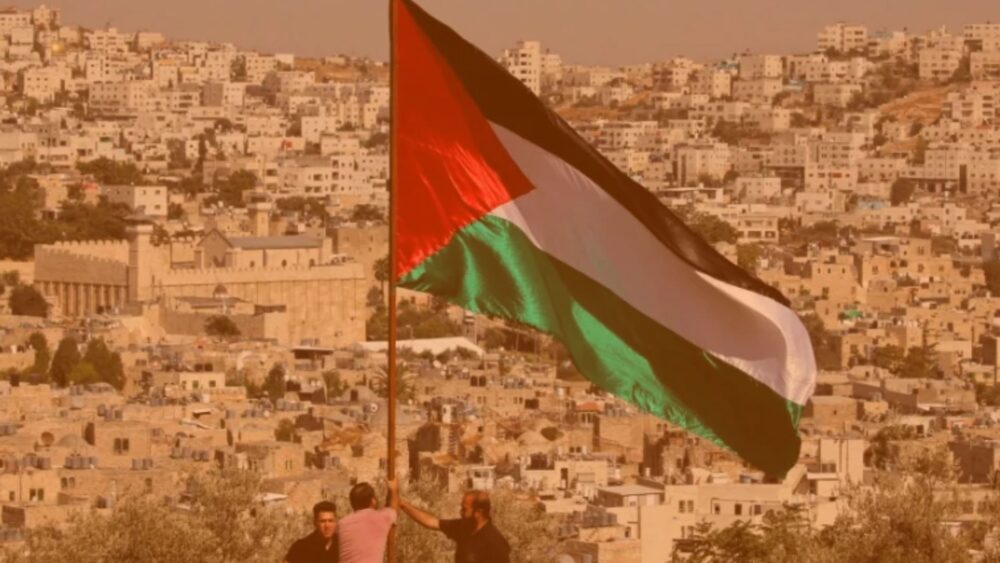
November 29 marks the International Day of Solidarity with the Palestinian People. The date, chosen by the UN General Assembly in 1977, was deliberate: it was on that same day in 1947 that the UN voted to partition Palestine without the consent of the people who lived there. But history shows that such denials do not last forever.
I vividly remember the long election queues of April 1994, when South Africa held its first free and fair elections, open at last to all who lived on that land. The tears for those who had given their lives for that day merged with tears of joy among those who inched their way towards the ballot box. South Africa was in transition: political apartheid was ending, and reconciliation was to come.
That fateful day had to be fought for. Apartheid ended in South Africa because the cost of maintaining it was unbearable – both for the regime itself and for its Western backers. Students rose up in townships, workers went on crippling strikes, conscripts began refusing to kill, foreign banks refused to roll over the regime’s debt, and boycotts by millions of people around the world exacted an ever-heavier toll.
Apartheid, settler colonialism and imperialism cannot be reasoned with morally. They yield only to resistance. And thanks to the BDS movement, we have a global means of resisting the last colony of Europe in West Asia: Israel.
Earlier this month, the Palestinian-led Boycott, Divestment and Sanctions (BDS) movement held its European regional conference in Barcelona. It brought together activists, organisers, scholars and supporters to strengthen the work of BDS across Europe. This is no easy task: European states remain deeply complicit in the genocide and continue to support the occupying entity in historic Palestine.
European weapons systems continue to kill and maim Palestinians. At the same time, European states have collectively become the largest buyers of Israeli weapons, accounting for 41% of Israel’s total arms exports in 2021–2025. They are bound by the Arms Trade Treaty and the EU’s own arms export rules not to supply weapons where there is a clear risk that they will be used in war crimes, and by the Genocide Convention to prevent genocide. Most have honoured neither obligation. But European complicity goes further still. Israel is woven into Europe through a web of bilateral and multilateral agreements and memberships that carry on as if nothing were happening. These include:
- Sport and culture: UEFA, FIBA Europe, European Olympic Committees, Eurovision
- Trade and finance: EU-Israel Association Agreement, Euro-Mediterranean “Open Skies” Aviation Agreement, European Bank for Reconstruction and Development
- Unions: European Students’ Union, European Federation of Public Service Unions
- Research: Horizon Europe, CERN, European Molecular Biology Laboratory
- Security and governance: Parliamentary Assembly of the Council of Europe, NATO’s Mediterranean Dialogue, Europol, OSCE (where Israel is a Partner for Co-operation)
The BDS@20 conference illuminated the way to unravel this web, drawing on the movement’s considerable legitimacy across the Palestinian community to turn solidarity into practical action. Israel’s deep political, cultural and economic integration into Europe calls for a systematic approach: dismantling it brick by brick, institution by institution. This requires a diversity of tactics – from pressure campaigns to winning over individual professionals in institutions whose work ties them, directly or indirectly, to Israel.
For all its limitations and colonial origins, international law is another potent tool for shifting public opinion and influencing institutions. In Israel’s case, the sheer weight of UN resolutions, court rulings and treaty obligations simplifies our work and allows us to expose the gap between what states say they are committed to and how they actually conduct themselves towards Israel. International law can also work at the local level. Thanks to the BDS Operational Guide for an Ethical Procurement Policy, municipalities and city councils can direct public money away from companies involved in international crimes.
The third terrain of resistance is soft power and memory. While Israel remains regionally unmatched in terms of hard power, it has failed to erase Palestine from the hearts and minds of the global majority. That places a responsibility on us to double down: telling, translating and amplifying Palestinian stories more than ever.
Lastly, practising BDS in everyday life holds up a mirror to Israeli society, forcing it to confront the reality it has normalised and the humanity it has lost along the way, just as the boycotts did for white South Africans under apartheid.
So today, let us remember that solidarity is a verb: it demands action. Every action in support of BDS increases the cost of sustaining apartheid and settler colonialism in Palestine. Our task is to make complicity unbearable, until the day everyone in historic Palestine can queue, as South Africans did in 1994, for freedom.
Free Palestine.
Do you want to be informed of DiEM25's actions? Sign up here