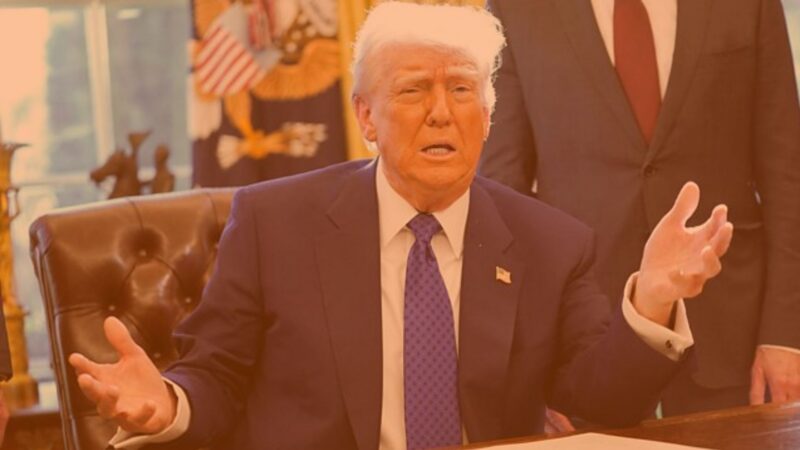


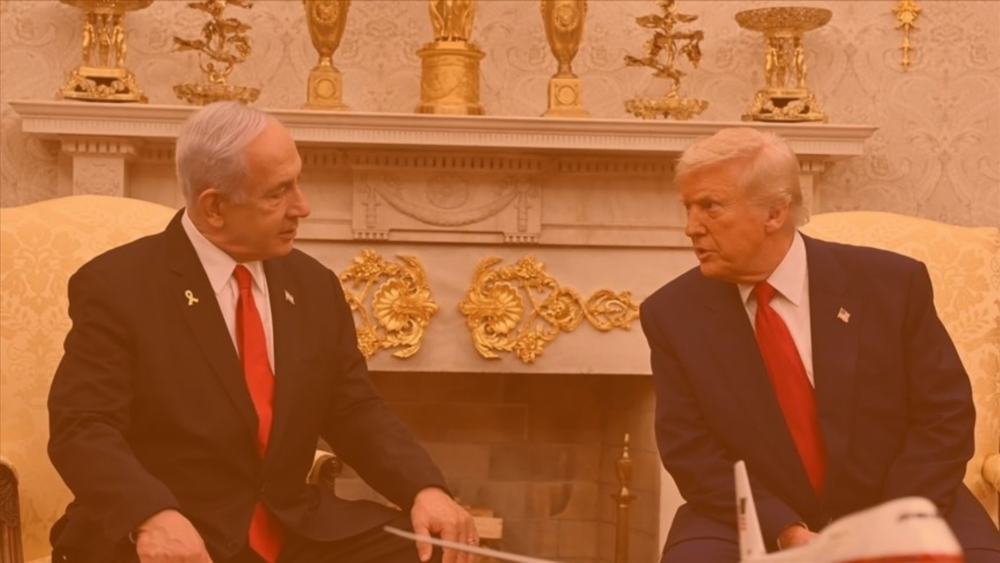
For all the talk of United States president Donald Trump abandoning historic allies the one partner the White House has not wavered on is Israel. This bonhomie was evident as Israel’s prime minister Benjamin Netanyahu made his third visit to Washington last week, the most of any statesmen under the second Trump administration.
While the two leaders were expected to be taking a “victory lap” over the recent decision to bomb Iran’s suspected nuclear facilities (despite questions over the effectiveness), both had a different objective in mind.
For the publicly avowed “peace president” Trump, the visit by Israel’s prime minister hopefully marked an end, or at least de-escalation, to conflicts in the Middle East. For prime minister Netanyahu – whose country is involved in conflicts Syria, Iran and of course Gaza – it marked a beginning.
Iran
What kicked off the visit between the leaders of Washington and Tel Aviv was predictably the perceived win over Iran. To commemorate what’s been called by the US and Israel as the “12-day war,” prime minister Netanyahu presented president Trump with a nomination for the Nobel Peace Prize.
Nevertheless, the conflict was still clearly on the mind of both leaders.
The visit saw Netanyahu surface a willingness to continue missile strikes against Iran in order stop what Israel alleges is the country’s program to develop nuclear weapons. The Prime Minister also suggested during his visit that these strikes could lead to “regime change” in Iran, an objective Netanyahu publicly advocated at the start of the military campaign in June.
While Trump has signalled no further US involvement and maintains that the administration is still actively pursuing a nuclear deal, the “Trump Doctrine,” according to vice president JD Vance‘s recent speech on the 12-day war, is founded on Iran not getting a nuclear weapon. If the problem cannot be solved “diplomatically,” stated Vance, “you use overwhelming military power to solve it, and then you get the hell out of there before it ever becomes a protracted conflict.”
Getting out of the conflict may be difficult for the administration if it continues to follow the Trump Doctrine. During the Netanyahu visit, an assessment by Israel was released claiming the US strike on Iran’s nuclear sites in June did not “obliterate” the country’s ability to enrich uranium as Trump previously claimed.
Syria
One of the topics not widely discussed in the visit last week – though also clearly front of mind for both Trump and Netanyahu – was Syria.
Since the toppling of former Syrian president Bashar Al-Assad in December of last year, Washington has been cultivating ties with the leader of the new government in the capital Damascus, Ahmed Al-Sharaa. The new leader comes with a controversial past, having formerly headed one of the most notorious adversaries of the United States: Al-Qaeda.
Outreach to Al-Sharaa by Washington has included removing the new Syrian leader from the designated terrorist list and also suspending many of the economic sanctions that, according to the US president, were “brutal and cruel.” The sanctions, alongside the country’s civil war, have “crippled” Syrian economic progress.
New leadership in Damascus has been a welcome development by the Netanyahu government. Syria’s former leader, Al-Assad, was historically openly in conflict with Israel, particularly over the geographic issue of the Golan Heights, which Israel claims is needed for “security” and has often militarily sought to occupy the area from within Syria’s established borders.
Netanyahu’s meeting with Trump in Washington may have secured that goal.
Reporting since the prime minister’s visit to Washington last week has noted Netanyahu will be making his fourth trip to the White House in September, this time to meet the new Syrian leader Al-Sharaa and potentially solve the issue of the Golan Heights (which Israel has once again occupied after the toppling of Assad in late 2024).
Along with solving the Golan Heights issue, the meeting will likely see new Syrian president Al-Sharaa signing a non-aggression pact with Israel known as the Abraham Accords.
Started in Trump’s first term, the Abraham Accords are Washington-led diplomatic agreements between Middle Eastern countries and Israel that officially normalize relations with Israel and thus act as a non-aggression pact.
So far, Bahrain and the United Arab Emirates signed under the US president’s first term in the White House, and the Biden administration continued efforts by bringing in Morocco and Sudan.
Saudi Arabia is the ultimate “prize” of the Abraham Accords for Washington for its status as the de facto leader of the Middle East. Like all other countries pursued by the US to sign the Abraham Accords, Saudi Arabia has historically not agreed to peace with Israel due to the forced displacement of Palestinians.
Gaza
The ongoing conflict of Gaza – and broader Palestinian question – is what of course dominated conversations between the leaders of Washington and Tel Aviv. Despite supporting the actions of Israel in the enclave, the White House appears eager to move the conflict out of the headlines.
The last sticking parts focus on what comes after the end of the proposed 60-day ceasefire.
The government in Gaza, Hamas, is willing to return the remaining hostages taken after their October 7, 2023 attack in exchange for complete withdrawal of Israel’s army from the Palestinian territory and end to the war.
The group has also requested the government in Tel Aviv allow greater access to aid, which has been significantly lowered if not outright suspended. Aid has also become even more of a pressing issue recently with the killing of over 800 of Palestinians since the establishment of the new US-Israel run group the Gaza Humanitarian Foundation.
Meanwhile, Prime Minister Netanyahu has demanded that the Hamas government in Gaza must be removed from power, including by “force” if necessary. This ultimatum, predictably rejected by Hamas, is reportedly to appease two far-right members of the prime minister’s governing coalition: Bezalel Smotrich and Itamar Ben-Gvir. The two, who have “long advocated” for Israel’s ¹occupation of Gaza and expulsion of the Palestinians from the territory, have threatened to leave their posts and thus collapse the government if a ceasefire is signed and Hamas remains in power.
Nevertheless, coming out of the meeting in Washington both Netanyahu and Trump appeared optimistic that indeed a ceasefire with Hamas could happen in “a few days.”
However, Netanyahu may appease the far-right Smotrich and Ben-Gvir with a plan presented by the Prime Minister to the US President about relocating Palestinians in Gaza into a “humanitarian city” of Rafah in the southern part of the territory. Netanyahu also mentioned working “very closely” with the United States to “voluntarily transfer” Palestinians from Gaza, with Somalia being a publicly announced contender.
More White House visits to come
So while the visit may have lacked the fireworks of a breakthrough of any of the conflicts in the Middle East – or completely avoided topics altogether, like Lebanon or the Prime Minister’s corruption trial – Trump nor Netanyhu seemed to mind. The story is that the two are “more in sync” than ever.
Similar to the US president’s relationship with Mark Rutte, Netanyahu’s often open flattery to the Trump White House is the easiest way for Israel to maintain business as usual – and keep Washington focused on a region that for nearly two decades it claims it seeks to leave.
Do you want to be informed of DiEM25's actions? Sign up here