

A powerful, unsparing documentary that turns the camera on Israel’s relentless campaign of displacement in Masafer Yatta
“We have no other land. It’s our land, that’s why we suffer for it,” says a resident of Masafer Yatta in No Other Land.
No wonder No Other Land won an Oscar at this year’s Academy Awards – this remarkable documentary deserves its plaudits. It is an unwavering insight into the grotesque brutality of illegal evictions of Palestinian families on the West Bank – specifically, in a community of 20 villages called Masafer Yatta, perched in the mountains, which Israel covets.
This is something Western audiences need to see to believe. The time is ripe for eye-opening truths on the terrifying militarised violence, arbitrary detentions, intimidation, and destruction used to advance displacement and community erasure in the West Bank.
The horrifying killing by an Israeli settler of Awdah Hathaleen, a 31-year-old Palestinian activist and father of three who contributed to the documentary, only underscores the film’s weight and urgency. It also adds to the film’s overarching concern with how far recording events – how far journalism, documentary-making – can really make a difference to the Palestinian struggle.
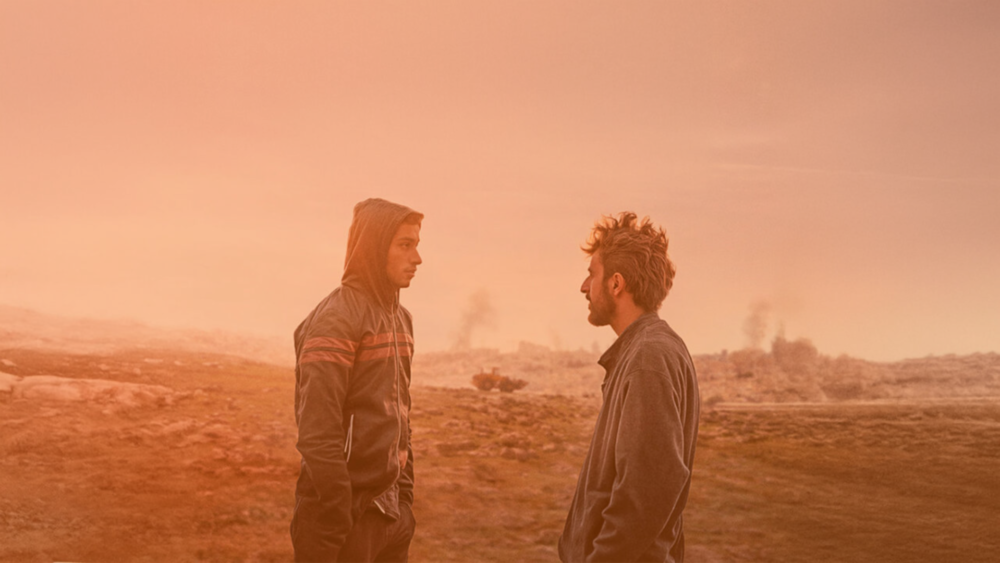
Framed by the friendship of two young men – Palestinian Basel Adra, and his Israeli journalist friend, Yuval Abraham – the documentary records the destruction of Basel’s village, and the resulting disintegration of the lives of friends and residents, once an Israeli court green-lights the evictions.
“I started filming when we started to end,” says Basel.
This is authentic reportage. In documentary fashion, the camera is simply trained on everyday events. The stiller, poetic scenes show Palestinian work, domesticity, cooking, conversation. Here are lovely, ordinary people – hospitable, gentle, generous toward one another and to strangers, including the Israeli Yuval. It’s a tough but simple rural life – now overshadowed.
Their lives are blighted by stress and worry. Love for one another sustains them. To show such dignity, such sumud in the face of overwhelming military might and the impending evisceration of their world, is truly admirable.
This film is, at times, a difficult watch. What were once idyllic Palestinian lives are now a nightmarish trap, entirely taken up with the fear of the sight and sound of the arrival of Israeli officials or settlers, who turn up night and day, armed with pseudo-legal paperwork, heavy machinery, bulldozers to evict them.
To capture the adrenaline-fuelled confrontations with Israelis, Basel’s handheld camera jerks and swings uncontrollably, evoking the instability and stress he is experiencing. In one harrowing scene, small children in class are driven from their elementary school and stand, powerless, while it is demolished by bulldozers – their wall drawings exposed to the open air.
In another, a mother screams as her son, Harun Aram, is shot trying to prevent his own family’s eviction. Now paralysed from the neck down, he eventually dies. Basel’s father is arbitrarily detained, returning a few months later to relief and celebration.
Humiliation is a huge part of how Israelis crush the villagers’ resistance. Engendering trauma in villagers through a repeated display of their powerlessness is another tactic. Haunting scenes include women and children salvaging toys and mattresses while bulldozers encroach outside the window. “Wait! My daughters are in there!” one woman warns.
The family gets clear and watches, their lives being visibly demolished before their eyes. Shelters, homes – crushed like egg boxes. Families resort to living in nearby caves.
Basel and Yuval conclude they cannot get married “because there’s no stability”. At one point, Basel wistfully suggests they escape together. There is one moment of resentment from Basel toward Yuval.
The friends believe in the power of film as a form of resistance – yet the documentary also gestures at the voyeurism of journalism: the way Yuval arrives, witnesses horrendous crimes, leaves, and then writes it up – with nothing changing as a result.
Yuval says, “I must write more… only 300 people viewed my last story.” Basel is amused:
“You’re a little enthusiastic… as if you came to solve everything… this has been going on for decades! You want to end the occupation… you want it so fast! It requires patience. Get used to failing, you’re a loser.”
Basel’s mood will deteriorate further into depression as the film goes on, as destruction continues and nothing is on the horizon.
Israelis enjoy impunity, while Palestinians have no recourse – to law nor reason. The film shows how you apparently cannot reason with or appeal to the better nature of Israeli officials. “Please,” says one villager, “you are taking everything from us. You are taking our home! I was born here 70 years ago.” It falls on deaf ears.
What sort of people would reply, “That’s the law, why should I be ashamed?” “Move back, we’re done here, bring in the bulldozer.” Those doing the evicting come out of this looking truly monstrous. The lack of empathy – the hatred towards Palestinians – is caught on camera. It is deeply shocking, showing in real terms what dehumanisation, racism, and colonialism amounts to. The logical extension of this pathological lack of human decency is genocide.
The unscripted dialogue, the admirable simplicity of approach, conveys all the more starkly the shocking realities of what Israeli settler colonialism is (pure violence in the vein of Frantz Fanon); how ethnic cleansing works (through brutality and humiliation); how apartheid dehumanises both victimiser and victimised. The eviction of Palestinians from their ancestral homes is very, very ugly – and that it goes on relentlessly to this day in the West Bank is indefensible.
No Other Land, meanwhile, demonstrates beautifully what film essentially is: a powerful medium that discloses beautiful, intimate, painful, and affecting truths – but which may have a frustratingly limited capacity to effect change in the despotic centres of power.
Do you want to be informed of DiEM25's actions? Sign up here