A personal contribution by Ceren Witkiewicz, board member of MERA25 Berlin
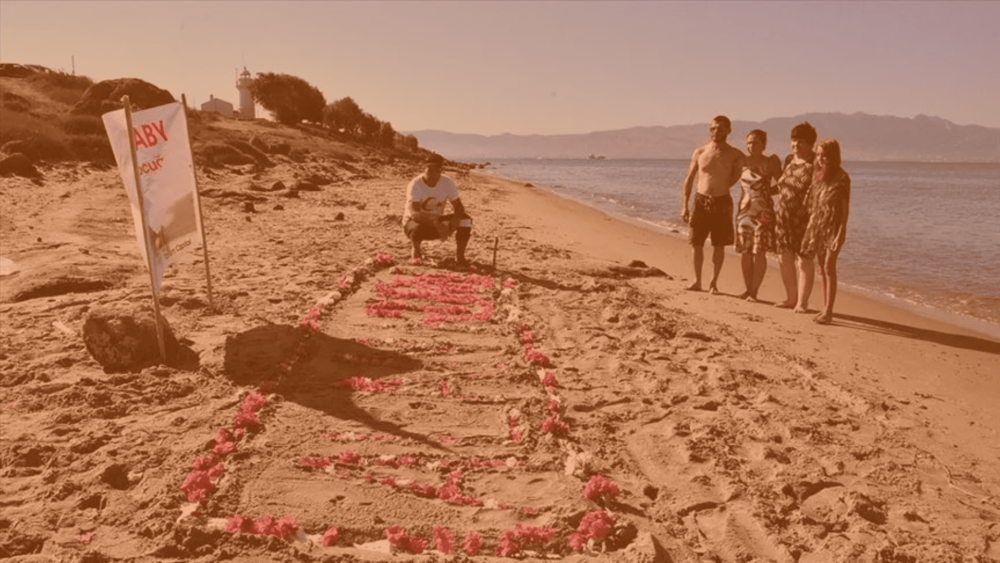
On September 2, 2015, the world was forced to look for a moment: A little boy, Alan Kurdi, lay dead in the sand on a beach in Turkey. He was three years old and fleeing the war in Syria with his family. He was on his way to Europe in a rubber dinghy. The boat capsized. Only his father survived.
The photo of the dead boy in the red T-shirt and blue trousers shocked the world. Politicians promised humanity. The headlines called for help. Civil society mobilised. But what has remained ten years later?
More deaths, more walls, more violence.
Instead of a rethink, there has been a step backwards: since the deaths of Alan, Galib and Rihan Kurdi, over 32,000 people have drowned or gone missing in the Mediterranean. They fled war, hunger and the climate crisis and were forced to their deaths because Europe does not provide safe escape routes. The EU has not turned this into a “never again“, but has set up a system of deterrence: Frontex instead of rescue. Detention camps instead of asylum. Pushbacks instead of human rights.
And Germany? Germany is right in the middle of it – not as a silent observer, but as an active co-creator of this policy.
Whoever makes it to Europe alive encounters racism.
Whoever survives the deadly Mediterranean route is far from safe, but ends up in a system of dehumanisation.
Refugees are systematically disenfranchised in Germany. Their accommodation is often isolated, overcrowded and guarded. Access to education, work or medical care remains restricted.
Racism is part of everyday life– whether on the housing market, in the office or on the street:
- Family reunification is severely restricted. Many refugees, especially those with subsidiary protection status, are not allowed to bring their relatives to join them. As a result, people are separated from each other for years.
- Those seeking protection here now receive a payment card instead of cash – in order to further promote dehumanisation through restrictions, controls and digital paternalism.
- In addition, people are being deported to war and crisis zones, for example to Afghanistan, Syria or Somalia.
The German government not only tolerates pushbacks, but also actively demands and promotes them through cooperation with Frontex and bilateral agreements with countries such as Libya and Tunisia. This policy is not only inhumane, but above all racist.
Detention camps on the EU’s external borders: politically motivated deterrence.
New closed camps are being set up on the EU’s external borders – on Lesbos, Samos or Lampedusa – surrounded, guarded and far from public control. The people seeking protection there are treated like criminals. They are interned for months, have no access to independent legal advice and have to endure unsustainable hygienic conditions.
These places are not intended to protect, but to deter.
Those who rescue are criminalised.
While the EU accepts the deaths in the Mediterranean, those who want to prevent them are being punished: civilian sea rescuers.
People like the crews of Sea-Watch, SOS Humanity or Mission Lifeline risk their lives to save others – and are accused and defamed for it. Their ships are seized, they themselves are hauled before the courts and their bank accounts are frozen. It is a deliberate strategy: aid is being criminalised so that the dying can continue.
Our position: MERA25 and DiEM25 are on the side of humanity!
We at MERA25 – as part of the transnational democracy movement DiEM25 – say clearly: This policy is a crime against humanity.
We fight for:
- Open borders for people in need and not for capital, weapons and profit.
- Legal and safe escape routes instead of deadly sea routes.
- Protection, participation and rights for refugees – regardless of passport or origin.
- An end to camps at the external borders – no zones, no isolation.
- Immediate decriminalisation of sea rescue, because rescue is a duty and not a crime.
We need a Europe that protects, not deters.
For us, these principles are not empty election campaign promises, but non-negotiable values. Our solidarity is with the survivors, the bereaved and all those who are still on the run today, as well as the activists and rescuers who are defending humanity at Europe’s borders.
In memory – and in struggle
In memory of Alan Kurdi, his family and the thousands whose names we do not know, we demand a change:
No human being is illegal. No sea should be a mass grave. Let’s act, now!
Ceren Witkiewicz
Board member MERA25 Berlin
Do you want to be informed of DiEM25's actions? Sign up here