







Marco Rubio denounces the Italian human rights scholar for urging ICC action against Israel and the US
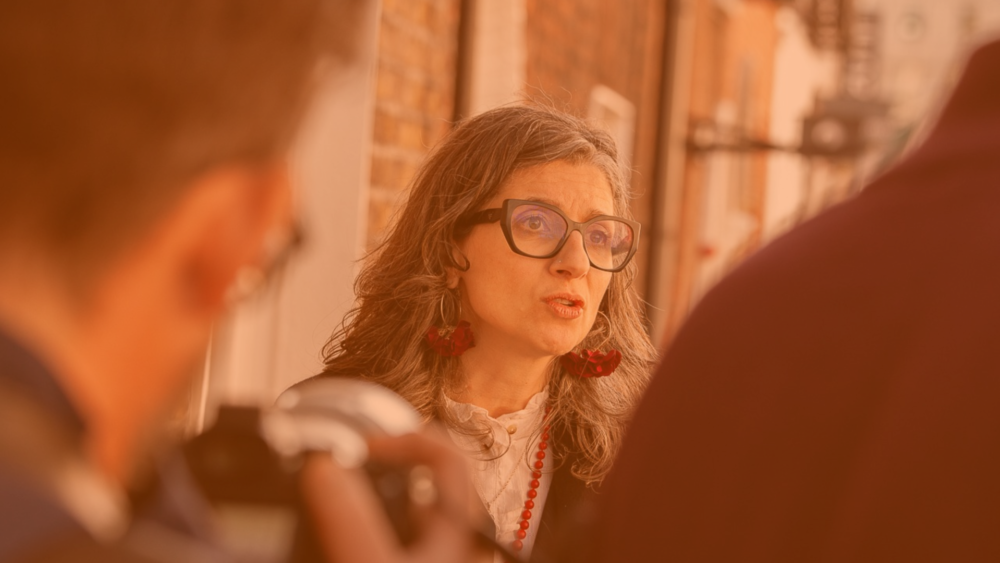
The US imposed sanctions on Wednesday, July 9, on the United Nations special rapporteur for Palestine, Francesca Albanese.
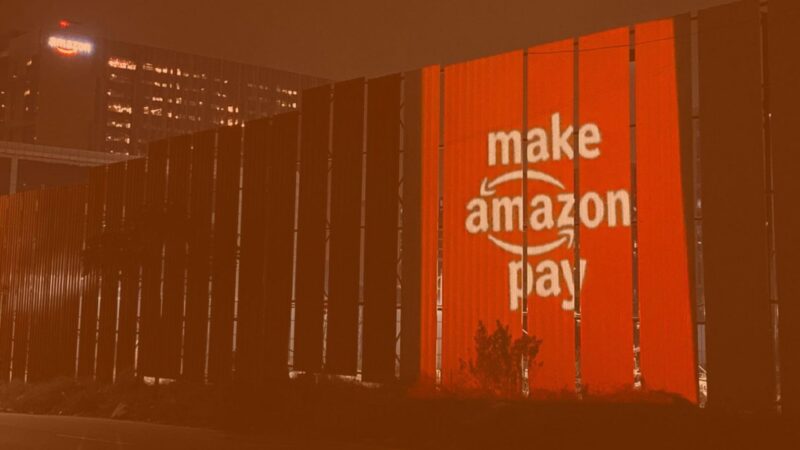
The sanctions follow Albanese’s scathing report on 30 June in which she named over 60 companies, including major US technology firms like Google, Amazon and Microsoft, which she said were involved in “the transformation of Israel’s economy of occupation to an economy of genocide”.
The report called for the International Criminal Court and national judicial systems to pursue investigations and prosecutions of corporate executives and companies. It also called on United Nations member states to pursue sanctions and asset freezes.
“Today I am imposing sanctions on UN Human Rights Council Special Rapporteur Francesca Albanese for her illegitimate and shameful efforts to prompt @IntlCrimCourt action against US and Israeli officials, companies, and executives,” US Secretary of State Marco Rubio said in a statement on X on Wednesday.
“Albanese’s campaign of political and economic warfare against the United States and Israel will no longer be tolerated. We will always stand by our partners in their right to self-defense,” Rubio added.
The sanctions will freeze any assets Albanese has in the US and would likely restrict her ability to travel to the US.
Albanese is an Italian citizen. If the sanctions are fully enforced, they could also prohibit her from engaging in financial transactions within the European Union. US sanctions carry weight because the US can impose secondary sanctions on entities, such as banks or financial institutions, which conduct transactions with the sanctioned individual. Unlike Iran or North Korea, the EU is deeply wired into the US economy.
In a subsequent statement, Rubio said Albanese was engaging in “economic warfare” against the US.
Rubio said Albanese had written “threatening letters to dozens of entities worldwide, including major American companies across finance, technology, defense, energy, and hospitality, making extreme and unfounded accusations and recommending the ICC pursue investigations and prosecutions of these companies and their executives”.
‘Getting rich out of genocide’
In a forthcoming exclusive interview with Middle East Eye, Albanese slammed US and European companies that she said were profiting off of Israel’s war on Gaza.
“It’s not the Israelis [who] are getting rich out of the genocide, it is that there are corporations, and there is an oligarchy connected to the defence industry, including in Europe and in the US, getting rich out of the genocide,” she told MEE.
The report did not focus solely on US-domiciled companies but included Caterpillar, Airbnb, and Lockheed Martin. South Korea’s HD Hyundai, Sweden’s Volvo Group, France’s BNP Paribas and the UK’s Barclays were also listed.
The sanctions announcement coincides with Israeli Prime Minister Benjamin Netanyahu’s visit to Washington, DC this week. Rubio and Netanyahu met on Wednesday.
One US official who spoke with MEE after the sanctions were announced called the move “in keeping with the administration’s policies”, saying it had been expected.
Albanese has emerged as one of the most prominent UN officials to criticise Israel’s war on Gaza, which she has labelled a genocide against Palestinians. She has also levelled broadsides against the policies of US President Donald Trump, particularly his plan announced in early February to take over the Gaza Strip and forcibly displace Palestinians.
The US, earlier this month, requested that the UN remove Albanese from her post.
Albanese declined to comment to MEE on the sanctions.
Source: Middle East Eye
Yanis Varoufakis backs Albanese
Our co-founder Yanis Varoufakis is among a number of leading economists to have backed Albanese for her courageous report who, together, wrote an open letter on in which they accuse corporations of “maintaining the Apartheid regime and enabling the subsequent genocide.” Read the full letter below:
History teaches us that economic interests have been key drivers and enablers of colonial enterprises and often of the genocides they perpetrated. The corporate sector has been intrinsic to colonialism since its inception, with corporations historically contributing to the violence against, the exploitation, and ultimately the dispossession, of Indigenous people and lands, a mode of domination known as racial colonial capitalism. Israel’s colonisation of the occupied Palestinian territories is no exception.
The recent report by Francesca Albanese, the UN Special Rapporteur on the situation of human rights in the Palestinian territories occupied since 1967, constitutes a major contribution to understanding the political economy of Israel’s Apartheid state, the ethnic cleansing of Palestinians and, now, their genocide. As such, we believe, it must be studied and debated widely and freely.
In view of the virulently hostile and indeed intimidating letter from the US government to the UN Secretary General demanding the dismissal of Ms Albanese and the quashing of her excellent report, we felt the need to express our strong support for Ms Albanese and to encourage the UN to dismiss the shrill demands of the US and Israeli governments.
Following a well-trodden path of genocide denial and of bullying anyone who challenges the right of the colonial power to dispossess Indigenous peoples, the US and Israeli governments, with most European governments too timid to take a stance, demand that the international community turn a blind eye to the ongoing genocide and, in particular, to the key role that multinational and national corporations are playing in maintaining the Apartheid regime and enabling the subsequent genocide.
As economists we feel the duty to highlight three key findings that Ms Albanese’s report unveils with clarity and precision.
First, occupation and genocide are highly lucrative for conglomerates. These include not only the usual arms and ‘defence’ big businesses (e.g., Lockheed-Martin, the primary maker of the F35s, ELBIT, Israel’s own arms manufacturer, and Palantir, the software company whose algorithms have most likely been crucial in the selection of ‘targets’ across Gaza) but also household brand names (e.g., Caterpillar, BNP Paribas, Barclays, Allianz, Chevron, BP, Petrobas, A.P. Moller-Maersk A/S). As Israel’s defence budget doubled, with the active support of the US government, it crowded in large ‘investments’ into Israel’s killing machine across this international network of complicit conglomerates in which thousands of Israeli companies are intertwined with US, European, Korean and even a Brazilian mega-corporation. This explains why Israeli equities rose by 161% at a time of falling demand, production and consumer confidence.
The second finding in Ms Albanese’s report that deserves extensive study is that the Palestinian territories Israel occupies have functioned as Big Tech’s ideal laboratory and testing ground – a function that the transition from occupation to genocide has only heightened. No country, for instance, has given as much access to a population’s biometric data as Israel has given to IBM. Since 7th October 2023, Microsoft, Amazon, Alphabet and Palantir have been expanding their cloud capital services at a breathtaking pace. Face recognition software, target selection algorithms and automated execution systems are being tested in real time, at will, and with fewer ethical constraints than in the case of experiments on laboratory rats. Big Tech could not be happier!
The third key finding is that top US and European universities are financially dependent on remaining wedded to Israel’s Apartheid and permanent occupation/conflict political economy. Many top US and EU institutions will face serious financial difficulties if they were to stop backing Israel’s genocide. Ms Albanese’s report must be commended for drawing this sordid dependency of stellar Western universities and research institutions (including the Technical University of Munich, MIT Labs, the University of Edinburgh among others). The peoples of Europe and America have a right to know that some of their most cherished academic institutions are financially reliant on helping Israel reproduce its political economy of occupation and genocide.
In a few years, almost everyone will claim they opposed this genocide. But it is now that people of good conscience need to take a stand. As economists we stand, today, with Francesca Albanese, the UN Special Rapporteur under attack by the US and Israeli governments because her recent report throws indescribably important light on the political economy of Israel’s occupation and genocide.
Yanis Varoufakis, former Greek finance minister, DiEM25 co-founder
Thomas Piketty, author of ‘Capital in the Twenty-First Century’
Nassim Nicholas Taleb, author of ‘The Black Swan’
Michael Hudson, president of the Institute for the Study of Long-Term Economic Trends (ISLET)
Guy Standing, professorial research associate, SOAS University of London
Jayati Ghosh, professor of economics at the University of Massachusetts Amherst
Giuseppe Mastruzzo, director of the International University College of Turin (IUC)
Jomo Kwame Sundaram, research advisor at Khazanah Research Institute
Robert H. Wade, professor of Political Economy and Development at London School of Economics and Political Science
Christopher Cramer, professor of the Political Economy of Development at SOAS University of London
Nidhi Srinivas, associate professor of management at Milano School of Policy, Management, and Environment
Do you want to be informed of DiEM25's actions? Sign up here