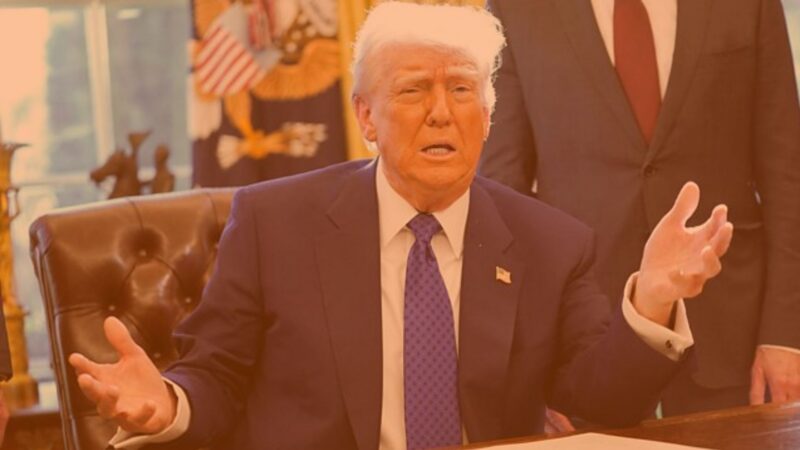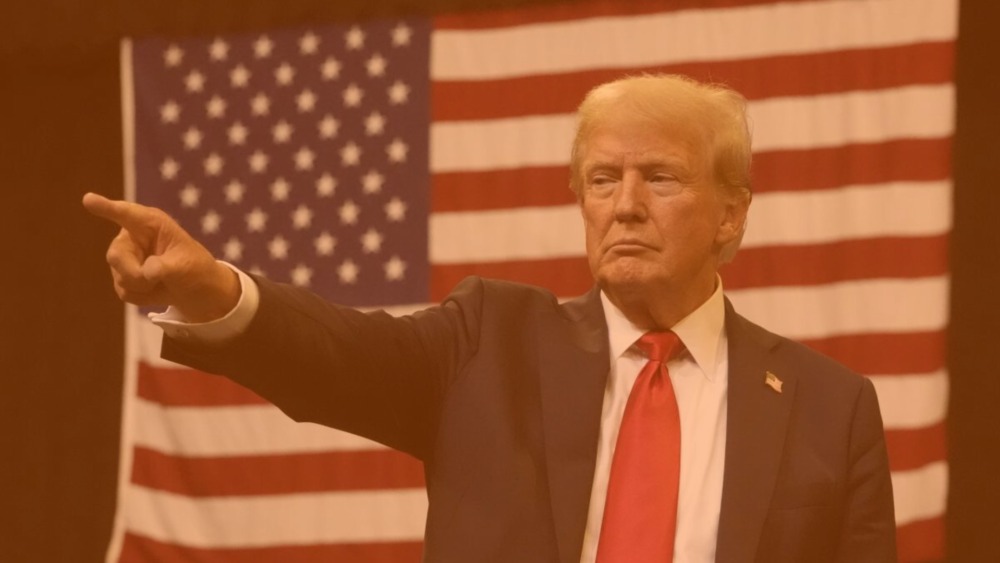
Latin America is once again making international headlines after the launch of what has been denominated as the ‘Donroe Doctrine‘. The kidnap of Venezuelan president Nicolas Maduro and the siege of Cuba combined with completely unapologetic neo-colonialist rhetoric are only a few features of this 21st century version of the Monroe Doctrine, which explicitly threatens the sovereignty of countries across the American continent or, as the United States calls this part of the world, their Hemisphere.
The recent capture and killing of shady drug lord “El Mencho” and the resulting violence, which was exaggerated and taken out of context using AI-created images by many mainstream news-outlets is part of a pressure campaign to discredit the left-wing government led by Claudia Sheinbaum internationally and pave the way for potential economic and arm intervention, as Mexico prepares for renegotiating its trade agreement with the US and hosting the increasingly infamous FIFA World Cup in June.
In the following lines, I will try to explain how a large part of the Mexican population, in line with the government led by Sheinbaum, perceives and tries to resist this imperialist project, where the so-called “war against drugs” has been a fundamental control tool that the USA has used for decades to intervene in the politics of most Latin American countries, no matter what party rules the White House.
What the hell is a chimichanga?
Explaining Mexico (or any other Latin American country) is not an easy task. Particularly, in the Global North. The huge territorial dimensions of every Latin American country and its historical, cultural and ethnical singularities are usually blurred by the fact that Spanish is the dominant language across these countries (except in Brazil). This is combined with the mostly negative stereotypes actively disseminated by mainstream US, British and European media, where Latin American people and culture are presented as uniform and are frequently caricaturised.
As a result of this, when talking about Mexico, the country I’m from to people in Europe, where I’ve been living for the last fifteen years, I spend most of my time talking about what it is not. It’s terribly exhausting. However, I understand that Latin Americans are not alone in this difficult task where we are also accompanied by people from many parts of the Global South and even Eastern and Southern Europe. Fun fact: as someone who was born and raised in Mexico City, the first time I ate chilli con carne was in Scotland. I was in my thirties at the time. I’m now in my late forties and have just found out what a chimichanga is. In summary, never trust “Mexican” restaurants outside Mexico.
The (so-called) war vs drugs
Even if drug-related criminal organisations have existed in Mexico since early as the 1950s, the disastrous strategy known as the “war vs drugs” started after the incumbency of former right-wing Mexican president Felipe Calderón in 2006, when he won the elections by a margin of 0.1% amidst serious allegations of fraud (which today are vastly documented) versus his opponent Andres Manuel Lopez Obrador. Nearly three thousand Wikileaks cables reveal the extent of the US intervention in Mexico in this dreadful process that has left Mexico with more than one million people dead and more than 150,000 people disappeared, while making drugs an even more profitable illegal transnational business.
Among other things, the “war vs drugs” provided the newly elected president with legitimacy while diverting the attention of a big part of the Mexican population, who believed he had committed fraud, towards a different issue of national concern. He also got an excuse to get the army out on the streets, in case things would get tougher for him. Calderon changed his wardrobe and decided to dress himself up in military gear (rings any bells Europe?) for this deadly endeavour throughout his presidency.
Now he lives in Madrid, which has become the new safe-haven after Miami for Latin American comprador elites. He is part of different boards of oil and gas Spanish companies (for which he proactively worked during his presidency) and seems to have close ties with far-right parties such as Vox, in an effort to coordinate and support the take-over of right-wing movements across Latin America. He was recently confronted by student protesters, who called him “murderer”, while he tried to participate as a speaker in an event in Paris. His chief of security, Genaro Garcia Luna has been indicted with a sentence of thirty-eight years in the US under charges of drug trafficking.
Enter Chavez
Calderon’s presidency was not only the result of fraud. It was also underpinned by a powerful campaign that started a few years before during the presidency of also right-wing president Vicente Fox – a former head of the Coca Cola company in Mexico. The campaign was called “Andres Manuel Lopez Obrador (AMLO) – a danger for Mexico”. AMLO was then the Mayor of Mexico City and due to his growing popularity was a serious contender to win the elections in 2006. It would be the second time that a left-wing candidate could win the elections in Mexico, the first time being in 1988, when another fraud was inflicted to Cuauhtémoc Cardenas, son of socialist-leaning president Lazaro Cardenas, who nationalised the oil industry in 1938. The “AMLO a danger for Mexico” campaign was orchestrated by the Mexican federal government in coordination with PR companies, some of which were Miami-based and had close ties to the Cuban lobby, of which Marco Rubio is a prominent figure.
It had two main principles: i) profiling AMLO and his voters as a bunch of gullible, manipulable, irrational and uneducated people, who were reluctant to the modernity, progress and prosperity opportunities brought by the Washington consensus, a.k.a. neoliberalism and, ii) associating AMLO and his movement with Hugo Chávez, even if most ordinary Mexicans still know practically nothing about Venezuela, Chavez or the Bolivarian movement. Chavez was already in those years the demonised figure of choice with which mainstream global media and their local associates would associate every single left-wing movement to scare voters across Latin America.
In consequence, AMLO has become one of the most passionately hated Mexican politicians among his detractors – a majority of which are upper(-middle) class Mexicans. However, it also became one of the most popular among its followers, who come from all social classes but particularly, among poorer and working-class people, i.e., the majority of Mexicans. After the election fraud in 2006, AMLO founded a new political party – MORENA (Spanish acronym for National Renovation Movement), with which he won the elections by a landslide in 2018 with 66.2% of the votes. The election of the party’s acronym (which in Spanish means brown skin woman) was not by chance, as the anti-AMLO / 4T campaign has also been traditionally charged with a classist, racist and even misogynistic rhetoric directed to the majority of the Mexican population for whom they use derogatory terms such as nacos or chairos. In the words Federico Navarrete, who is a prominent researcher of racism in Mexico, these terms ultimately mean poor indigenous person – two conditions that when taken out of the realm of insult represent factual characteristics of most of the Mexican population.
The right-wing strategy literally boomeranged and hit them in the face, since Calderon’s campaign (and the subsequent campaigns by the right-wing opposition to Mexico’s current government) have been based on the idea that Mexicans should try to think, behave and if possible, look to the best of their abilities like people from the Global North and that being poor was a result of their own laziness and cultural flaws. As opposed to this, AMLO and his movement have told Mexican people that their cultural heritage, education, mentality, language and even looks are actually fine and in tune with the 21st century and that their condition as poor people is structural.
I remember him saying “we must always think with a Mexican head” during a meeting I attended when I worked as an intern of his cabinet in 2004 when he was the Mayor of Mexico City. This phrase made a huge impact on me at a personal level. It is worth to mention that at the time, the majority of members of his cabinet, including my boss (as well as his security staff) were women. Current president Sheinbaum was the Ministry of the Environment.
Enter Trump
Like in most parts of the world, Donald Trump has definitely made an impact in Mexico since he entered into politics. His racist anti-Mexican/Latin American rhetoric and constant reference to the wall as a physical barrier that would divide the American continent for being inhabited by two types of people have managed to do what seemed to be impossible – to unite pro and many anti-AMLO supporters. However, this repellent attitude towards Trump comes from different sources. This is because during pre-Trump times, the Mexican economic and intellectual elites and their followers were cultivated by the US and by many European governments and its affiliated organisations, e.g., USAID,
the National Endowment for Democracy, the Open Society Foundation, the British Council, etc., in the hope that they would be accepted as relatively equals, if they would try to look, think and behave like them and work to their benefit. Trump shot down this possibility by adding a racial element, which represents an impossible barrier to overcome for those elites, that will always be regarded as simply non-white. Conversely, when AMLO was asked if he preferred democrats or republicans leading the neighbouring northern country, he replied that after two hundred years of experience, Mexico has learned that there’s not much difference with regards to who sits on the White House. This is why among the supporters of today’s government in Mexico, the Donroe Doctrine comes as no surprise, as it is only the continuation of the Monroe Doctrine, which claims that America (the continent) is for Americans (people and particularly, the elites from the USA). The only difference in comparison to his predecessors is that the government led by Donald Trump has taken the mask off and made one of the ugliest faces of US exceptionalism completely explicit.
MAGA, Chavismo and Mexico’s Fourth Transformation: Not a one-man show
When talking about characters, such as Trump, Chavez or AMLO it is frequent to assume that they represent one-man shows. This misleading perception is reinforced by mainstream media, who fails (perhaps intentionally) to understand and explain that, even if we like them or not, movements such as MAGA, Chavismo and Mexico’s Fourth Transformation are actual organised movements with grassroots. This is perhaps, impossible to understand in the EU, where political leaders are mostly highly unpopular and even in smaller countries have relinquished to be in touch with their citizens.
I know little about MAGA and practically nothing about Chavismo. However, in the case of Mexico, the government led by AMLO and today led by Sheinbaum (the first woman to be in power in North America), is known as the Fourth Transformation and represents a struggle that could trace its origins back in the late sixties, when left-wing parties in Mexico (just like in the rest of Latin America) were strongly persecuted as a result of the cold-war, which was intolerant to everything they would consider as socialist or communist.
With the collapse of the Soviet Union, the focus moved towards drugs, as a tool of intervention by the US in Latin American politics. Colombia was perhaps, the most exemplary case throughout the nineties and then Mexico, during the neoliberal period from year 2000 and until now. While Latin American capos and corrupt politicians are captured and sent to prison (and some of them liberated at the US convenience too as in the recent case of former Honduran President Orlando Castro), there is very scarce information of what happens to drugs and who runs the distribution networks once they cross the US border or Europe. The US Government, no matter what party is in power, treats drugs as a security issue instead of a health issue and does practically nothing to
stop the flow of weapons to the south of their border, as constantly demanded both by AMLO and now President Sheinbaum.
As recent as last week, weaponry marked with seals from the US military factories were found at an anti-drugs raid in Mexico. Pretending that notorious characters, such as “Chapo” Guzmán, “Mayo” Zambada or the recently captured and killed capo “El Mencho” and their associates (who are in many cases their relatives) can fully control de drug distribution across the US plus its resulting cash flow, which most likely ends in tax havens around the world is absurd. With no demerit to their intellectual abilities, but just the level of understanding of the financial system requires for such a task seems to be simply far-fetched for a bunch mostly uneducated Mexican farmers from the most remote areas of the state of Sinaloa (a state with little influence even within Mexico), who do not even have good command of the English language. Without pretending to take responsibility off cartel members for any of their atrocities, many journalists and researchers point their finger towards US agencies such as the CIA and the DEA (and their internal battles for power, control and scandalously large budgets), among many others, as key players in the drug dynamics across Latin America.
Bombing cartels in Mexico not only will not fix the issues of drug consumption and distribution in the USA or elsewhere. It will only exacerbate violence to unpredictable levels, while quite likely making this illegal business more profitable.
So, what does the fourth ‘t’ stand for?
It’s very difficult to explain in a few lines what is the movement that currently governs Mexico. What I can say, is that is far from perfect. Inequality, violence and corruption continue being very big problems in Mexico. The latter permeates the MORENA party too and that has to be fixed, which is not an easy task. However, when I compare the principles that underpin AMLO or Sheinbaum’s discourses, proposals and actions with those by the leaders of the USA or the EU, the difference is radical.
As a start, the 4th T’s is underpinned by what has been denominated Mexican humanism. It has three main principles: i) recognising Mexican multicultural and plural character, particularly the heritage and struggle of indigenous and African descent populations, ii) being aware that no human suffering should be alien to Mexican people and iii) recognising the structural inequalities that exist in the country and focus first on poorer people.
Then, the type of democracy proposed by the government is participative. This means that people should participate in the most important decisions in the country. Debate should be fostered and education facilitated for this purpose. This opposes completely the technocratic notion of democracy, where decisions are made only by elected and sometimes unelected representatives that in many cases come from and work for the elites, while the people are kept away from the government.
It also looks at economic growth, tackling climate change, food and energy sovereignty and developing technology though an ambitious strategy called Plan Mexico, which taps on many strategic areas. However, growth and development should be based on principles of fairness and justice, gender equality and rights for indigenous people and the most vulnerable members of the society.
The government is also working towards upgrading health and education services and enhancing access to them. To illustrate this, thirty-one public hospitals and twenty-one clinics along with ninety higher education premises teaching programmes that are relevant to their context are in the process of being built across the country.
Clara Brugada, another forward-looking woman who serves currently as Head of the Government in Mexico City maintains more than three hundred community centres called Pilares, whose creation was started by Sheinbaum (her predecessor) where people from all ages can enjoy a wide range of cultural, sports and educational activities, including robotics. This is accompanied by another initiative called Utopias – where she has built impressive public infrastructure with a particular emphasis on rehabilitation, attention to women, sports, culture and recreation. They have been awarded by UN-Habitat for their contribution to social justice and urbanism.
Internationally, despite its policy of neutrality, Mexico has denounced the Russian invasion of Ukraine and received large numbers of refugees. It has raised its voice against the genocide in Palestine and continues to send humanitarian help to Cuba. All despite a toxic environment where Mexico is characterised by the current US administration (and their reactionary associates in Mexico, Europe and Latin America) as a as a “narco-terrorist dictatorship” that should be deal with through sanctions and violent military intervention.
Now compare the 4T’s principles with the essence of Rubio’s colonialist speech at last week’s Munich Security Conference or the outbursts of exceptionalism, racism and warmongering uttered practically at every opportunity by leaders like Trump, Benjamin Netanyahu, Mark Rutte, Friedrich Merz, Ursula von der Leyen, or Kaja Kallas (and her gardener predecessor Josep Borrell). All of them leaders who are completely disconnected with the realities of ordinary people in their corresponding countries. What principles do you think should govern and rule our societies?
Finally, my intention with these paragraphs is not to tell you wonders about a country that is far from perfect and of which you might know or think of very little. My purpose is to show you that there are places in this world where there are ongoing efforts for transforming positive principles into action. Left-wing movements from across the globe need to learn from and support each other. The struggles of ordinary people across Europe and the US are the same as the struggle of people in places like Mexico and other Latin American countries, which have decades of experience dealing with imperialism at its worst. Let’s work together.
Do you want to be informed of DiEM25's actions? Sign up here