

Why defending the streets is essential to defending democracy in the Netherlands
In the Netherlands – a country proud of its liberal values and tradition of open debate – voices are growing louder in favour of restricting the right to protest. Some politicians and officials are calling for stricter rules, faster bans, and tighter limits on where, when, and how people can express their opinions in public. These calls are not only dangerous – they are fundamentally undemocratic.
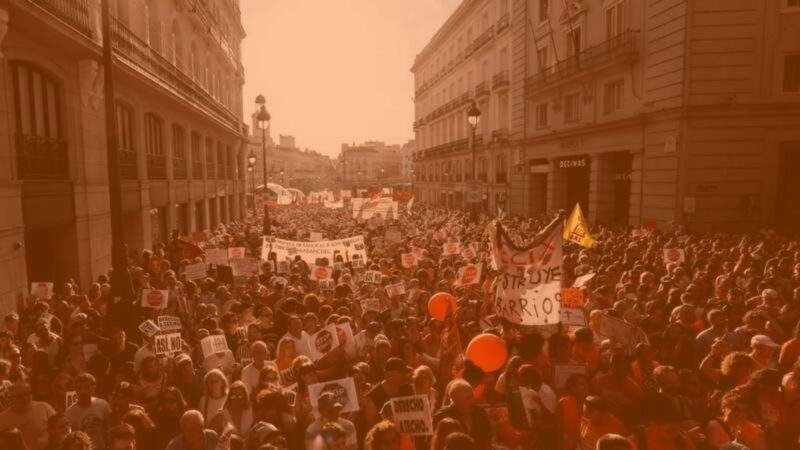
The right to protest is not a luxury or a favour granted by the state. It is a fundamental right, enshrined in Article 9 of the Dutch Constitution and protected by international treaties such as the European Convention on Human Rights. It empowers citizens to question authority, demand change, and show solidarity. From women’s liberation to climate justice, progress rarely begins in parliaments – it begins in the streets.
Yet we increasingly hear arguments about “public order” or “nuisance” being used as excuses to suppress dissent. But a demonstration that doesn’t inconvenience anyone, that doesn’t draw attention – is it still a demonstration? Restricting protest in the name of order is a slippery slope toward authoritarianism. What is labelled a “disturbance” today can be outlawed tomorrow.
DiEM25 stands for the radical democratisation of Europe – and that begins with the freedom of citizens to raise their voices: at work, at the ballot box, and in the streets. In an age of rising inequality, climate breakdown, and growing far-right influence, defending the street as a political space is more urgent than ever.
Limiting the right to protest doesn’t just affect climate activists or anti-racism groups – it affects all of us. Because if the state gets to decide which protests are “appropriate,” then no opinion is truly safe.
Defend the right to demonstrate. Not despite the friction it causes – but because of it.
Do you want to be informed of DiEM25's actions? Sign up here