

On 28 February 1909 in New York city, Theresa Serber Malkiel, a Russian-Jewish migrant, leader of the women wing of the American socialist party, organised the first “National Woman’s Day” event in history, which was the precursor of the “International Women’s Day” that is now celebrated each year on 8 March.
From the first Women’s Day to the Minab School Strike
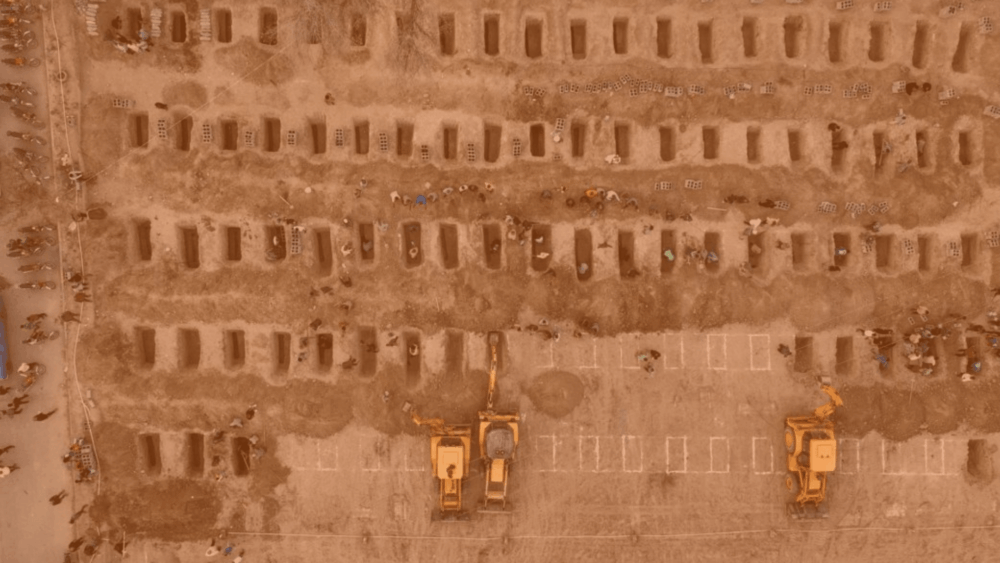
On 28 February 2026, about 180 pupils, the majority of them girls aged 7 to 12 years old, from the Shajareh Tayyebeh girls’ elementary school were killed amidst a joint US-Israel missile attack on the city of Minab in Southern Iran. A shocking and painful event that destroyed the lives and hopes of the pupils, teachers, and their families. Reportedly, US forces were, more likely, responsible for the strike on the school.
Theresa Malkiel could not have imagined that exactly 117 years after the first celebration of the struggle for women’s rights, more than 100 girls would be slaughtered in a school in one single day by the illegal and immoral war that US and Israel are waging against Iran.
Malala Yousafzai, the United Nations’ Messenger of peace and Nobel Peace Prize laureate, who was shot in Pakistan at the age of eleven for opposing the Taliban’s restrictions on girls’ education, has condemned the killing of the Iranian girls and has called for accountability for this massacre and justice for the victims.
War, denial, and international law
Trump and Netanyahu, instead, have opted for the denial of all responsibilities and have since mobilised their propaganda machine trying to accuse the Iranian forces of the strike on the school. A scenario that recalls the Israeli failed attempt to attribute to Hamas the responsibility of their strike on Al-Ahli Arab hospital in Gaza city on 17 October 2023, which resulted in many fatalities and injuries among displaced Palestinians seeking shelter there. Schools, hospitals, medical personnel, supplies, ambulances, civilian houses are protected under the International Humanitarian Law and the four Geneva Conventions of 1949, of which US and Israel are signatories. Their violation amounts to crimes against humanity, which could be persecuted by the International Criminal Court.
Trump claimed that the US attacks against Iran aimed at liberating the people and women of Iran from the Ayatollah dictatorship. Recent history, from Afghanistan, to Iraq and Libya, has proved that regime change promoted by external interventions results in countries’ increased fragmentation and proliferation of armed groups divided based on their ethnic, ideological and external affiliations. It is widely acknowledged that the disintegration of societies always leads to devastating consequences on the civilian population’s life and freedom, particularly those of women and girls.
Iranian women between repression and war
In September 2022, Masha Amini, a 22 years-old Iranian-Kurdish woman, died in an hospital of Tehran after being arrested by the Religious Morality Police because she did not wear the hijab properly, as mandated by the government. Her death sparked a series of protests throughout the country and led to the creation of the “Women, Life, Freedom Movement”, which united Kurds, Persian, Azeri and Balochi under one single slogan against the discrimination and oppression of women in Iran. The protests were met with government repression that resulted in the killing of at least 470 people and the arrest of thousands more.
During the nationwide protests of last January, reportedly thousands of people were killed by Iranian security forces, among them about 200 children, including girls. Amnesty International stated that, based on their records, the January 2026 political repression was the deadliest one committed by the Iranian security forces in decades.
Notwithstanding the brutal repressions, the Iranian government could not completely suppress the women’s movement for freedom, which continued to seize any opportunity to rise from the ashes challenging the Ayatollah regime, conquering freedoms one by one, step by step with the resilience and steadfastness that characterize the struggle of the oppressed.
This struggle takes on so many different dimensions in the daily life of Iranian people. Minab, the city where the girls’ school massacre occurred, is the capital of the Hormozgan Province, a military and economic hub, because of its strategic location, functional to the control of Hormuz Strait. Yet, people living in the area, despite the military controls, have managed to take advantage of the city location for their survival strategies.
Human beings and all type of goods have been smuggled across the Hormuz Strait to and from Oman, the United Arab Emirates and Saudi Arabia. The Omani internet signal, which was reachable in some areas of the Strait, has also been used to communicate with the external world. A parallel economy co-existed together with the official one, generating livelihoods and giving hopes for a better future to people.
Trump and Netanyahu’s airstrikes might have now buried the women and reformist groups’ movements under the rubbles of their homes, hospitals, schools, basket camps, and parks. On 6 March, Trump, in an interview with CNN, admitted that he would not oppose the appointment of another religious leader in Iran, provided he would be friendly to the US, Israel and the other Gulf States. Trump also stated that he would not insist on the need for Iran to be a democratic state and openly declared that he wanted to be personally involved in the selection of Iran’s next leader, speculating on possible candidates.
Trump’s claim of American power over Iran’s political future will not augur well for Iranian women. Iranian civilians are paying a heavy toll amidst the war, and they deserve far more than a leader selected by either the US and Israel theocracies or the Ayatollah regime.
This International Women’s Day, on 8 March, women of Iran, Palestine, and Middle East still have little to celebrate, but, no doubt, they remain resilient and determined to pursue their rights and freedom, despite the patriarchal agenda of Trump, Netanyahu, the Ayatollah, the Revolutionary Guards, and the Gulf States’ monarchies.
Do you want to be informed of DiEM25's actions? Sign up here