

In October 2025, the Trump administration authorised the CIA to conduct lethal covert operations against the Venezuelan government, escalating its regime-change campaign. The move accompanies a US military buildup in the Caribbean and a series of deadly strikes on boats. Venezuela has denounced the actions, mobilised its defenses, and cited a historical pattern of US intervention in the region.
The Donald Trump administration has reportedly authorised the Central Intelligence Agency (CIA) to carry out lethal covert operations in Venezuela as part of escalating regime-change efforts against Caracas. The revelation came as the US military struck another boat in the Caribbean, bringing the total to 27 people killed.
Several US officials confirmed to the New York Times a new presidential finding that would enable the CIA to take lethal covert action against the Maduro government and conduct other unspecified operations in the Caribbean region.
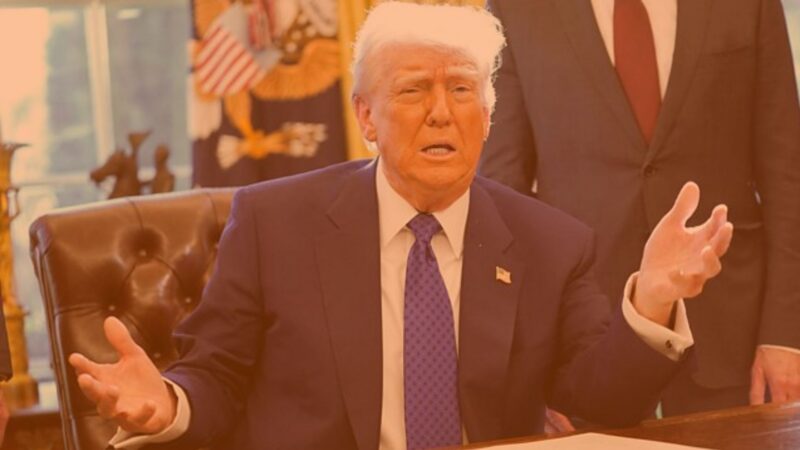
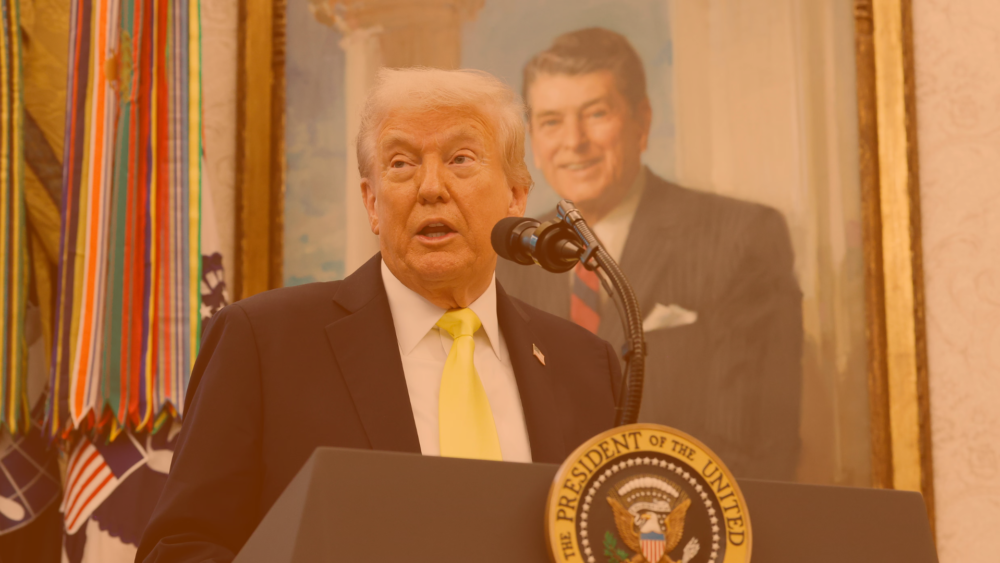
President Trump confirmed Wednesday that he had approved CIA covert operations in Venezuela, without giving any details. Trump justified the measure to reporters by alleging that the Maduro government had sent “criminals and people from asylums” to the US through the southern border, along with narcotics trafficked via Caribbean routes. He reiterated that land strikes would follow.
Venezuela’s Foreign Affairs Ministry reacted by denouncing Trump’s “bellicose and extravagant” statements and his admission of CIA-led destabilisation plans.
Last week, Venezuela denounced in an emergency meeting of the United Nations Security Council (UNSC) that regime-change efforts were underway, including potential US military attacks in the near future, using “falsehoods” that Caracas was involved in drug trafficking.
The ramped-up military threats followed Washington’s suspension of all diplomatic contact with Caracas on October 2, alongside reports that Trump has grown frustrated with Maduro’s refusal to give up power and Venezuela’s rejection of “narcoterrorism” allegations as unfounded and politically motivated.
The Maduro government recently warned that it had prevented a “false flag operation” allegedly organised by local far-right groups to plant explosives at the US embassy with the goal of orchestrating a conflict with Washington. The warning was reportedly dismissed by US authorities, who stated the embassy building has been empty since 2019 when Caracas broke diplomatic ties.
Washington has also dismissed President Maduro’s calls for dialogue and de-escalation. Venezuelan armed forces have launched defense exercises and are deployed across the country to protect borders, airports, ports, and critical infrastructure and institutions.
Over the years, declassified documents have confirmed the CIA’s hand in overthrowing leftist governments in South America, such as Salvador Allende’s Chile in 1973 and Jacobo Árbenz’s Guatemala in 1954, while repeatedly trying to assassinate Cuba’s Fidel Castro.
In Venezuela, the CIA was involved in cocaine smuggling operations in the 1980s and 1990s in collaboration with assets within the Venezuelan military. Caracas has likewise accused the agency of being behind several plots to overthrow or assassinate former President Hugo Chávez (1999-2012), including the 2002 short-lived US-backed coup.
Early last year, Venezuelan authorities arrested dozens of people tied to an alleged far-right scheme to assassinate President Maduro, accusing the CIA and the Drug Enforcement Administration (DEA) of backing it. A previous assassination attempt failed in 2018.
CIA director John Ratcliffe is said to be working alongside fellow regime-change advocates, including US Secretary of State Marco Rubio and White House staffer Stephen Miller, in shaping the new aggressive strategy against the Venezuelan government. This approach involves expanding the US military presence in the Caribbean and potentially hitting targets inside Venezuela in the next phase of Washington’s so-called counter-narcotics mission.
Since mid-August, the White House has stationed at least eight warships, aircraft, and an estimated 10,000 troops in the Caribbean in a purported mission against drug smuggling. On Wednesday, two US B-52 bombers were spotted by open-source aircraft tracking websites maneuvering inside Venezuelan airspace.
The military deployment followed a US $50 million bounty for President Maduro’s capture over claims of links to the so-called “Cartel de los Soles” and “Tren de Aragua” gang, both designated terrorist organisations by the US early this year.
Washington has not provided any court-tested evidence of its allegations. Reports by the United Nations Office on Drugs and Crime (UNODC) and the DEA have found that Venezuela is not a major drug-producing or drug-shipping country. Most US-bound narcotics originate in Colombia, Perú, and Bolivia and reach the US via Pacific routes and Central America.
Since September, the US Southern Command has conducted strikes against at least five boats in the Caribbean near Venezuelan coasts, killing 27 people, claiming that they were carrying drugs to the US and belonged to designated terrorist organisations. The last strike was announced Tuesday by Trump via Truth Social, in which six crewmen were killed.
Legal and human rights experts, as well as Democratic representatives, have warned that these actions constitute extrajudicial killings and that the US must carry out formal interception and arrest procedures guaranteeing due process.
In response, the Trump administration produced a classified legal opinion that justifies lethal strikes against a secret and expansive list of alleged cartels and drug traffickers. The White House has sought to further justify its actions by notifying Congress that the United States is engaged in a “non-international armed conflict” with designated foreign terrorist organisations. The US Senate recently rejected a resolution that sought to limit Trump’s authority to conduct military strikes in the Caribbean.
Caracas has said that the strikes have killed civilians, but has been unable to identify the victims. However, Pentagon sources have reportedly revealed that at least one strike in the Caribbean targeted a boat that departed from Colombia.
Colombian President Gustavo Petro had previously claimed that the three men killed in the September 19 strike were Colombian nationals and accused the US of manufacturing a war.
US Southern Command chief Caribbean visit
US Southern Command (SOUTHCOM) Chief Alvin Holsey visited Antigua and Barbuda and Grenada on October 14-15 to “further strengthen security cooperation,” including fighting transnational organised crime and illicit trafficking, according to an official communiqué.
On Tuesday, Holsey met with Antigua and Barbuda Prime Minister, Gaston Browne, and the Caribbean nation’s Chief of Defence Staff, Brigadier Telbert Benjamin, to discuss Caribbean security and deepening the bilateral defense partnership. Browne declared that his country would not host US military assets or units on its territory.
Holsey wrapped up his Caribbean visit Wednesday after meeting with Royal Grenada Police Force (RGPF) Acting Commissioner Randy Connaught to discuss security-related efforts.
Grenadian authorities have yet to respond to a recent request by the US military for the temporary installation of radar equipment and associated technical personnel at the Maurice Bishop International Airport. Local and regional organisations have firmly come out against US military actions in the Caribbean.
Do you want to be informed of DiEM25's actions? Sign up here