

Washington was buzzing last week with congressional hearings over the Trump administration’s targeted strikes on small boats from Venezuela allegedly carrying drugs into the United States.
The hearing, which focused on whether Secretary of War Pete Hegseth ordered a second “double tap” strike that killed civilians, questioned whether such strikes were legal given that the administration is not at war with Venezuela (or any South American nation).
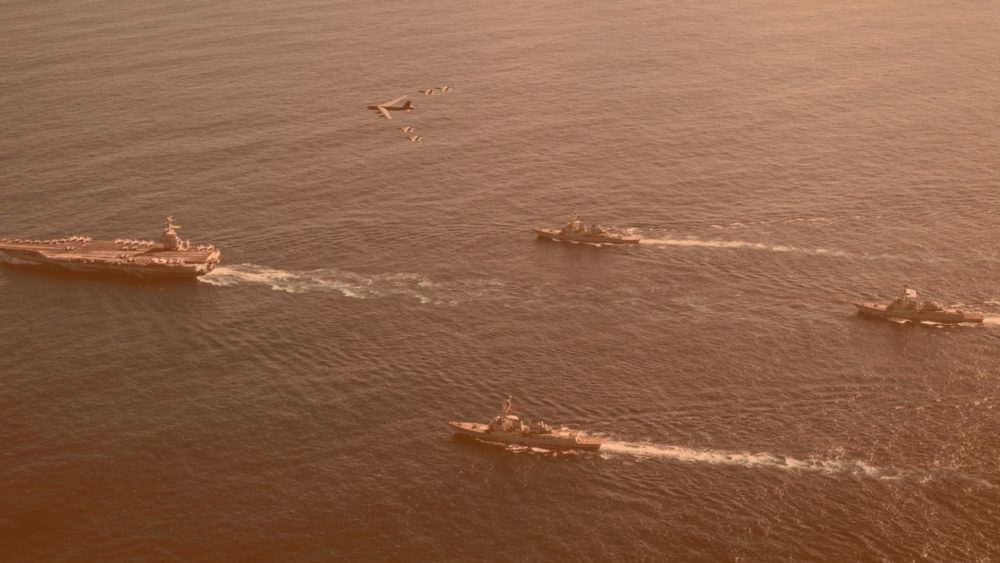
The White House says the pressure – which began with missile strikes on small vessels and now includes the largest US naval presence in the region since the Cuban Missile Crisis – is meant to curb illegal drugs, such as fentanyl, allegedly coming from or transiting through Venezuela and contributing to opioid deaths in the US.
But that may not be the only reason Washington is applying pressure on Caracas.
The White House has also pointed to Venezuela’s oil reserves, and analysts note that Washington may be attempting to limit China, Russia, and Iran’s influence in South America.
A short recent history of US-Venezuela relations
Hugo Chávez’s election in 1999 upended the traditional US-Venezuela relationship. Under the banner of Chavismo, Chávez sought to end what he described as Venezuela’s subordinate role to US interests.
Washington did not welcome what became known as the Bolivarian Revolution, not only because Venezuela has one of the world’s largest oil reserves, but also fearing anti-American governments would sweep through South America.
The George W. Bush administration supported – or was at least sympathetic to – a 2002 coup d’état that briefly ousted Chávez, though he was restored to power by a loyal military officer. Under the Obama administration, tensions increased in 2014 when Chávez’s successor, Nicolás Maduro, expelled three US diplomats, accusing them of encouraging student protest movements at universities.
Despite campaigning against “regime change,” president Donald Trump in his first term continued the long-standing US policy of attempting to remove Maduro from power. In 2019, Trump recognised Juan Guaidó – the head of Venezuela’s National Assembly – as the country’s legitimate president, though the effort failed to dislodge Maduro.
From small boats to operation southern speer
The second term Trump administration has continued US policy towards Venezuela by acts of brute force.
The White House has used drones and fighter jets to target small boats in the Caribbean, many carrying no more than 15–20 people. As noted, Hegseth has justified the attacks by claiming these vessels were smuggling fentanyl into the US (despite evidence pointing to the contrary).
The latest strike came in early November, bringing the number of boats destroyed to 21 and the death toll to roughly 80.
Now, under a mission referred to as Operation Southern Speer, the White House is shifting toward a broader pressure campaign. In early November, Trump authorised the CIA to conduct covert operations in the country. The US airforce has conducted flyovers near the Venezuelan coast. And the US president recently posted on Truth Social that all Venezuela airspace should be considered closed.
Despite concerns raised in Congress about the legality of these strikes, the White House designated Maduro and members of his inner circle as part of the Cartel de los Soles, a label that groups them with a foreign terrorist organisation. This designation allows the administration to impose additional sanctions and could provide legal justification for expanded military operations, like a ground invasion.
Sabre rattling?
For a president who campaigned against regime-change wars, these moves appear contradictory. But Trump has frequently used military escalation as a bargaining tool rather than a pathway to conflict, raising the possibility that the build-up is meant as sabre rattling to force the Venezuelan leader into concessions or an exit.
The most recent example was a phone call late last month between Trump and Maduro.
Before the naval escalation, the two governments were reportedly exploring a deal: the United States would lift or ease sanctions that have devastated Venezuela’s economy in exchange for greater US access to Venezuelan oil reserves. Maduro also reportedly offered to scale back or “slash” contracts with Russia, Iran, and China.
The result could benefit oil companies Chevron and Shell, both of which the White House recently approved to continue operations in Venezuela.
This theoretical hard-line approach could also ease disappointment among some Southern Florida voters, a key demographic in a usually competitive state, who were disappointed by the approval of Chevron and Shell oil operations and resumption of direct flights from the US to Venezuela.
What regime change would look like
There is also the possibility that the White House is not bluffing about ousting Maduro militarily.
Within the administration, there are competing factions on Venezuela policy, though both share the goal of removing Maduro. Richard Grenell argues that the Venezuelan leader might accept – and Trump might offer – a negotiated exit that satisfies both sides. Meanwhile, Secretary of State Marco Rubio believes military pressure should be escalated until Maduro steps down.
If Maduro is ousted, Washington’s preferred successor is likely María Corina Machado, the recent Nobel Peace Prize winner and long-time opposition leader. A proponent of privatising Venezuela’s state-owned oil industry, Machado has expressed support for the Trump administration’s military buildup and for removing Maduro from power.
So, despite the many norm-breaking policies under this administration, the Trump White House appears intent on continuing traditional US policy of regime change towards Venezuela.
Do you want to be informed of DiEM25's actions? Sign up here