


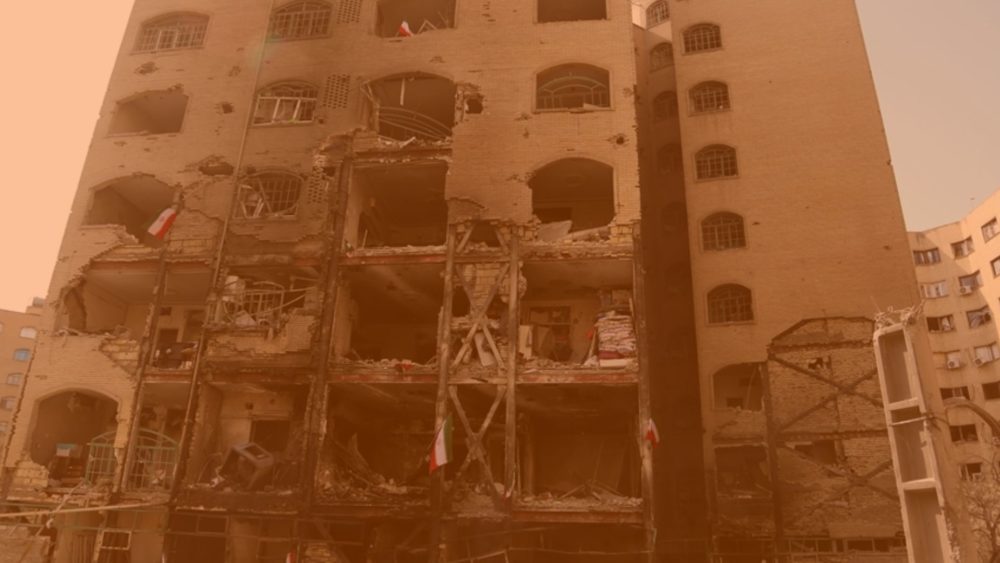
Over 82,000 civilian structures have been damaged by U.S. and Israeli bombardments, the Red Crescent says.
The American and Israeli bombardments of Iran have devastated tens of thousands of civilian facilities, the Iranian Red Crescent Society says, killing over a thousand civilians so far and damaging infrastructure considered completely off limits in war time like schools and hospitals.
Over 82,000 civilian structures have been damaged by United States and Israeli bombardments, the group reported this week.
This includes 62,000 homes, 498 schools, and 281 medical centers, hospitals, and pharmacies, the Red Crescent reported. Seventeen Red Crescent bases and 94 ambulances and rescue vehicles have also been damaged.
“Attacks on these facilities and equipment are not merely destruction of buildings or vehicles, but direct assaults on the lifelines that save human lives,” the head of the Iranian Red Crescent Pir Hossein Kolivand said this week, per state-run outlet Islamic Republic News Agency. Iran’s health minister has also said that about 300 health facilities have been damaged.
Secretary of War Pete Hegseth has repeatedly claimed that the U.S. military doesn’t target civilians. However, one of the first strikes of its war on Iran was on a primary school in Minab, evidence shows. That strike killed at least 175 people, most of them young schoolchildren.
Even if civilian structures aren’t the sole target of the strikes, or are targeted accidentally, it may still be a war crime to damage or destroy them, experts have said. A CNN report earlier this month showed evidence that U.S. and Israeli strikes are often hitting within lethal radius of hospitals, schools, and other civilian facilities, even if they aren’t striking them directly.
The latest phase of the war also involves the explicit targeting of civilian oil and gas infrastructure, kicked off when Israel, with the approval of the U.S., struck Iran’s South Pars Gas Field on March 18. This sparked Iran to retaliate on oil and gas facilities in neighboring countries that have allied with the U.S.
President Donald Trump has threatened to escalate this campaign. On Saturday, Trump said that the U.S. will “hit and obliterate” Iran’s power plants, “STARTING WITH THE BIGGEST ONE FIRST,” if Iran didn’t lift restrictions on the flow of vessels through the crucial Strait of Hormuz by Friday. Power plants are civilian infrastructure, and Iran’s largest, on the outskirts of Tehran province, can provide power for multiple major cities.
“Trump is openly threatening a war crime,” Kenneth Roth, former executive director of Human Rights Watch, told The New York Times. “I see no difference between what Trump is threatening to do in Iran and what the International Criminal Court charged four Russian commanders for doing in Ukraine.”
Iranian officials have reported 1,500 deaths from the bombardments so far, though these figures are updated sparsely. According to human rights group HRANA, the U.S. and Israel have killed 1,443 civilians since February 28, including at least 217 children, with another 653 fatalities not yet classified as civilian or military by the group.
Trump has claimed this week that Iranian officials are eager to make a deal to end the war – a claim refuted by Iranian officials. However, even as Trump spoke of peace, the Israeli military launched a new “wide-scale” wave of strikes, it said, across Iran on Monday.
This article was written by Sharon Zhang for Truthout.
Do you want to be informed of DiEM25's actions? Sign up here