The US–Israel–NATO axis is replaying a bloody script with Iran as the next target
Fuelled by hubris, the US–Israel–NATO axis finds the prospect of regime change in Iran too tempting to resist. Rich in oil and gas, commanding a critical position at the crossroads of the Middle East, Central Asia, and the Caucasus, and home to over 90 million people — most under 40 — Iran remains a prize for anyone seeking to reshape the regional balance of power through coercion.
For Washington and its allies, a ‘friendly’ regime in Tehran would deliver more than just a pliant partner in the Gulf: it would remove a key regional spoiler, reassure Western energy markets — and complicate China’s ambitions for secure energy access and overland trade routes through Eurasia.
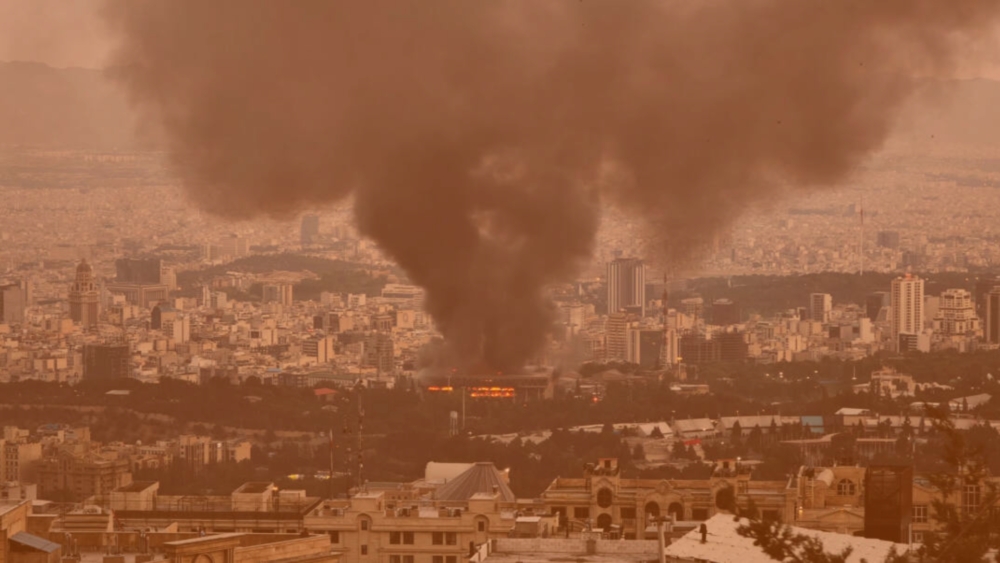
But Iran is not Iraq, nor Afghanistan, nor Libya — yet the regime change fantasy persists: that a few more airstrikes, a couple of MOABs, covert operations, and sanctions on what little remains unsanctioned will finally deliver regime change on Western terms. For a region choked by the ruins of past “liberations”, this is déjà vu — with Israel’s undeclared nuclear arsenal at play.
There are indeed vocal figures within the Iranian diaspora — including Reza Pahlavi, Masih Alinejad, and a handful of exiled influencers — who have welcomed Israeli strikes as a “historic chance” to break the regime once and for all. But not all in exile share this view, and inside Iran, the message is unambiguous: No to the regime. No to this war.
Activists like Sepideh Qolian, Nobel laureates like Narges Mohammadi and Shirin Ebadi, and countless Iranians defying internet blackouts repeat it daily: foreign bombs will not bring freedom: “War is not helping us. It is destroying us. It is silencing the very people it claims to save.”
Iranians want an end to corruption and repression — but they know exactly what “liberation” by war looks like, and who always pays for it.
In 1953, a British–American coup killed Iran’s democratic experiment to protect Western oil profits. In 2025, the same bet returns: that foreign firepower can reorder a people’s politics and deliver geostrategic benefits. It did not work then. It will not work now. And the longer this war drags on, the more certain one thing becomes: the only endgame is more ruin — for Iran, for its neighbours, and for a world that cannot afford yet another never-ending war dressed up as strategy.
Same playbook, same catastrophe
The playbook of the US–Israel–NATO axis is open for examination. European powers sustain this strategy by enforcing unilateral coercive sanctions, supplying arms, and granting diplomatic cover for Israel’s strikes. From reinstalling the Pahlavi dynasty, strangling the economy, and deploying non-state actors à la Syria and Libya, to balkanising the country into its disparate parts — every method is familiar. Meanwhile, decades of domestic repression, corruption and mismanagement have already dwindled the people’s willingness to defend the regime at any cost. The prospects, therefore, look bleak.
If this familiar script runs its course, the consequences will be the same as before: a hollowed-out state, foreign-backed militias feeding off sectarian divides, and millions more forced to flee. What remains of Iran’s social fabric — its unions, students, journalists, reformers — will be crushed between a cornered regime and foreign patrons who prefer pliable chaos over genuine democracy.
What hubris won’t allow
Initiating democratisation cannot be outsourced to missiles or secret deals with exiles. It means shielding and amplifying Iran’s own civil society: teachers, students, workers, journalists — and an immediate ceasefire would certainly help keep these hard-pressed activists alive. And lest we forget the aggressor: Israel, too, may soon have to face the first real consequence of pariah status — suspension from the United Nations, as was once the fate of apartheid South Africa.
It also means Iran undertaking rapid political changes — from freeing political prisoners and those under house arrest to announcing a popular constitutional assembly to draft a new constitution for a secular republic. On the diplomatic front, it means committing to smart diplomacy: shared, verifiable nuclear enrichment with neighbours like the UAE and Saudi Arabia, echoing Europe’s own first step towards peace — the European Coal and Steel Community, where historic enemies built trust by jointly managing the very resources that once fuelled war.
Above all, it means stepping back long enough for Iranians to democratise from within — free from internal repression and from external coercion in which Europe remains complicit. And this is exactly why movements like DiEM25 — organising within Europe’s centres of power — are more vital than ever: to raise public consciousness, pressure governments and institutions to break with endless war, and expose the true motives hidden within the corridors of power in Europe’s capitals. But alas, dare we imagine the West allowing independent development outside its control, beyond its balance sheet, with equal application of international law?
Do you want to be informed of DiEM25's actions? Sign up here